• Home
  • Mission of This Site
  • Contact

Impeachable Offenses?

~ The Use & Abuse of Impeachment in the 21st Century

Impeachable Offenses?

Author Archives: impeachableoffenses

Why efforts to stop Mueller’s testimony are probably fruitless

06 Monday May 2019

Posted by impeachableoffenses in Uncategorized

≈ 1 Comment

Tags

Alberto Luperon, Robert Mueller

By Frank Bowman

Yesterday, I had the pleasure of talking with Alberto Luperon of Law & Crime Network about whether the Trump Administration would be likely to succeed if it tried to stop special counsel Robert Mueller from testifying to Congress. His article about that conversation appears here.

Share this:

  • Share on X (Opens in new window) X
  • Share on Facebook (Opens in new window) Facebook
Like Loading...

AG Barr maneuvers to block disclosure to Congress of full Mueller report and supporting evidence

03 Friday May 2019

Posted by impeachableoffenses in Uncategorized

≈ Leave a comment

By Frank Bowman

Today I write on Slate about the dual objectives of Attorney General William Barr’s statements about the Mueller report. The link is here.

Share this:

  • Share on X (Opens in new window) X
  • Share on Facebook (Opens in new window) Facebook
Like Loading...

AG Barr cowers at prospect of proper cross-examination

29 Monday Apr 2019

Posted by impeachableoffenses in Uncategorized

≈ 1 Comment

Tags

House Judiciary Committee, Jerrold Nadler, Nixon impeachment, William Barr

By Frank Bowman

This weekend brought a subtle, but important, bit of good news for those interested in effective congressional investigations of the Trump administration.

Attorney General Bill Barr is threatening to refuse the request of the House Judiciary Committee that he testify later this week. Reportedly, Barr is balking because the Committee will deviate from the pattern of recent congressional hearings in which members do all the questioning and every member gets a paltry 3-5 minutes to ask questions of the witness, with no opportunity for follow-up. Instead, House Judiciary Chair Jerrold Nadler is delegating some of the questioning to committee lawyers who will have 30 minutes to pursue lines of questioning to their logical conclusions. There may also be a private session about any classified materials in the Mueller report.

The “get every Member on camera for 5-minutes” mode of proceeding has long had those of us who are trial lawyers tearing our hair and screaming at our TV sets (or computer screens). It is guaranteed to be ineffectual for three reasons: First, cross-examination, particularly of reluctant or hostile witnesses, is the single most difficult trial skill. To do it well takes training and years of practice. Perishingly few members of either the House or Senate have the professional background to have mastered it. For most of those few, the experience was years in the past and they’ve lost their edge.

Second, the best cross-examiner in the world can do little if confined to an arbitrary 5-minute limit. Thus, even the rare talented congressional interrogator can be filibustered for five minutes by any reasonably self-possessed witness.

Third, sequential questioning by members could be made fractionally more effective if all the members (or at least all the members of one party) carefully coordinated the topics and lines of questioning to be pursued. But there is little indication that this is ever done, and it would require a degree of diligence, focus, and cooperative spirit improbable in a group comprised of office-seekers eager to get individual, and distinctive, facetime.

If you want an eye-opening contrast to the aimlessness and patent grandstanding of most modern congressional hearings, go watch the proceedings of the Senate and House committees investigating Nixon and Watergate. Three key differences jump out: first, the committee’s professional counsel did much of the questioning; second, they were unconstrained by artificial time limits; and third, the senators and congressmen of both parties were prepared for their turns at questioning and were obviously interested in learning the truth. Moreover, in order to promote candor and avoid concerns about unfairly besmirching reputations, a number of the key hearings were held in private.

The result was that, in Watergate, both the Senate and House hearings were genuine factual inquiries in which witnesses were compelled to answer questions comprehensively and explain inconsistencies in their stories. Both sets of hearings maintained coherent narratives and exposed important facts that would not otherwise have come to light.

It is extraordinarily heartening to see that Chairman Nadler seems to have learned a lesson from history. Mr. Barr’s anguished cries at the prospect of a modest move back toward earlier and more productive modes of procedure should be seen as what they are — the vain protestations of a lawyer who knows the power of competent cross-examination and desperately wants to avoid having it directed at him.

That said, Nadler’s proposal is only a modest step in the right direction. The staff questioning will still be broken up into 5-minute alternating chunks between majority and minority counsel, which is sadly reminiscent of the clumsy experiment by the Senate Judiciary Committee’s Republican majority in the Kavanaugh Supreme Court confirmation hearings.

Chairman Nadler should do two things. He should stick to his guns in this confrontation with Barr. And in future, he should move even more firmly in the direction of procedural rules that, in living memory, facilitated the discovery of truth. Committees of both the House and Senate who want facts should follow and build on his example.

Share this:

  • Share on X (Opens in new window) X
  • Share on Facebook (Opens in new window) Facebook
Like Loading...

Prof. Bowman discusses Mueller Report on Legal Talk Network’s “Lawyer 2 Lawyer” podcast

26 Friday Apr 2019

Posted by impeachableoffenses in Uncategorized

≈ Leave a comment

Today Professor Bowman was a guest, with Heritage Foundation representative Hans van Spakovsky, on the podcast “Lawyer 2 Lawyer.” The topic was the Mueller Report and its implications for impeachment. Link here.

Share this:

  • Share on X (Opens in new window) X
  • Share on Facebook (Opens in new window) Facebook
Like Loading...

Prof. Bowman in NY Times on impeachment for obstruction

23 Tuesday Apr 2019

Posted by impeachableoffenses in Uncategorized

≈ 1 Comment

Tags

Adam Liptak, Obstruction of Justice

Adam Liptak, the distinguished Supreme Court reporter for the New York Times, has an article out today discussing whether, as a matter of historical precedent, obstruction of legal processes can be an impeachable offense. He is kind enough to quote Professor Bowman extensively. The link is here.

Share this:

  • Share on X (Opens in new window) X
  • Share on Facebook (Opens in new window) Facebook
Like Loading...

Prof. Bowman in SLATE debate on impeachment

20 Saturday Apr 2019

Posted by impeachableoffenses in Uncategorized

≈ Leave a comment

In addition to syndicating Professor Bowman’s article from this blog on the Mueller report (link here), the good folks at Slate were kind enough to invite him to participate in an online discussion/debate about whether impeachment is now likely or desirable in the wake of Mueller’s work. The link to the debate is here.

Share this:

  • Share on X (Opens in new window) X
  • Share on Facebook (Opens in new window) Facebook
Like Loading...

The Mueller Report

19 Friday Apr 2019

Posted by impeachableoffenses in Uncategorized

≈ 5 Comments

Tags

don mcgahn, James Comey, Michael Flynn, Mueller report, Obstruction of Justice, Robert Bork, Robert Mueller, Russia investigation, Saturday Night Massacre, William Barr

By Frank Bowman

This is how it’s done. In the endless, degrading cacophony of the Trump era, in which the “tweet storm,” the “flame war,” the sneering insult, and the facile certainty of cable punditry have become the customary form of legal and political discourse, I had almost forgotten what the language of the law sounds like. But there it is in the 448 pages of the Mueller report
— logical, cautious, painstaking, measured, dry, yet inexorably compelling. One may quibble about details, but taken as a whole, Mueller’s product is an exemplar of the prosecutor’s craft and a powerful reminder of why a Justice Department imbued with norms of independence and professionalism is an essential counterweight to both presidential overreach and partisan hysteria.

The legal craftsmanship of the report is also an unanswerable refutation of the endlessly repeated canard that the Mueller investigation was a baseless partisan “witch hunt” by a hostile “deep state.”

In one sense, of course, the report is the work of the “deep state,” if by that foolish term one means the career professionals of American law and government. If some of those professionals are hostile to Trump and Trumpism, it is only because their lives are based on values — the dogged pursuit of truth, a commitment to fairness and due process, respect for the law, support of constitutional government — that Trump openly flouts.

Nonetheless, Trump should thank his lucky stars that Mueller’s team was composed of such old-fashioned folks. Had they indeed been the “thirteen angry Democrats” of Trump’s splenetic imagination, persons of the disposition and caliber of, say, Devin Nunes or Lindsey Graham, but of the opposite political valence, the resultant report would surely have been very different. As it is, the professional values and institutional norms by which good prosecutors live produced a report exonerating Trump of actual crime in relation to Russian election interference and withholding judgment on the legal question of obstruction.

Trump and his enablers are, of course, claiming vindication. But the caution and restraint of Mueller’s style cannot obscure the facts he meticulously reports. And those amount to a devastating portrait of a man by conduct, character, and temperament unfit for the office of president.

The section of the report on Russian election interference does clear Trump and his campaign of conspiring with the Russian government to interfere in the 2016 election. It nonetheless unequivocally affirms that the Russians did interfere. And it depicts Trump campaign operatives, including members of the Trump family, who were aware of the possibility that Russia was trying to intervene to help Trump by hacking and leaking material damaging Clinton, but saw no problem with such Russian meddling and would happily have conspired in it given the chance.

The reality of Russian intervention and the dangerous, if perhaps not quite provably illegal, proximity of Trump intimates to it frames the question of Trump’s obstruction quite differently than his defenders would like. Despite Trump’s endless denials, the Russians did meddle. As a matter of national security, that required investigation. Likewise, Trump associates and family did have troubling contacts with Russian emissaries. That, too, required investigation. Given the facts, both those long publicly known and others now laid out in Mueller’s report, investigation of neither point could, except in the mind of a willfully blind partisan, amount to a “witch hunt.”

Moreover, a truly independent inquiry into Russian electoral interference represented a political threat, or at least grave embarrassment, to Trump, because it raised the possibility that his victory was tainted by the assistance of a hostile foreign power. In addition, by no later than early 2017, Trump knew that his family and associates had, at the very least, come dangerously close to illegal entanglements with Russian representatives. Thus, Trump had powerful motives to quash the Russia investigation.

The crime of obstruction of justice depends on proof of two basic points — first, actions that obstruct or impede an investigation, and second, corrupt motive. Although a president may lawfully limit or even halt investigations for reasons genuinely related to the national interest, doing so to advance one’s partisan political prospects or to protect oneself or one’s family or friends from criminal exposure or personal embarrassment is to act corruptly.

The second volume of Mueller’s report lays out eleven different incidents or sequences of events that might amount to obstruction — from Trump’s efforts to convince FBI Director James Comey to lay off the investigation of Gen. Michael Flynn, to his repeated attempts to stop or limit the Mueller investigation, to his public and private efforts to induce witnesses Flynn, Manafort, and Cohen not to testify or to hew to Trump’s preferred view of reality.

Space precludes a blow-by-blow analysis of each of these categories, but Mueller’s conclusions — though guardedly, even opaquely, phrased — are evident and damning. He concludes that on multiple occasions Trump engaged in behavior that either did, or was intended to, obstruct or impede criminal investigations. As to some of the enumerated categories, Mueller concludes that, even if obstructive conduct occurred, there was insufficient evidence of “corrupt” motive. But as to at least five sequences of events, Mueller unmistakably believes that there is persuasive evidence of both obstructive conduct and corrupt motive. These included repeated efforts to remove special counsel Mueller; an attempt through Cory Lewandowski to induce Attorney General Sessions to limit the scope of the Mueller probe to future Russian interference in elections; a brazen attempt to convince White House Counsel Don McGahn to lie about the fact that Trump had ordered him to arrange the firing of Mueller; Trump’s efforts to influence the cooperation and testimony of Michael Flynn and Paul Manafort; and Trump’s efforts to induce Michael Cohen not to cooperate or to shade his testimony in Trump’s favor.

Mueller’s conclusions are unmistakable despite his careful refusal to go the last step and say plainly that Trump obstructed justice. If there were any doubt on the point, it is removed by the report’s inclusion of a devastatingly thorough legal rebuttal of Attorney General Barr’s apparent view that a President cannot commit obstruction by stopping or limiting a criminal investigation. The only reason to include such an argument is if Mueller concluded that, on the facts, the president violated the law. Otherwise, the legal question is moot and a legal craftsman like Mueller would never have included such surplusage.

In the end, of course, whether a president can or cannot technically commit the crime of obstruction is itself a moot point. As I have argued many times, Bob Mueller was never going to defy DOJ policy and seek indictment of a sitting president. As to the president, therefore, Mueller’s job from the beginning was to determine the facts and present them to Congress and the public in order that a political judgment about the president’s fitness for office could be made — whether through the impeachment process or at the polls.

The picture of the current president painstakingly etched in the Mueller report is of a man with three dominant characteristics.

First, his narcissism overwhelms all other considerations. Even a more balanced and self-aware person would have found the Russia inquiry politically and personally troublesome. But one cannot escape the feeling (to which Mueller obliquely alludes) that a primary factor in Trump’s desperate efforts to squash the investigation was the fragility of his ego — a manic determination that the epic achievement of his election not be tarnished by even a hint that forces other than Trump played a role.

Second, Trump believes that, having been elected, the powers of government are to be wielded for his personal and political benefit and the law exists only as a tool to serve his ends. No institution, no law, no set of traditional norms, no professional standard, certainly no moral consideration deserves any deference if it stands in the way of his immediate wishes.

Third, the thread running through the entire report is Trump’s essential falsity. Mueller confirms that Trump not only lies constantly as part of his public act, but does so privately among his advisers and intimates and he expects others to lie for him on command. Among the most revealing vignettes is Trump’s effort to convince Don McGahn to lie about the fact that Trump ordered him to secure Mueller’s firing. McGahn, to his credit refused and showed Trump his notes documenting the order. Trump exploded in astonishment that, “Lawyers don’t take notes…. I’ve had a lot of great lawyers, like Roy Cohn. He did not take notes.” That a subordinate might have personal integrity and be unprepared to sacrifice it on Trump’s command had seemingly never occurred to him.

One other curious theme recurs throughout the report as a kind of counterpoint to Trump’s lawlessness. Even though Trump repeatedly ordered people to crush or divert or hobble the Russia investigation, over and over they refused to comply, either to his face or simply by failing to carry out his directives. Revealingly, those who resisted told Mueller that they did so because they didn’t want to be responsible for another “Saturday Night Massacre,” or they didn’t want to be another Robert Bork.

This is heartening in a sense. The example of Watergate seems to have restrained at least some Trump subordinates and helped buttress, at least for awhile, the tottering citadel of the rule of law. But the Mueller report is about yesterday’s White House. Those with historical memory, and perhaps more imbued with personal integrity and professional values, are largely gone. Quit in disillusionment. Or purged because they refused to bend to Trump’s lawless whims. In considering what to do about Donald Trump, Congress should ponder that they now confront a Trump unchanged in his essence but increasingly surrounded by aides who may prove unwilling to provide even the modest restraint on his worst impulses documented in Mueller’s report.

Whether Donald Trump violated a particular federal obstruction statute is in the end a peripheral matter. The fundamental lesson of the Mueller report is simply that he is fundamentally unfit for office and presents a persistent danger to the integrity of the American constitutional order. That is the question that Congress and the country must now address.

Share this:

  • Share on X (Opens in new window) X
  • Share on Facebook (Opens in new window) Facebook
Like Loading...

Prof. Bowman on Chinese TV re: Mueller Report

19 Friday Apr 2019

Posted by impeachableoffenses in Uncategorized

≈ Leave a comment

Tags

CGTN America, Mueller report

Tonight Professor Bowman appeared on CGTN America, an international network largely funded by the Chinese government, to talk about the Mueller report. See the panel discussion at this link.
https://www.youtube.com/watch?v=2bnanYaWc00

Share this:

  • Share on X (Opens in new window) X
  • Share on Facebook (Opens in new window) Facebook
Like Loading...

The Mueller Report

25 Monday Mar 2019

Posted by impeachableoffenses in Uncategorized

≈ 8 Comments

Tags

Attorney General Barr, Barr summary, Bob Barr, Mueller report, Robert Mueller, Russia investigation

By Frank Bowman

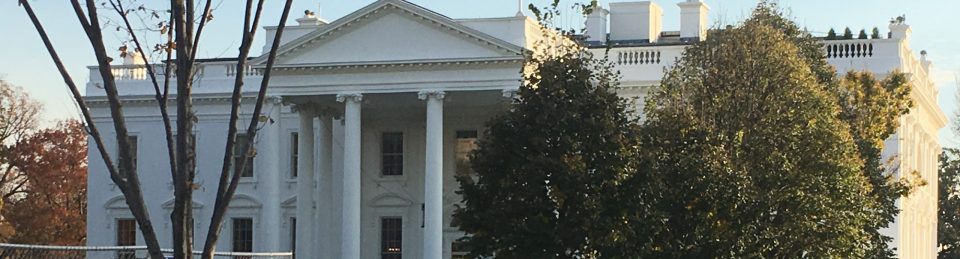
The villagers are despondent. Helpless against the ogre in the white castle looming over their town, they hired Sir Robert, peerless paladin of republican virtue, and sent him forth against the monster. After a two-year quest, every hint and rumor of which was followed breathlessly by the quaking townspeople, Sir Robert has returned. But he comes not with the ogre’s severed head hanging from his saddle bow, but with a long parchment that says, “The creature in the white palace is indeed a bad fellow, certainly not better and indeed somewhat worse than you knew him to be when you selected him to live there. What you do about that is now up to you.”

Upon reading this, the scales fell from the villagers’ eyes, and Sir Robert stood before them revealed, not as a knight in glittering plate armor with pennon flying from his lance, but as what he had been all along, a grave, punctilious, honest lawyer who had done what he was tasked to do, neither more nor less. And then, in their disillusionment, those villagers most wroth against the ogre wailed and rent their garments and covered their heads with ashes.

Robert Mueller was never going to save us from Donald Trump. He was certainly never going to indict a sitting President of the United States. Indeed, given the narrow scope of Mueller’s charge — to investigate “any links and/or coordination between the Russian government and individuals associated with the campaign of President Donald Trump” and any “matters that arose or may arise from the investigation” — it was always extraordinarily unlikely that he would find that Trump or high-ranking members of his presidential campaign “colluded” — or to use the better and more precise legal term, “conspired” — with the Russian government to fix the 2016 election.

The improbability of success on “collusion” narrowly construed had nothing to do with the inherent morality of Trump and his handlers. After all, Trump chose as his campaign manager Paul Manafort, a man so sleazy that, even before his recent convictions, he had been cast out of American politics to practice his black arts on behalf of the third world thugs and aspiring autocrats on the fringes of the former Soviet empire. And apart from thoroughly corrupt newcomers like Manafort and lightweight wanna-be grifters like Rick Gates, Trump’s campaign was a family affair. Which meant that a chip off the old block like Donald Jr. was empowered to gleefully accept meetings with obviously dodgy Russian intermediaries offering obviously stolen dirt on candidate Hillary Clinton.

But however much the Trump menage might have been willing to conspire with the Russians, it has always seemed improbable in the last degree that, during the campaign, the Russians ever got close enough to Trump that the interaction could be fairly categorized as a criminal conspiracy. A prosecutable conspiracy requires proof that two or more persons agree to carry out a criminal objective.

The first problem with proving that Trump conspired in the legal sense with the Russians is identifying the criminal objective of the conspiracy. The second and equally daunting obstacle is proving an agreement to commit the object crime.

What we know of Russian activities in 2016 establishes that they did two basic things to help Trump and hurt Clinton — they certainly conducted a social media disinformation campaign that favored Trump and they quite probably hacked Clinton campaign emails and fed them to the media through Wikileaks.

As to the first, one might construe the millions of rubles expended on the Russian social media effort as an illegal foreign campaign contribution, but I am aware of no evidence suggesting that the Trump campaign had any more advance knowledge of the Russian efforts on this score than anyone else. Indeed, there is no reason to think the Russians would have said anything to Trump’s people about their work in this realm. They didn’t need Trump’s help to do what they were doing and telling Trump — that famously indiscreet man — would have risked disclosure which would have nullified the whole point of the exercise.

As for the Clinton email leak, the original hack (whoever performed it) would have been illegal, but it is altogether unclear whether anything that happened thereafter was criminal. Anti-Trump legal experts have poured out barrels of internet ink arguing that for a foreign government or entity to give and an American candidate to accept negative information about an electoral opponent is a campaign finance violation. I’ve always found this contention improbable, both as a matter of law and as a matter of simple common sense.

Suppose, as was surely the case, that the British favored Hillary Clinton in the last election, and that, as was apparently not the case, they had evidence Donald Trump had long been a Russian intelligence asset. Can anyone seriously contend that it would be a crime under American law for the Clinton campaign to ask the British about their knowledge of Trump’s allegiances or indeed for the British to respond to the query? Even if one accepts the somewhat strained argument that information is a thing of value regulated by campaign finance law, no plausible reading of the First Amendment would permit criminalization of the disclosure of information so vital to the operation of the democratic process.

In any case, I strongly suspect that when the details of Mueller’s investigation finally emerge, they will reveal no evidence of prior communication between Trump’s people and the Russians about the Clinton email hack or the feed of the material to Wikileaks. An expression of interest in the emails by Donald Jr. at the Trump Tower meeting, yes. Loud public encouragement of the release from Trump, yes. Some advance word given to Roger Stone by Julian Assange (not the Russians) of the impending release of the material by Wikileaks, perhaps. But no Trump-Russian cooperation in either obtaining or disseminating the material.

All of which makes perfect sense. The Russians perennially want to undermine their great geopolitical rival, the United States. They disliked Hillary Clinton for her past posture on matters Russian, and perceived her as the more obviously competent — and thus undesirable — candidate in the 2016 election. Therefore, they were happy to attack her to weaken her support among the American public and to cause general disruption of American civic life. But, and this is a huge but, while it is now sometimes hard to remember, before November 8, 2016, no sensible person — not the Russians and probably not even Trump himself — thought the American public would freely choose to elect such a transparently incompetent blowhard.

It was therefore always vanishingly improbable that the Russians would connect themselves directly and provably to the campaign of a weak, imprudent, huckster, thus exposing Russia to the wrath of what the Russians surely assumed to be the incoming Clinton administration. Without such connections, there can have been no criminal conspiracy.

The situation with respect to obstruction of justice is different. It appears from Attorney General Barr’s letter that Mueller did find evidence from which one might conclude that Trump obstructed justice, but elected not to opine on whether that crime was committed. We don’t yet know whether he did so because the evidence on both sides of the question was in rough equipoise, or because he concluded that the law is ambiguous, or because he decided that, since he could not under DOJ policy indict a president, he should not offer an affirmative opinion that the president committed a felony.

My best guess is that he intended that congress and the public should weigh the evidence arrive at its own conclusions. The Barr letter is a fairly transparent effort to frustrate that expectation by offering a preemptive and exonerating legal judgment carrying the imprimatur of the Attorney General. It is also a peculiar animal because it effectively concedes that Trump did obstruct the Mueller investigation in fact, but nonetheless concludes that Trump did not commit the crime of obstruction primarily because Mueller did not find that Trump “was involved in an underlying crime related to Russian election interference.”

For what it’s worth, I think, Mr. Barr is wrong on the law. His heavy reliance on the absence of proof that Trump himself committed a crime connected with Russia is certainly misplaced. One can undoubtedly obstruct justice by interfering with an investigation of the crimes of someone else. Moreover, the law is clear that one can obstruct an investigation that ultimately does not yield proof of criminal wrongdoing by anyone. Barr’s contrary conclusion is only explainable as intellectually dishonest special pleading, or as the product of an intellectually honest, but constitutionally suspect, embrace of the so-called unitary executive view of the presidency pursuant to which the president as the personal embodiment of the executive branch cannot obstruct justice by stopping investigation of anyone else.

But none of the foregoing is at all surprising. The chances of a smoking gun tying Trump to a provable electoral conspiracy with the Russians were always tiny. And any obstruction case was almost certainly going to turn on debatable views of presidential power. This does not mean that the Mueller report itself, once revealed, will be of no consequence. One suspects it will reveal a wealth of discreditable detail about Trump and his clan. Still, whatever is in it will likely serve only to confirm his opponents in their disdain, even as his fans continue to hail it as exoneration.

For me, the most important question about the Mueller report is the issues it will leave unaddressed. For example, I have long thought that the Trump campaign’s contacts with Russia during the election were a mere secondary issue. The real question about Russia is why Trump has become a reliable, even obsequious, apologist for Vladimir Putin and has, so far as he has been able against the resistance of Congress and the intelligence and defense establishments, regularly aligned himself with Russian interests. That requires explanation, and I strongly suspect Mueller did not read his charge as extending to an inquiry that would demand a deep historical analysis of Trump’s personal and business history running many years into the past. If the mystery of Trump’s open affinity for Putin is to be solved, congressional Democrats will have to solve it.

Which brings me to the three main lessons of the Mueller investigation.

The first is that Trump’s opponents have always invested far too much hope in Robert Mueller. He was asked to investigate one quite narrow segment of Trump’s affairs. He seems to have done so, vigorously, professionally, and dispassionately. But he was never going to be Trump’s Ken Starr, peering into every cranny of Trump’s life before and after the election for the silver bullet that would bring down a president. Mueller lacked the powers the old independent counsel statute gave Starr, and happily I think, he lacks the zealotry that propelled Starr to the sordid fizzle of the Clinton impeachment. He has provided a salutary example of what the law, and the prosecutors who serve it, are supposed to do.

Second, the very narrowness of the Mueller inquiry should remind us that the problem with Donald Trump has never been one misdeed or misjudgment, or even one extended disgraceful episode. Nor is it the things we do not know about him (unless he really is compromised by Russia). The already-obvious challenge he presents to American democracy is his endless, staggering, mind-numbing array of completely public assaults on communal decency, competent governance, and bedrock constitutional norms. We don’t need Bob Mueller to tell us what the problem is. And almost nothing Mueller was ever likely to discover would have added very much to our understanding of that problem.

Bob Mueller’s legal investigation was never going to solve our national political crisis. And by not trying to solve it, by simply doing the job the constitution and the laws asked him to do, he has paid the American system of government and his fellow citizens the great compliment of trusting us to solve it for ourselves. The truth is that both Democrats and Republicans have been hiding behind Bob Mueller for a long time. The shallow, vicious, children of Trump’s media and congressional base have transformed him and the rest of the honorable men and women of federal law enforcement into an imaginary traitorous “Deep State.” Among Democrats, “Wait for Mueller” has been the mantra of those either too cautious or too calculating to move boldly against a generational threat.

Now we are going to find out what 21st century American democracy is made of. Will congressional Democrats have the fortitude to investigate those things that remain to be investigated — and do it both thoroughly and fairly? Will Republicans honor the example of their predecessors during Watergate and cooperate in seeking the truth? While waiting for its investigations to conclude, will Congress as a body defend its prerogatives and the constitutional balance against a president who plainly respects neither? And will it have the courage, once all investigations are complete, to act both on what they find and what is already staring them in the face? And even if our elected representatives fail us, will we employ the Founders’ primary remedy against an overreaching or incompetent executive and vote to turn him out of the White House?

Bob Mueller is an old-fashioned man who has placed an old-fashioned faith in the regular processes of law and in our national commitment to intelligent self-government. I hope we are worthy of it.
Share this:

  • Share on X (Opens in new window) X
  • Share on Facebook (Opens in new window) Facebook
Like Loading...

The (first) Manafort sentencing

08 Friday Mar 2019

Posted by impeachableoffenses in Uncategorized

≈ 4 Comments

Tags

Judge Amy Berman Jackson, Judge T.S. Ellis, Manafort, manafort sentencing, paul manafort, sentencing guidelines

By Frank Bowman

Yesterday, former Trump campaign manager Paul Manafort was sentenced to 47 months in prison by Judge T.S. Ellis III of the U.S. District Court in Alexandria, Virginia, for tax and bank fraud. A fair number of folks were surprised (and some disappointed) by the fact that the sentence was so far below the range of 235-293 months (roughly 19 – 24 years) recommended by the advisory Federal Sentencing Guidelines.

As someone who had a hand in shaping earlier versions of the white collar sentencing guidelines, and who has both prosecuted and defended federal white collar offenders, I have four observations about the Manafort sentence.

First, no one should be surprised that Manafort didn’t receive a sentence in the guideline range. From the advent of the Guidelines in 1987 through roughly 2003, the provisions governing high-end white collar crime underwent a steady mutation toward unyielding severity. In the beginning, they were a notable improvement over the often shockingly lenient sentences generally imposed in the previously unguided discretion of federal judges. The most common white collar sentence before the Guidelines, even for quite serious crimes, was probation. The original guidelines insisted that those who committed serious economic crimes should go to prison, albeit for relatively short periods — a few years perhaps.

However, in the years that followed, the U.S. Sentencing Commission, sometimes at the behest of Congress, sometimes responding to judges, and sometimes on its own initiative, steadily and inexorably increased the severity of white collar guideline sentences. This process climaxed from 2001 – 2003 when the Commission performed a major overhaul of the economic crime guidelines, which was followed by congressional directives issued in the wake of the Enron-era scandals that white collar sentences should be raised even higher.

The result was a set of white collar guidelines that recommends multi-decade sentences for virtually all defendants convicted of frauds involving large dollar amounts. The guideline sentencing levels for the most serious such cases are now so astronomically high that no one (including the Sentencing Commission itself) seriously contends that that they represent rational guidance for sentencing judges.

Once the Supreme Court transformed the Guidelines from a mandatory to an advisory system in the 2005 Booker case, most judges, who were already resistant to the guideline recommendations in high-loss cases, began to ignore them except in extraordinary instances. Accordingly, few knowledgeable observers expected Judge Ellis to give Manafort 20 years or anything approaching that figure.

Second, 47 months nonetheless seems low to me. In justifying his sentence, Judge Ellis alluded to the fact that other defendants convicted of the same kinds of crime – tax evasion and fraud – have often gotten sentences in the range he imposed on Manafort. He’s not wrong about that. But where he seems markedly off base is in impliedly comparing Manafort to a defendant convicted of a single (even if highly lucrative) scheme, and then adding the gloss that Manafort has lived “an otherwise blameless life.”

As the world knows, Manafort’s life has been so far from blameless as to leave some doubt that the judge was referring to the man in front of him. Manafort is a conscienceless grifter who grew rich by burnishing the public images of the most rancid assortment of thugs, demagogues, and dictators on the planet. His career has been one long outrage against honesty, fair dealing, and commitment to democratic values.

Those are factors a judge is entitled to consider when imposing a sentence. That Judge Ellis either didn’t see the obvious or chose to ignore it is cause for dismay. But the eccentricities of judges in their sentencing role is, in the end, simply part of the price we pay for the benefits of a life-tenured federal judiciary.

Third, it is at least possible that Judge Ellis was being strategic. He knew that Manafort is facing a second sentencing before Judge Amy Berman Jackson next week. He may have thought Manafort deserved more than 47 months, but did not want him to receive too much more than the maximum of ten years he faces in the second case. By keeping his own sentence low, Ellis gave Judge Jackson room to impose additional punishment, but also effectively capped the aggregate of the two sentences at just shy of fourteen years (47 months plus a possible ten years consecutive).

Finally, although it seems counterintuitive, by holding Manafort’s sentence down, Judge Ellis may have increased the odds that Manafort will have to serve it. A huge sentence of the order of magnitude suggested by the guidelines, particularly if supplemented with consecutive time from Judge Jackson, would allow President Trump to invoke the near-universal criticisms of the over-harshness of the white collar guidelines as a justification for pardoning Manafort. As matters stand, that would be a hard sell.

Let’s see what Judge Jackson has to say…

Share this:

  • Share on X (Opens in new window) X
  • Share on Facebook (Opens in new window) Facebook
Like Loading...
← Older posts
Newer posts →

Blog Owner

Frank O. Bowman, III


Curators' Distinguished Professor Emeritus
Floyd R. Gibson Missouri Endowed Prof of Law Emeritus
Univ of Missouri School of Law

Web Profile

Enter your email address to follow this blog and receive notifications of new posts by email.

Professor Bowman on Impeachment »

Bibliographies

Explore bibliographies categorized by author and subject, and find other resources.

Posts by Topic

  • The Case for Impeachment
  • Defining Impeachable Conduct
  • Impeachment on Foreign Policy Grounds
  • Impeachment for Unfitness
  • Obstruction of Justice
  • Abuse of Criminal Investigative Authority
  • Election Law Violations
  • Foreign Emoluments
  • Conspiracy to Defraud the   United States
  • Politics of Impeachment
  • Lying as an Impeachable Offense
  • Abuse of Pardon Power
  • Electoral College
  • House Impeachment Resolutions
  • The Logan Act
  • The Mueller Investigation
  • Impeachment of Missouri Governor Greitens
  • Historical Precedent for Impeachment
  • Messages from Professor Bowman

Student Contributors »

Enter your email address to follow this blog and receive notifications of new posts by email.

Blog at WordPress.com.

  • Subscribe Subscribed
    • Impeachable Offenses?
    • Join 199 other subscribers
    • Already have a WordPress.com account? Log in now.
    • Impeachable Offenses?
    • Subscribe Subscribed
    • Sign up
    • Log in
    • Report this content
    • View site in Reader
    • Manage subscriptions
    • Collapse this bar
%d