Apples & Oranges: The Arpaio Pardon and President Obama’s Drug Sentence Commutations

Tags

, , , , , ,

In a series of posts over the past week, I argued that Mr. Trump’s pardon of former Arizona sheriff Joe Arpaio constituted an impeachable offense.  This suggestion has drawn a variety of responses, some of them printable on a family-oriented blog, and others not so much.

A common theme among those resistant to my thesis was to ask, “Well, what about President Clinton’s pardon of Marc Rich?”  Or, “What about President Obama’s pardon of all those drug dealers?”  The easy response to this sort of question is simply to ignore it as “what-about-ism” — the tendency on both sides of the political spectrum to deflect attention from the misdeeds of one’s own leaders by pointing to allegedly equal misconduct by the leaders of the other side.

Taking “What-about-ists” seriously

But in some cases, what-about-ism, though intellectually lazy, raises issues that deserve a serious response.  The best method of determining if there is a real argument lurking behind the laziness begins by turning the question back on the What-about-ist, and asking him, “Well, what about it?” In other words, what implication would you have me draw from the past event to which you are comparing the present event I’m analyzing?

If one can draw a What-about-ist this far into a dialogue, the response will customarily take one of two forms.

Either the What-about-ist will say that the past act by someone on your “side” (for example, a Clinton pardon or Obama sentence commutation) was no different in kind than the current act by someone on his “side” (Trump’s Arpaio pardon), and thus the fact nothing was done to the person on your “side” (Clinton and Obama were not impeached and removed from office) proves that what the person on his “side” did is perfectly fine. Or the What-about-ist will tacitly concede that, although the current act by someone on his “side” might have been questionable, the fact that someone on your “side” did something comparable in the past and you didn’t complain about it at the time makes you a hypocrite.

A sophisticated What-about-ist might go further and maintain that the lack of past complaints or concrete action against someone on your “side” creates what lawyers would call an “equitable estoppel” — that is, having failed to complain about fouls by someone on your team, you can’t complain about the same foul by someone on theirs.

Note that for any of these arguments to succeed, even as rhetorical weapons, the past act raised by the What-about-ist has to be genuinely comparable to the present sin under discussion.  If the past event raised by the What-about-ist turns out to be quite different than the present sin, then the What-about-ist’s argument collapses.

Of course, even where the present and past cases are comparable, most what-about-ist arguments are nothing more than diversions.  It obviously won’t do to say, “Since your guy committed murder and got away with it, my guy should be able to murder, too.”  But sometimes an apparently shallow what-about-ism raises authentically important questions. This is particularly true where the core of the dispute is about acceptable legal or political norms.

Impeachment is a classic example.  Other than treason and bribery, the constitution does not list the particular behaviors that constitute an impeachable offense.  Article II, Section 4 speaks of “high crimes and misdemeanors,” but the meaning of those terms has been debated for over two centuries.  Therefore, when considering what should count as an impeachable offense for a president, it is reasonable to examine past presidential behavior of the same general type to determine: (a) if it really is comparable to the current supposedly impeachable behavior, and (b) whether the past and current behavior conforms to law and constitutional norms of presidential action.

So let’s examine President Obama’s use of the pardon power.

Obama’s sentence commutations for drug offenders

President Obama granted some form of executive clemency to 1927 federal defendants.  Of these, only 212 were outright pardons, which effectively wipe out the criminal conviction and all its civil and criminal consequences.  The remainder were not full pardons, but sentence reductions called “commutations” that also come within the president’s Article II, Section 2 authority to grant “reprieves and pardons.”  Virtually all the commutations were issued as part of an official U.S. Justice Department “Clemency Initiative” directed at non-violent drug offenders at low risk of recidivism who would have received lower sentences today than when they were originally sentenced because of later changes in harsh drug laws.  Priority was given to inmates who had already served at least ten years in prison.  The task of identifying candidates for clemency was shared by two units of the Justice Department, the Office of the Pardon Attorney and the U.S. Bureau of Prisons, aided by volunteer lawyers coordinated by the Clemency Project 2014, which was a joint undertaking of the American Bar Association, the National Association of Criminal Defense Lawyers, the Federal Defenders, the American Civil Liberties Union, and Families Against Mandatory Minimums.  In total, more than 24,000 offenders petitioned for relief under the program, and President Obama commuted the sentences of 1,696.

Although the federal judiciary maintained official silence, the DOJ Clemency Initiative enjoyed broad support among judges, many of whom have long been critical of lengthy quantity-based mandatory drug sentences.  Likewise, the U.S. Sentencing Commission, which has always opposed lengthy mandatory sentences and has in recent years passed a series of guidelines amendments reducing guidelines sentences for many drug offenses, recently issued a report on the effect of the Obama commutations that remains studiously neutral on its face, but exudes disappointment that the Clemency Initiative did not produce more commutations.  The Clemency Initiative drew sharp criticism from some House Republicans, but enjoyed nearly universal approval among Democrats and widespread tacit approval from many Republicans as one stop-gap method of ameliorating overlong mandatory sentences in the interim until Congress could agree on comprehensive statutory reform.

Consider the differences between the Obama clemency initiative and the Arpaio pardon:

First, the Obama clemency grants were not full pardons.  Their recipients did not have their convictions voided and they remain subject to all the civil disabilities (like loss of voting rights or eligibility for aid programs) that dog ex-offenders in many states.  Moreover, those receiving clemency had already served some portion of their sentences, often many years.  By contrast, Mr. Trump gave Arpaio a full pardon, and did so in advance of sentencing.  Hence, Arpaio will never suffer any incarcerative punishment and will never lose any civil rights for having a felony conviction.

Second, the Obama clemency grants were the product of an official Justice Department program, sanctioned by the Attorney General and operated through regular administrative channels pursuant to internal rules and procedures and subject to multiple layers of review.  Moreover, the clemency process was facilitated with the active and enthusiastic participation of the organized American bar.  By contrast, the Arpaio pardon was not awarded as part of any program, and was not vetted by the Justice Department or recommended by the U.S. Pardon Attorney.  It was instead a personal whim of the President undertaken, according to published reports, only after Mr. Trump was told by Attorney General Sessions that trying to short-circuit Arpaio’s sentencing by ordering DOJ to drop the case would be inappropriate.

Third, the Obama clemency grants were part of a broad bipartisan shift in criminal justice policy toward de-emphasis of lengthy incarceration, particularly for non-violent drug offenders.  By the time of the DOJ Clemency Initiative, this shift had already manifested itself in congressional enactment of new statutes and U.S. Sentencing Commission amendments to sentencing guidelines lowering sentences of many federal drug defendants.  A primary objective of the clemency program was to afford relief to defendants sentenced before the effective dates of these ameliorative amendments who would otherwise receive no benefit from them.  By contrast, the Arpaio pardon was not part of any policy initiative.  It was a reward to a political supporter.

Fourth, the Obama clemency grants did not undermine the authority of the judges who originally imposed the sentences Obama commuted, or the authority of the judiciary generally.  The clemency grants did not void the judgments of conviction entered by those judges or restore to the clemency beneficiaries any rights or privileges forfeited due to the conviction.  All Obama did was to reduce the sentences of beneficiaries to levels consistent with current law.  In many cases, indeed, the clemency grants had the effect of imposing sentences commensurate with what judges would have done had their discretion not been limited by mandatory sentences.  By contrast, the Arpaio pardon undermined the authority both of the judge who was about to sentence Arpaio and of judges generally.  Not only did Arpaio escape any punishment for his repeated, flagrant, and notorious violations of federal court orders, but the pardon sent the message that those who support Mr. Trump politically can ignore the lawful orders of the federal judiciary.

This is not to say that no one objected to President Obama’s clemency program.  Some Republican congressmen did.  But mere disapproval of a presidential pardon by some officeholders in another branch neither voids the pardon nor renders it an abuse of authority meriting impeachment.  The most credible argument advanced by Republican critics was that the Obama clemency program encroached on legislative prerogatives by lowering sentences below levels that Congress had previously mandated by statute, not just for one or two offenders, but for a large number of persons.  This was not a wholly frivolous complaint.  But its force was greatly diminished by the fact that Congress itself had recently passed statutes, and the Sentencing Commission had adopted with congressional approval guidelines amendments, the effect of which was to grant the same type of relief to thousands of defendants who happened to have committed their crimes more recently.  Congress could kvetch that Obama should have waited for additional legislation giving retroactive relief to older cases or additional relief to more defendants, but it could hardly claim that the clemency initiative was fundamentally at odds with the direction of its own recent actions.

Moreover, historically, the scale of Obama’s use of his clemency authority was not that impressive.  Since 1900, Obama ranks only fifth among presidents for total pardons and commutations.  As for outright pardons, he issued fewer (212) than any president other than the two Presidents Bush.  And these rankings don’t even count the thousands of Vietnam-era draft law violators given a blanket pardon by President Carter.

In short, President Obama’s commutations of drug sentences bear no resemblance to Mr. Trump’s pardon of Arpaio.  Mr. Obama acted deliberately and in collaboration with criminal justice authorities and experts in and outside of the executive branch to award carefully calibrated sentence reductions to a subset of persons otherwise unable to obtain sentence relief under recent changes of the law.  Mr. Trump ignored all advice from inside and outside the criminal justice organs of the executive branch, and acted both precipitously and alone to protect a political ally and consciously undercut the authority of the federal judiciary to protect the civil liberties of disadvantaged minorities.

Clinton’s pardon of March Rich

I covered President Clinton’s pardon of fugitive financier Marc Rich in an earlier post.  I agreed that the Rich pardon was reprehensible and, quite plausibly, an impeachable offense (albeit one rendered moot by the fact that it was issued on the last day of Mr. Clinton’s term).  In short, the fact that Mr. Clinton behaved disgracefully, but got away with it by waiting to the last minute to place one last smudge on his deservedly tarnished legacy, provides no reason to excuse Mr. Trump.

Bottom line

In the end, what-about-ist responses to the Arpaio pardon have no heft. Indeed, comparing the Arpaio pardon to the supposedly outrageous examples of yore serves primarily to illustrate how greatly Mr. Trump deviated from acceptable historical norms.
The Collusion Investigation Continues

Tags

, , , , , ,

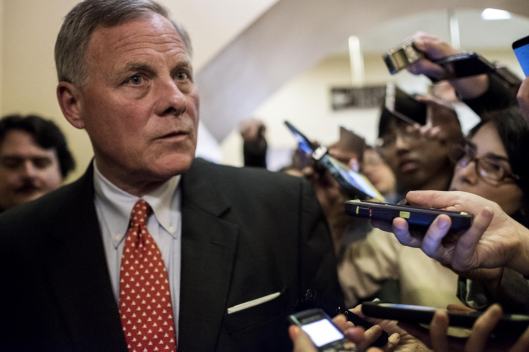
This piece in the Washington Post rexamines the state of the Senate Intelligence Commitee’s investigation of Russian collusion in light of the Senate Judiciary Committee’s upcoming meeting with Trump Jr. Senate Intelligence Committee Chairman Richard Burr believes that without new information, their report could be finished by the end of the year.

burr.jpgMelina Mara/The Washington Post

Johnson-Trump Parallels

Tags

, , ,

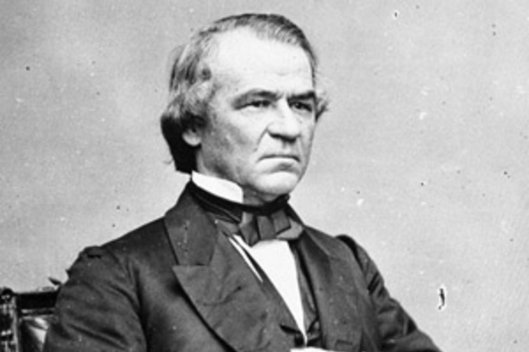
This article, referenced in yesterday’s post, from the Journal of the Civial War Era, examines the parellels between President Trump and President Johnson, with a special consideration for abuse of pardon power.

download.jpg

People are Talking Arpaio

Tags

, , , , ,

News sources and blogs alike have been discussing Prof. Frank Bowman’s analysis of President Trump’s pardon of Arpaio, which can be found both here and on slate.com. Notably, the New York Times highlighted Professor Bowman and the work he has done on impeachableoffenses.net for its centrist perspective. Additionally, Professor Bowman’s argument was referenced and summarized in this article published by the Independent. Many others cited the argument as well including Metro, the Journal of the Civil War Era, NJ Today, Outside the Beltway, and BillMoyers.com. We here on impeachableoffenses.net look forward to more lively commentary in the near future!

636274475421162300-PNILaVoz-08-01-2014-LaVoz-1-A004--2014-07-31-IMG-VOZ0801-Arpaio.jpg-1-1-K08487AU-L460306135-IMG-VOZ0801-Arpai.jpgDavid Wallace/The Republic

Dean Chemerinsky, separation of powers, and the Arpaio pardon

Tags

, , , , , ,

I am grateful to reader Chris Tucher for drawing my attention to an article in the Daily Journal in which Dean Erwin Chemerinsky of UC Berkeley Law School contends that the Arpaio pardon might be invalid.  He argues that, by pardoning Arpaio for criminal contempt of court, the president interfered with the ability of courts to enforce their own judgments and thus undercut a fundamental component of judicial authority, which in turn violates the basic constitutional principle of separation of powers.

[The Daily Journal article appears to be behind a paywall.  But you can hear Chemerinsky make his argument on a podcast at this link https://soundcloud.com/thenationmagazine/erwin-chemerinsky-why-trumps-pardon-of-joe-arpaio-is-outrageous?platform=hootsuite ]

Although Dean Chemerinsky couches this as a separation of powers issue, it is essentially the same argument made by Professor Martin Redish, who contends that the Arpaio pardon violates the due process clause of the 5th Amendment.  I’ve responded to Professor Redish and won’t repeat my argument here.  I don’t think Dean Chemerinsky, prodigious scholar though he is, adds much to the debate.  Indeed, his argument seems to me weaker than Professor Redish’s.

An argument from separation of powers is an argument about the fundamental distribution of authority between the co-equal branches, a distribution set by the original constitution in 1787.  It is profoundly implausible to suggest that the framers did not understand that conferring upon the president the power to pardon all federal offenses except impeachments had the effect of limiting judicial authority in some cases.  That, after all, is the point of pardons.  It is also implausible to suggest that the framers, many of whom were eminent lawyers, did not understand that among the things a president might pardon would be criminal contempts of court.

Moreover, the constitutional scheme is not one of strict separation of the powers and functions of the three branches, but is instead one in which the powers characteristic in each branch are often limited by a corresponding grant of authority to another.  In short, the “checks and balances” of high school civics. Presidential pardons are, by design, a check upon the occasional excesses and misjudgments of the judiciary.  There is no indication that the framers thought that judges were less prone to error in finding people in contempt than in rendering judgments for other crimes, or that judges should be given a veto of presidential pardon authority in the special case of criminal contempts. (Nor is there any indication that conditions have changed since 1787 in any way that would oblige us to revisit the framers’ original calculus on this point.)

Professor Redish, at least, recognizes the difficulty in arguing that the men of Philadelphia did not understand, and intend, what they themselves wrote.  He attempts to circumvent it by arguing that the Arpaio pardon violates, not the original constitution of 1787, but the later-enacted due process clause of the 5th Amendment.  As I explain in my previous post, I respectfully disagree with this position, but it at least avoids the absurdity of suggesting that the framers didn’t understand how pardons work, what they can be used for, and how the president’s pardon power fit into their own scheme of checks and balances.  Dean Chemerinsky’s position runs aground on that absurdity.

I am nonetheless grateful to Dean Chemerinsky for drawing attention to a Supreme Court case — Ex parte Grossman, 267 U.S. 87 (1925) — that settles the question.  In Grossman, the U.S. Supreme Court flatly and unequivocally holds that a president may pardon a criminal contempt and doing so does not violate separation of powers.  I am somewhat chagrined that I hadn’t seen the case before, but my mild embarrassment is outweighed by the fact that it upholds the position I’ve been arguing in favor of for days.

Dean Chemerinsky’s response to Grossman is simply to say that he doesn’t agree with it.  Despite his eminence, that’s not enough to overcome the plain pardon language of Article II, Section 2, and the unequivocal holding of the U.S. Supreme Court.

Of course, the fact that Mr. Trump had the constitutional power to issue pardons of criminal contempts means only that that the Arpaio pardon cannot be judicially overturned.  It says nothing at all about whether the Arpaio pardon can properly form the basis of an impeachment proceeding.  As I’ve said repeatedly, the primary purpose of impeachment is removal of officials who misuse the powers the constitution conferred upon them.  And abuse of the pardon power, as James Madison himself recognized, is an impeachable offense.

A due process challenge (almost certainly fruitless) to the Arpaio pardon

Tags

, , , , , , , ,

As reported by Jennifer Rubin at the Washington Post, a group called Protect Democracy has argued in a letter to the Justice Department that the pardon of former Arizona sheriff Joe Arpaio is legally invalid as a violation of the due process clause. They adopt an argument first made in the New York Times by Professor Martin Redish. The group contends that:

While the Constitution’s pardon power is broad, it is not unlimited. Like all provisions of the original Constitution of 1787, it is limited by later-enacted amendments, starting with the Bill of Rights. For example, were a president to announce that he planned to pardon all white defendants convicted of a certain crime but not all black defendants, that would conflict with the Fourteenth Amendment’s Equal Protection Clause.

Similarly, issuance of a pardon that violates the Fifth Amendment’s Due Process Clause is also suspect. Under the Due Process Clause, no one in the United States (citizen or otherwise) may “be deprived of life, liberty, or property, without due process of law.” But for due process and judicial review to function, courts must be able to restrain government officials. Due process requires that, when a government official is found by a court to be violating individuals’ constitutional rights, the court can issue effective relief (such as an injunction) ordering the official to cease this unconstitutional conduct. And for an injunction to be effective, there must be a penalty for violation of the injunction—principally, contempt of court.

I’m sympathetic to the sentiment.  Indeed, it is precisely because the Arpaio pardon is so corrosive of the constitutional order that I’ve argued that it is an impeachable offense. Nonetheless, trying to invalidate the pardon itself is a non-starter.

Lots of constitutional language is vague or necessarily subject to interpretation in light of unforeseeable events.  The pardon clause is not of that sort. Article II, Section 2 says that the president, “shall have power to grant reprieves and pardons for offenses against the United States, except in cases of impeachment.”  That is as plain and unequivocal as any sentence the framers ever wrote. The framers could have written exceptions or qualifications into the constitution’s absolute grant of presidential authority.  They could have made pardons subject to review by the Supreme Court.  Or to override by Congress.  Or something else. They didn’t.  In short, the constitution made the president’s pardon power absolute, with one single exception – matters subject to impeachment.

The Protect Democracy authors contend that the plain scope of the pardon power in the original constitution is somehow limited by the later-enacted provisions of the Bill of Rights, specifically the 5th Amendment’s guarantee of due of process of law.  But just because the Bill of Rights was enacted after the original constitution doesn’t make it a warrant for rewriting any portion of the original constitution that one now finds inconvenient.

Let’s consider the argument for a due process limitation on presidential pardon power:

To begin, because the constitution is America’s fundamental law, in constitutional disputes of this sort, the contestants are necessarily confined to certain forms of argument.

First, one can argue from the text, particularly where the text is ambigous or open-ended.  (Textualism.) But the Article II text defining the presidents’s pardon power is clear and unequivocal.  And the due process clause says nothing whatever about pardons.

Second, one can argue from a combination of textual and extra-textual sources that the framers intended something not obvious from the text.  (Originalism.)  Here the argument would have to be that the authors or ratifiers of the 5th Amendment due process clause intended it to modify the unequivocal pardon language of Article II. There is no evidence whatever for this position.  Indeed, there is not the faintest hint of a suggestion that anyone in the founding generation ever even thought about the pardon power in connection with the due process clause.

Third, one can argue that, while a particular problem now at issue was not contemplated by the framers because technology or physical conditions or social arrangements have changed in ways they could not have anticipated, had they been able to anticipate modern conditions, they would have wanted the constitutional language to cover the problem. (A more elastic originalism.) A classic example is the judicial expansion of the 4th Amendment, which speaks of searching “houses, papers and effects,” to cover electronic communications 18th century politicians could not have envisioned.  But in this case, Mr. Trump’s pardon of Arpaio is hardly something the framers could not have anticipated. Many of them were practicing lawyers.  They understood courts, injunctions, and the power of courts to enforce their own orders. Had they wanted to carve out an exception to the pardon power for criminal contempt convictions, they could plainly have done so in Article II. They didn’t.  And there is no hint that those who enacted the due process clause only a few years later (most of them the same people) had any other view of the question.

Moreover, and this seems to me key, the framers did anticipate that a president might abuse the pardon power, and they provided a remedy: impeachment.  As I discussed in my last post, no less a figure than James Madison made that express point at the Virginia ratifying convention.

Fourth, one can disavow any interest in the intentions of the framers and treat the language of the constitution as a mere framework for an evolving set of rules, norms, and governing principles.  But even the most elastic living constitutionalist cannot (or at least should not) completely ignore what the constitution itself says.  The language of Article II, Section 2 is unequivocal.  To use the vague concept of “due process” to negate the plain meaning of another section of the constitution requires a far more powerful argument than the good folks at Protect Democracy muster.

For example, they assert that if a president were to announce that “he planned to pardon all white defendants convicted of a certain crime but not all black defendants, that would conflict with the Fourteenth Amendment’s Equal Protection Clause.”  This is, frankly, remarkably sloppy stuff.  In the first place, merely announcing an intention to behave in a racially discriminatory way does not violate the 14th Amendment.  Moreover, even if the president were to act on his stated intention and begin issuing pardons only to white defendants, that might violate the spirit of the equal protection clause, but that would not invalidate the white pardons. Nor is it plausible to suggest that a court would order the president to start issuing pardons to similarly situated black persons.

Or consider an analogous hypothetical – assume a president announced that he intended to nominate only white cabinet members, and then did so.  Would that be outrageous?  Sure.  Would that violate the equal protection clause?  No.  Because the president’s power of nomination is plenary and not governed by legal rules.  And even if one could construct some contorted argument that the 14th Amendment was violated, what would be the remedy?  Does anyone seriously imagine that courts could order the president to withdraw nominations of the white cabinet officers, or order the president to substitute black ones?

In each of these hypotheticals, the president would be exercising, however deplorably, an undoubted constitutional power.  And in each case, there would be no constitutional mechanism to reverse the exercise of that power in the particular case.  There would be other constitutional remedies — but they are political and rest primarily with the public and Congress and not the courts.  In the second case, Congress could refuse to confirm all or some of an avowedly racist slate of nominees.  In both cases, if the president were in his first term, an outraged public could refuse to re-elect him.  Or Congress could impeach him immediately.

A due process based judicial review of presidential pardons would have to be consistent with the checks-and-balances structure written into the constitution we have. It is not. The pardon power was designed in large measure as an executive check on judicial excesses. It would hardly make sense to give the judiciary a check on that check.  And I can’t imagine how a court could fashion an appropriate standard of review of the pardon decision that wouldn’t give courts the final word on a question expressly, unqualifiedly, reserved to the president.

The real meat of Protect Democracy’s argument is that the due process clause must be read to provide a judicial remedy for every improper executive action.  That is not so. The constitution gives the judiciary the power to effect case-specific remedies for some executive improprieties, but not all.  Sometimes the constitution provides no remedy except political ones.

The Arpaio pardon is scandalous.  But it will stand.  Judges have no power to overturn it. Nonetheless, Congress has the power to remove — to impeach — the man who awarded it.


James Madison on abuse of the pardon power as an impeachable offense

Tags

, , , ,

In several recent posts, I have made and amplified on the case that Mr. Trump’s pardon of former sheriff Joe Arpaio is an impeachable offense.  Some commenters here and on other forums stoutly resist the idea that any exercise of the pardon power can be an impeachable offense.  They insist that, because Article II, Section 2 of the constitution states that the president “shall have power to grant reprieves and pardons for offenses against the United States, except in cases of impeachment,” then this textual grant of the pardon power makes the president immune from impeachment for its misuse.

In a previous post, I explained why, as a matter of constitutional logic, this position is wrong.  Put simply, the impeachment clauses were inserted into the constitution precisely in order to provide a constitutional remedy for misuse of constitutionally granted powers.  Merely because an official act is within the scope of the official’s constitutional power does not deprive the nation of a remedy for misuse of that power. And sometimes the remedy for misuse of the conceded power is not reversal of the particular official act, but removal of the official – impeachment. For example, if a judge dismisses criminal charges against a defendant after jeopardy has attached, even if he does so groundlessly, whimsically, even insanely, the double jeopardy clause prohibits retrying the defendant. There is no remedy for outraged justice in the particular case. But the judge can plainly be impeached for this behavior. Presidential pardons are no different. Once issued, they cannot be negated. But if the pardon offends constitutional values, the president can be impeached for issuing it.

I am hoping that folks unpersuaded by this logic, folks who think that, as several commenters have put it with varying degrees of politeness, that I’m just “making stuff up,” might be persuaded by James Madison, the principal architect of the constitution’s scheme of inter-branch checks and balances.

During the Virginia ratifying convention for the federal constitution, George Mason expressed concern about the breadth of the pardon clause and indeed about the very idea of giving pardon power to the president.  In language some may find eerily prescient of the current moment, he said:

Now, I conceive that the President ought not to have the power of pardoning, because he may frequently pardon crimes which were advised by himself. It may happen, at some future day, that he will establish a monarchy, and destroy the republic. If he has the power of granting pardons before indictment, or conviction, may he not stop inquiry and prevent detection?

James Madison responded:

There is one security in this case [a misuse of the pardon power by the president] to which gentlemen may not have adverted: if the President be connected, in any suspicious manner, with any person, and there be grounds to believe he will shelter him, the House of Representatives can impeach him; they can remove him if found guilty; they can suspend him when suspected, and the power will devolve on the Vice-President.

In short, Madison said that the remedy for presidential misuse of the pardon power was impeachment.  I stand with Madison.

For those interested, the exchange can be found at http://teachingamericanhistory.org/ratification/elliot/vol3/june18/

Comparing Apples (Gala) with Apples (Fuji): The Arpaio & Marc Rich Pardons

Tags

, , ,

By Frank Bowman

In a recent “Impeachable Offenses” post (also published on Slate) I suggested that Mr. Trump’s pardon of former Sheriff Arpaio constitutes an impeachable offense.  Several commenters on both Slate and the blog have said, in effect, “Well what about President Clinton’s pardon of Marc Rich, huh?”  The apparent import of these rhetorical questions was that, since I am a Democrat, I must think that the Rich pardon was acceptable presidential behavior and therefore, since I believe the Arpaio pardon was not, I’m a loathsome hypocrite.

Au contraire. As it happens, I have always viewed the Rich pardon as a contemptible abuse of the pardon power. For those who don’t remember, on the last day of his presidency, Bill Clinton pardoned Marc Rich, an indicted, fugitive swindler. There was no plausible case for the pardon, either on legal or humanitarian grounds.  It was issued over the strong objections of the U.S. Attorney’s Office that indicted Rich and the U.S. Pardon Attorney.  Moreover, Rich had arranged for very large contributions to be made to the Democratic Party and the Clintons in particular in the months and years before the pardon was issued.  These included $450,000 to the Clinton Library and $10,000 to the Clinton legal defense fund.  Thus, the pardon was both objectively unjustifiable and arguably overtly corrupt.  It was the sordid capstone to a presidency that, however politically adroit, was irremediably stained by Bill Clinton’s degraded personal morals.  Indeed, it was precisely the kind of sleazy maneuver that lent credence to the often overhyped accusations against both Clintons and left an indelible taint on the Clinton “brand” – a taint that more than any other factor defeated Hillary Clinton and spawned the Donald Trump presidency.

Not only did I disapprove of the Rich pardon when it was issued, but I believed then that it might be an impeachable offense.  I still have in a file drawer the beginnings of an article I started in January 2001 suggesting that Clinton be impeached a second time for the Rich pardon. My hypothesis was that, even though Clinton had vacated the presidency, Congress might yet impeach him, convict him, and impose the penalty of permanent disqualification from holding any office of honor or profit under the United States.  After cooling down a bit, I concluded that there were serious jurisdictional barriers to such an argument, and that in any event, it was, in the real world, a frivolous proposal.  So I turned to other more worthwhile projects and the draft is still in the drawer.

But I can at least deny any imputation of partisan inconsistency.  I believed then and believe now that sufficiently egregious abuses of the pardon power are impeachable.

A comparison of the two events is instructive.  If one makes the reasonable causal connection between the pardon and contributions from Rich to the Clintons, then the pardon amounted to an exercise of presidential power in response to poorly concealed bribes.  And bribery, along with treason, is one of the two constitutionally specified impeachable offenses.  The Arpaio pardon did not result from a monetary bribe – though it is transparently a reward to a political ally.  But it is in many respects far more disturbing precisely because it is not merely an instance of personal venality, moral blindness, or even partisan calculation, but instead amounts to an attack on constitutional protections of civil liberties and on the power of courts to enforce the laws of the United States.

And, as noted in my last post, if Arpaio proves to be only the first in a series of pardons of Trump allies who fall afoul of the law, the case for impeachment should become irresistible, at least for anyone who believes in preserving the constitutional order.

Representative Requests Mental Exam

Tags

, , ,

Click here to read about Rep. Zoe Lofgren, a House Democrat, who in pursuit of the 25th Amendment is requesting that President Trump’s cabinet members give him a mental examination to see if he is capable of handling the responsibilites of his position.

920x920.jpgSusan Walsh/Associated Press


More on the Arpaio pardon

Tags

, ,

A version of my post on the pardon of Sheriff Arpaio as an impeachable offense appeared on Slate yesterday, and drew a wide array of comments.  Leaving to one side the contingent that was just calling names, as a whole the comments raise some issues that merit additional comment.

  1. A great many commenters raised the obvious points that impeachment of a president is very difficult and that, regardless of the facts, impeachment of this president on any ground is vanishingly unlikely so long as Republicans hold majorities in both houses of congress.  I agree, and said so in the Slate article and many times on this blog.
  2. A fair number of, obviously conservative, commenters sneered that impeachment of Mr. Trump is nothing more than a delusional, and even subversive, fantasy indulged by defeated liberals.  Another group of, apparently liberal, commenters said that it is a mistake for Trump opponents to focus unduly on impeachment as the solution to the frightening reality of the Trump presidency.  They note that impeachment is deeply unlikely and in any case would only produce a Pence presidency that would not remedy the policy problems caused by total Republican control of both the White House and Congress.  Democrats and politically aware independents, they say, should focus on organizing locally to win local and state elections and congressional seats in 2018.  I agree that impeachment is unlikely — though not, I think, impossible.  And I agree that the primary focus of those opposed to Mr. Trump personally and to the policies of the current Republican Party should be on elections, not impeachment.
  3. Nonetheless, although I am a Democrat and I’d rather not have Mike Pence as president, my disagreements with him and his Republican compatriots fit within the frame of normal political differences that will work themselves out in the normal way over a series of electoral cycles.  Trump the man presents unique threats to the Republic, and indeed to the peace and stability of the planet, that extend far beyond my disagreements with Republican policy. And that extraordinary, indeed quite unprecedented, threat to the country merits consideration of the extraordinary remedy of impeachment.
  4. Several commenters said, in effect, that if impeachment must be discussed, the discussion should avoid speculative and improbable theories for its application.  I agree.  And I would agree that impeachment of Mr. Trump based solely on his pardon of former sheriff Arpaio is in the highest degree unlikely.  Heck, it ain’t gonna happen.  But that does not change my constitutional analysis of Trump’s behavior in this instance, which I believe to be sound.  And I think it important as a practical matter to lay out the analysis now – to get serious people thinking about the connection between improper pardons and impeachment.  Because, as others have already observed, the Arpaio pardon may well be a harbinger of later Trump pardons of persons implicated in the Russia investigation or other investigations that threaten him or his family.  As deeply improbable as impeachment for the Arpaio pardon alone may be, the country should begin thinking seriously about impeachment if this first patent abuse of authority becomes a pattern.
  5. Despite my earnest efforts, a number of commenters simply rejected the notion that a president can be impeached for the exercise of a power conferred on him by the constitution.  In effect, they say, “The constitution grants presidents the power to pardon anyone for anything.  So no pardon can possibly be an impeachable offense.” They’re wrong.  Let me amplify the point.  Merely because a president is given a power does not mean that any use of it is permissible.  As I wrote in the article, the primary reason the founders wrote a power of impeachment into the constitution was precisely to permit removal of a president who misuses his constitutionally granted authority.  For example, Article II, Section 2, of the constitution makes the president the “commander in chief of the Army and Navy of the United States.” That grant does not make the American armed forces the president’s personal Praetorian Guard.  If a president were to order the armed forces to bomb the headquarters of the opposing political party, or invade an ally which had offended the president personally, or kill prisoners in violation of international law, or refuse to defend the United States against a foreign invasion, or refuse to allow US forces to fulfill our treaty obligations to NATO countries, or even allow the armed forces to degrade to a point where their ability to defend the United States and its allies was in question, he would plainly be impeachable for a misuse of a constitutionally conferred power.  The president’s pardon power is no different.
  6. I am entirely in sympathy with those who urge caution in talking about impeachment.  Indeed, I have written at length about that very point on this blog.  But caution does not equate to a craven refusal to contemplate a constitutional remedy for a genuine constitutional crisis.  This blog will continue to consider that remedy — cautiously, yes, but with a vigor inspired by the reality of our national circumstances.