Tags
Trump Jr. and Russian Collusion
12 Wednesday Jul 2017
Posted in Articles, Uncategorized
12 Wednesday Jul 2017
Posted in Articles, Uncategorized
11 Tuesday Jul 2017
Posted in Uncategorized
Tags
Buell, Kushner, Manafort, obstruction, Obstruction of Justice, Russian lawyer meeting, Trump Jr.
I have been having an ongoing debate with Professor Sam Buell, Professor Alan Dershowitz, and others about whether, based on currently available information, Mr. Trump may have violated federal obstruction of justice statutes in connection with the Russia collusion investigation and the firing of FBI Director James Comey. The technical point in contention has been the circumstances under which a president who delays or halts a federal investigation can be said to have acted with the required mental state of “corruptly.”
I have maintained that, given the president’s unique position at the apex of the executive branch, corrupt intent could only be proven if it were shown that, in acting to slow or stop an investigation, the president was not acting in good faith to promote the public interest, but was instead protecting his private interests. Such proof could include evidence that he knew or suspected that the investigation might implicate himself, his family, or close aides in wrongdoing. I expressed skepticism that the then-publicly-available facts were sufficient to establish that state of mind for Mr. Trump.
The recent revelations about the June 16, 2016, meeting between Donald Trump, Jr., Jared Kushner, Paul Manafort, and a Russian lawyer they were told was representing the Russian government and was offering dirt on Hillary Clinton may change the calculus. As I discussed in my last post, that meeting might indeed prove to be technically criminal. It surely came close enough to a variety of legal red lines that, assuming Trump either knew of it in advance or came to know of it before he began to meddle with Mr. Comey and the Russian investigation, he would certainly have been worried that the Russian investigation would reveal the meeting and produce legal exposure for his family, his campaign staff, and possibly himself. That sort of thing would bridge the gap that has, so far, separated my view of the state of the evidence on obstruction from that of Professor Buell.
11 Tuesday Jul 2017
Posted in Uncategorized
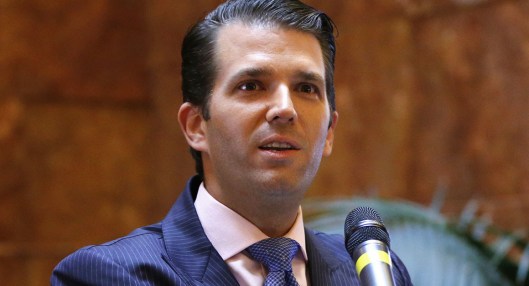
In recent days, the media has been full of reports about a meeting on June 16, 2016, shortly after Mr. Trump clinched the Republican presidential nomination, between Donald Trump, Jr., Jared Kushner, Paul Manafort (Trump’s then-campaign manager) and a Russian lawyer who was allegedly offering dirt on Hillary Clinton. New details emerged today in a New York Times story exposing emails that seem to show that Trump Jr. was told that the meeting would be with a “Russian government attorney,” and that “This is obviously very high level and sensitive information but is part of Russia and its government’s support for Mr. Trump.”
As with many of the revelations about Trump campaign connections with Russia, the story is disturbing, at a minimum, as yet another illustration of the combination of naivete and B-movie skulduggery to which Mr. Trump’s family and retainers are so distressingly prone. But the newly disclosed email text threatens to take the matter to another level insofar as it seems to prove both that Trump’s children and campaign manager were told, expressly, that the Russian government was trying to help Trump and that they were willing to personally involve themselves in those efforts.
For purposes of this blog, the question is whether the meeting constitutes a criminal offense or any part of a case for impeachment of Mr. Trump.
Media reports on the meeting have spawned a swarm of commentary on its possible legal significance. I will focus here on two points: (1) whether the meeting might constitute a freestanding violation of 18 USC 371, the federal conspiracy statute, and if so, whether Mr. Trump himself would be implicated in such a case; and (2) whether the meeting might violate federal election law provisions barring soliciting something of value from a foreign entity. In my next post I will address briefly how this meeting might impact the ongoing discussion I have been having with Professor Buell, Professor Dershowitz, and others about whether Mr. Trump could, on present evidence, be guilty of obstruction of justice.
Conspiracy – 18 USC 371
Section 371 of Title 18 of the US Code is the general federal conspiracy statute. I say “general” because lots of other federal statutes have specific provisions making it a crime to conspire to violate them, but Section 371 is the omnibus federal conspiracy statute. It reads:
“If two or more persons conspire either to commit any offense against the United States, or to defraud the United States, or any agency thereof in any manner or for any purpose, and one or more of such persons do any act to effect the object of the conspiracy, each shall be fined under this title or imprisoned not more than five years, or both.”
The statute has two basic parts. The first, which prohibits conspiring “to commit any offense against the United States,” means that it is a felony to conspire to commit any other felony in the federal criminal code. For this part of the statute to come into play, a prosecutor must specify some other crime defined in some other federal statute that the conspirators agreed to commit.
The second part of Section 371, which prohibits conspiring “to defraud the United States, or any agency thereof in any manner or for any purpose” is of immediate interest because it makes it a federal felony to conspire to “defraud” the United States in ways that might not be criminal if done by a single person. “Neither the conspiracy’s goal, nor the means to achieve it needs to be independently illegal.” United States v. Caldwell, 989 F.2d 1056, 1059 (9th Cir. 1993).
In a thorough and extremely informative post on his blog, Sidebars, Professor Randall Eliason explains the nuances of Section 371 and argues that:
“Running a free and fair Presidential election is a core lawful function of the federal government. Any agreement to secretly and dishonestly attempt to interfere with a federal election would fall squarely within section 371’s prohibition on conspiracies to defraud the United States.”
He has also argued in a recent Washington Post op-ed that the Trump Jr. – Russian lawyer meeting at the least lays critical groundwork for a charge that some subset of Trump campaign officials violated the “defraud the United States” clause of Section 371.
My primary reservation about proving a Section 371 conspiracy to defraud the United States in relation to the Russian lawyer meeting is that such a conspiracy generally requires proof of a traditional element of any fraud, which is false statement or dishonesty. As the Supreme Court held in Hammerschmidt v. United States, 265 U.S. 182, 188 (1924) :
“To conspire to defraud the United States means primarily to cheat the Government out of property or money, but it also means to interfere with or obstruct one of its lawful governmental functions by deceit, craft or trickery, or at least by means that are dishonest. It is not necessary that the Government shall be subjected to property or pecuniary loss by the fraud, but only that its legitimate official action and purpose shall be defeated by misrepresentation, chicane or the overreaching of those charged with carrying out the governmental intention.”
I am not sure that a 371 “defraud the United States” offense would be committed if a political campaign openly sought unfavorable, but true, information about an opponent from a foreign government and, once the dirt was obtained, promulgated it without disguising its source. But that is not what happened here. Throughout the campaign, Mr. Trump and all his surrogates vigorously denied any contact or collusion with Russian representatives. The existence of such contacts has been revealed by journalists and other outsiders. If it could be shown that the Russian lawyer meeting was part of a pattern of conduct in which the Trump campaign solicited or encouraged the release by Russians or their surrogates of negative information about Secretary Clinton while keeping the campaign’s role secret, that in itself could satisfy the dishonesty element of a 371 “defraud the United States” conspiracy.
Moreover, if the activities of the Trump campaign, including but not limited to the Russian lawyer meeting, could be shown to violate another criminal statute, then the first clause of Section 371 comes back into play.
The newly revealed emails
The latest New York Times story certainly strengthens the case for a Section 371 conspiracy. It is one thing for a political campaign to seek negative information on an opponent. That sort of thing feels unseemly, but Trump Jr. is right that it is standard practice. Nonetheless, not all sources and means of securing such information are either normal or legal. For example, a political campaign could not burglarize the opposition’s headquarters to obtain such information (see, Nixon, Richard) nor extort it with threats. For an American presidential campaign to collaborate consciously and actively with a traditionally hostile foreign power to obtain negative information about an opponent is certainly a violation of every historical norm and could, without partisan exaggeration, be categorized as an attempt to subvert the American electoral process and thus to “defraud the United States.”
Donald Trump Jr. has claimed that the meeting produced nothing of substance and that it was terminated quickly. But for purposes of proving a Section 371 conspiracy, that would not matter. A conspiracy need not attain its illegal object to be prosecutable. It is sufficient that the conspirators agreed to achieve an illegal end and commit one overt act in furtherance of that object.
That said, the subject of this blog is presidential impeachment, so the question for our purposes is whether the Russian lawyer meeting exposes President Donald Trump, Sr., to criminal liability, and thus makes the commission of an impeachable offense more likely. The short answer is a cautious “maybe.” Even if one accepts that the meeting was part of a Section 371 conspiracy prosecutable against Donald Trump, Jr., Jared Kushner, and Paul Manafort, the essence of a criminal conspiracy is agreement between the conspirators, meaning that there must be an express or implied agreement between them to achieve the conspiratorial object.
Donald Jr. has claimed that his father “knew nothing of the meeting.” Even if true, this statement could mean any of a number of things. It could mean that Mr. Trump did not know of the Russian lawyer meeting in advance of its occurrence. It could mean that, while he did not know of it in advance, he was told about it later in the campaign season. It could mean that he never heard about it until after the election was over, or even that he first heard of it when it was disclosed in the media during the last week.
I confess to thinking it highly implausible that Mr. Trump did not know of this meeting either before or shortly after it occurred. His fascination with scurrilous gossip about his perceived enemies has been a well-known feature of his character for decades. And the idea that his son, his son-in-law, and his campaign manager would all take a meeting with a possible foreign source of dirt on Hillary Clinton and not tell him about it strains credulity.
That said, even knowledge of the meeting does not prove participation in a criminal conspiracy. More will need to be known before concluding either that the actual participants committed any crime or that Mr. Trump was part of a conspiracy to commit that crime. All we can say now is that the Russian lawyer meeting is likely to be of increasing interest as further revelations occur.
Federal Election Law Violations
A number of commentators have argued that the Russian lawyer meeting is a violation of federal election law. I do not know enough about that field to have an immediate opinion on the question (though I will be reading up). But if this view is correct, it would strengthen the case for a 371 conspiracy charge against the meeting’s participants and perhaps others by providing a separate crime that would constitute the “offense” necessary for prosecution under the first prong of Section 371.
10 Monday Jul 2017
Posted in Uncategorized
Tags
1505, Buell, Hemel, obstruction, Obstruction of Justice, posner
Several days ago, I commented on Professor Sam Buell’s excellent article in Slate on whether, on the publicly available evidence, Mr. Trump can be said to have committed the crime of obstruction of justice. I suggested that Professor Buell was underappreciating the difficulties of proving the required mental state of “corruptly” when the defendant is the President of the United States. Professor Buell was kind enough to respond briefly to my argument, saying:
Frank, I think we are in agreement about where the one issue of substance lies, as I concede in my Slate piece. That’s a good sign. (They cut my piece by 1500 words by the way, and I didn’t use the term “slam dunk,” they did in the headline.) But perhaps neither of us is quite on the mark still. First, it just isn’t legally relevant to obstruction liability whether the underlying crime is there or whether the violator knows that. Second, your quite deft argument still suffers from the proves too much problem of the Dershowitz argument, with regard to what it suggests a president could legally do. Anything could be rationalized as in the national interest and rationalization isn’t a way of making mens rea go away. Otherwise a CEO could get away with accounting fraud on the argument that it’s better for the shareholders in the long run if the truth is suppressed. Third, I think we just disagree about whether there are enough clear facts to reach a conclusion about mens rea here. I don’t see the space for the argument you are allowing in this case, even if in another, especially given all the behavior towards Comey including clearing the room. But that’s a jury issue, which is almost always a place for reasonable minds to differ.
Best,
Sam
At the risk of beating a dead horse, I continue to think that Professor Buell’s view fails to account for the special role of a president. He is right that, most of the time, the existence of an underlying crime or the violator’s knowledge of it won’t be relevant to proving that the violator acted corruptly in impeding an investigation into a suspected crime. The evils against which the obstruction statutes are directed are the purposeful interruption or frustration of legal processes either (a) by unauthorized persons, i.e., persons not legally empowered to make decisions about the course of the legal process, or (b) less commonly, by persons with legal authority to affect the legal process who employ that power corruptly
Professor Buell seems to be focused almost exclusively on the first category Indeed, his example of a CEO committing accounting fraud illustrates the point nicely. A CEO has no legal power to authorize accounting fraud. More importantly, he has no legal power to decide how a government investigation into possible accounting fraud will proceed. Hence, Professor Buell is entirely correct that the CEO’s judgment about whether suppressing the truth about the accounting fraud is “better for the shareholders” is irrelevant to his guilt of obstruction of justice. But that is because the value protected by obstruction statutes is not the private value of the well being of shareholders, but the public value of the integrity of the law. And the CEO has no authority to make judgments on behalf of the public. Hence, if he decides to impede a government investigation of accounting fraud, he acts corruptly regardless of whether there really is a fraud, whether he’s aware of it, or whether he thinks it would be better for shareholders if no investigation happened. His mental state is “corrupt” because he knows that he is frustrating the ordinary course of the work of the law.
But the calculus changes when the alleged violator has the undoubted power to affect the course of a legal investigation. In that case, it is insufficient to say, “X did something that caused an investigation to stall or a prosecution not to go forward.” If a patrolman on the beat decides not to follow up a lead from an informant, or a prosecutor on intake duty decides not to file a case presented by the police, or a D.A. in Florida decides not to pursue the death penalty in her jurisdiction, or the Attorney General of the United States decides not to pursue marijuana prosecutions in states that have legalized marijuana, or the President of the United States decides that the Justice Department will not pursue criminal remedies against, say, mine safety violators or environmental polluters, in every such instance the course of a criminal case is affected or perhaps frustrated entirely. It would seem quite bizarre to associate any of these choices with the crime of obstruction, but in truth, any of them might be obstruction if the official’s decision was driven by a “corrupt” motive.
The dividing line between the ordinary exercise of lawful official discretion and criminal obstruction is whether the official exercised his or her lawful power over the course of legal processes in good faith – which essentially means using his or her best judgment to promote the public interest –or instead acted corruptly, meaning with an “improper purpose,” 18 USC 1505. In the case of a public official, the calculation of whether there was improper purpose unavoidably involves a judgment about whether the official allowed calculations of private interest to distort or supplant entirely his obligation to employ in the public interest his lawful power over legal processes.
Thus, when a president – from whom all federal prosecutorial authority constitutionally flows – intervenes in the course of federal investigative processes, we cannot avoid inquiring into his private motives. Only if he acts for illegitimate reasons, which prominently include protecting himself, his family, or close aides from well-founded investigative efforts, can he be found to have acted corruptly. So, while Professor Buell is right that presidential knowledge or fear of the existence of an underlying crime is not an “element” of the crime of obstruction, in the case of a president, proof of such knowledge or fear would surely be a necessary component of proving the statutory element of corrupt intent.
As Professors Eric Posner and Daniel Hemel put it:
“We think a reasonable approach would be to say that a President commits obstruction of justice when he seeks to stop an investigation that he believes may bring to light evidence of criminal activity by himself, his family members, or his top aides, and possibly merely embarrassing information as well …. But it should be a defense if the President can show that he acted consistently with his constitutional role as the faithful executor of federal laws and as commander in chief. A President who stops an investigation because of urgent national security priorities would not be criminally liable.“
Which brings us to the facts. Professor Buell is on record as thinking there are enough facts to prove corrupt intent. I have been more cautious. Which of us is right in the abstract is really beside the point because the facts are evolving and the question of whether Mr. Trump has obstructed justice will be resolved (if it ever is) many months from now based on far more information than is now available.
And as I will discuss in my next post, some facts have emerged in the last day or so that make the obstruction case stronger under either Professor Buell’s view or mine.
10 Monday Jul 2017
Posted in Articles, Uncategorized
09 Sunday Jul 2017
Posted in Articles, Uncategorized
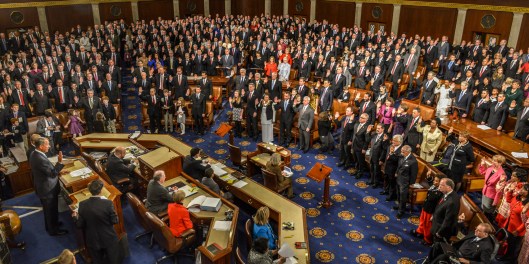
Click here to read an article which addresses the interplay of powers between the Executive and Legislative Branches.
08 Saturday Jul 2017
Posted in Articles, Uncategorized
Tags
Click here to read about Senator Blount: orchestrator of a conspiracy and the only Senator to have impeachment proceedings initiated against him.

08 Saturday Jul 2017
Posted in Uncategorized
Tags
Professor Sam Buell of Duke Law School, one of the real bright lights in American law – a former lead prosecutor in the Enron case and a truly brilliant scholar – has provided his take on the criminal obstruction of justice case against Mr. Trump in Slate. http://www.slate.com/articles/news_and_politics/jurisprudence/2017/07/the_obstruction_of_justice_case_against_trump_is_already_a_slam_dunk.html
As much as I respect Professor Buell’s judgment, I have to say I think that, quite uncharacteristically, he’s getting a bit ahead of the evidence and, perhaps, underappreciating the complications presented by a prosecution of a president.
Professor Buell argues, quite correctly, that “the president’s authority over federal law enforcement does not include the freedom to prevent investigation and prosecution of himself and his close aides.” But no serious person contends otherwise. The question at hand – the one Professor Buell undertakes to answer in Slate – is not whether any president is free to block any criminal investigation regardless of circumstance, but whether, on the known facts, this President has violated several very particular statutes – 18 USC 1503 or 18 USC 1512.
And the premise I don’t think Professor Buell takes seriously enough – at least in Slate – is that a president has the constitutional power to stop a criminal investigation, even into his own close aides, unless he does so “corruptly.” I don’t want to be unfair to Professor Buell’s argument, but at least in what he writes in Slate, he seems to assume that the mere closeness of the aide makes the act of stopping an investigation corrupt. I think, for a president, the issue is much trickier than that.
As I’ve argued at greater length previously, two things seem clear, at least to me: First, I think a president can certainly order the Justice Department not to pursue an investigation he, in good faith, deems baseless. Second, I think a president can, constitutionally and without violating federal criminal law, even choose not to prosecute a provable criminal case against a close subordinate executive branch official if the president makes the good faith judgment that the declination would be in the best interests of justice or in the national interest.
Neither proposition means, as folks like Alan Dershowitz have implied, that any such action by a president is both constitutional and legal. But they do mean that a prosecutor has to do more than show that there is some (undefined) degree of institutional or personal connection between the president and the investigative target. For example, it may well be that the Department of Justice now has solid evidence that General Flynn violated 18 USC 1001, which prohibits lying to federal agents. One can fairly argue that Trump could tell DOJ to drop that case, and do so without committing obstruction, if his motive in doing so was simply that he thought Flynn was a good public servant and that a criminal prosecution for lies would be overkill. If that’s all the gov’t could show, Trump would look bad. And maybe Congress would later decide that going too easy on your friends is impeachable. But, on those facts, would this constitute the crime of obstruction? I doubt it.
The result changes, at least for me, if Mr. Trump’s motive in trying to quash a Flynn investigation was to head off disclosures about himself or much more serious crimes involving hacking the election. Professors Eric Posner and Dan Hemel take a similar nuanced view. http://ericposner.com/when-does-the-president-commit-obstruction-of-justice-iii/.
Does all this mean that defining “corruptly” (always a ridiculously vague term) is much tougher in the case of a president? Yes. But I don’t think the difficulties presented by the president’s unique constitutional status can be dispensed with quite as easily as Professor Buell intimates in Slate.
In any case, regardless of who is right about what, to a non-lawyer, may seem a pretty fine point, neither an indictment (assuming that’s possible for a president) nor an article of impeachment against Mr. Trump based on obstruction of justice will have any traction outside the realm of theory unless more facts emerge about what Mr. Trump might have been trying to conceal by pressuring and then firing Mr. Comey.
07 Friday Jul 2017
Posted in Articles, Uncategorized
Tags
Click here to read an analysis of coup d’états as a means of restructuring the government, and their place in modern America.
 Associated Press
07 Friday Jul 2017
Posted in Articles, Uncategorized
Tags
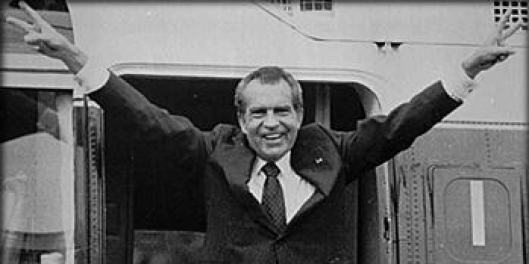
Click here to read a discussion of the historical precedent for impeachment.
 tonynetone/Flickr

 Impeachable Offenses?