• Home
  • Mission of This Site
  • Contact

Impeachable Offenses?

~ The Use & Abuse of Impeachment in the 21st Century

Impeachable Offenses?

Tag Archives: Obstruction of Justice

Prof. Eliason on Prof. Dershowitz

05 Wednesday Jul 2017

Posted by impeachableoffenses in Uncategorized

≈ 1 Comment

Tags

Dershowitz, Eliason, obstruction, Obstruction of Justice

Over the past week, I have written several times about Professor Alan Dershowitz’s arguments that Mr. Trump could not have committed the crime of obstruction of justice in relation to the Flynn-Russia investigation-Comey firing imbroglio, or the crime of extortion in connection with the Morning Joe – National Enquirer cat fight.  In each case, I concluded that Professor Dershowitz has been unduly dismissive of fair arguments from the applicable law, even though I concur with his underlying theme that there is great risk in yielding to the temptation to criminalize political disagreements for partisan ends.

Yesterday, Professor Randall Eliason of George Washington University Law School, author of the outstanding white collar crime blog, Sidebars,  was kind enough to point me to his own careful and erudite rebuttal of Professor Dershowitz’s argument against obstruction liability for Mr. Trump.  This is the link: https://sidebarsblog.com/trump-obstruction-justice-alan-dershowitz-wrong/

I commend his first rate discussion to interested readers.


Share this:

  • Click to share on X (Opens in new window) X
  • Click to share on Facebook (Opens in new window) Facebook
Like Loading...

Professor Dershowitz responds

03 Monday Jul 2017

Posted by impeachableoffenses in Uncategorized

≈ 6 Comments

Tags

Dershowitz, obstruction, Obstruction of Justice

By Frank Bowman

In a series of recent posts, I have been considering whether Mr. Trump could be criminally prosecuted or impeached for violation of various obstruction of justice statutes in connection with Mr. Trump’s meeting with and subsequent firing of FBI Director James Comey.  In one of these posts, I disagreed with Professor Alan Dershowitz’s contention that Mr. Trump could not be guilty of obstruction given the facts laid out by former Director Comey.

         Professor Dershowitz, who was my criminal law professor back in the spring of 1977 (a fact that suggests neither of us is in the first blush of youth) was kind enough to respond to my post.  He writes:

With all due respect , you’re asking the wrong question. Any overbroad statute can be stretched by clever law prof arguments to fit questionable conduct by a political enemy. The same kinds of arguments could be made for finding Hillary Clinton guilty under half a dozen statutes. That’s what law profs do in the classroom. The real question is why are so many liberal profs, who are generally opposed to this excercise when it is directed at their political allies , so anxious to give more power to prosecutors? Don’t they see the precidential [sic] dangers to civil liberties? 

Would they really be engaging in the same conceptual stretches if it were President HC who were being investigated. 

The entire exercise confirms the partisan nature of criminalizing political differences by both sides. And a point of personal privilege. Please don’t lump me with Gingrich. He would be making your argument if the investigation were against HC. I’ve been making the same argument since before you were my student.

With equal respect, I find in Professor Dershowitz’s brief comment several misconceptions, along with several important admonitions.

The misconceptions

1) My argument about possible obstruction by Mr. Trump —  In my post, I disagreed with Professor Dershowitz’s categorical assertion that Mr. Trump did not violate federal obstruction of justice statutes in relation to the Comey/Flynn/Russia investigation matter. I argued that Mr. Trump might have violated one or more of those statutes, but that proving it, particularly the mental state element of “corruptly,” would be extremely difficult.  Moreover, I argued that, given the constitutional position of a president as head of the executive branch vested with wide discretionary authority in criminal cases, such a case would, in practice, be nearly impossible to make absent proof that Mr. Trump, his family, or close associates had committed some other crime and that Mr. Trump knew or suspected that an FBI investigation would reveal it.

This does not seem to me to be a “clever law prof argument” stretching an overbroad statute “to fit questionable conduct by a political enemy.”  Rather, I hope it is a careful, cautious, hardheaded legal argument informed by statutory text, caselaw, and almost four decades of personal experience as a federal and state prosecutor, sometime defense lawyer, and (lastly) law professor.

I should add that I haven’t yet gotten to discussion of the obstacles to an obstruction prosecution posed by constitutional doubt about whether a sitting president can be criminally charged, the Justice Department’s longstanding policy position that it would not do so, and the possibility that, even if indicted, a president could pardon himself.

In short, although I forgive Professor Dershowitz for not ploughing through every nuance of my long and complex analysis, had he done so, he would have discovered that while I think his published analysis is, to be candid, too simplistic, we agree that, on the currently known facts alone, proving Mr. Trump guilty of the crime of obstruction of justice is in the highest degree unlikely.  What the future may hold is another matter.

2)  The purpose of this blog — Which brings me to the point of this blog.  Professor Dershowitz and I would surely agree that odds of Mr. Trump being impeached and removed from office are tiny.  Leaving all other considerations aside, so long as Republicans control both houses of Congress, impeachment is a liberal fantasy (unless Mr. Trump really does gun someone down on Fifth Avenue, and even that might not do it).  But midterm elections are coming and that purely political obstacle might, I repeat might, be removed.

In the meantime, impeachment talk is everywhere.  Most of it is grossly uninformed.  The lack of information and dispassionate analysis is itself dangerous.  For Mr. Trump’s most ardent foes, the information void fuels hope of a sudden resolution to a problem which is, almost certainly, only resolvable at the ballot box.  Disappointment of that hope could lead to unhealthy disillusionment, despair, and disengagement.  For Mr. Trump’s supporters and defenders, the information void fosters equally unjustifiable, and perhaps even more dangerous, fantasies of presidential immunity to the law, established political norms, and the constitution itself.

The point of this blog is to inform the conversation.  To provide laymen some legal insights.  To engage lawyers and scholars in serious conversation.  To channel impeachment debates, so far as possible, away from emotion and toward careful analysis of law, history, and the public good.

Professor Dershowitz’s valid insights

I take Professor Dershowitz’s main points to be: (1) deploying criminal processes against political actors is a dangerous business, posing real risks to democracy unless the greatest care is taken; (2) the same is true about an over-readiness to start talking impeachment as soon as an election produces a president one does not like; and (3) liberals too eager to use these tools against Mr. Trump risk looking like hypocrites.

I take all these admonitions seriously.  I am particularly conscious that my introduction to the law of impeachment came during the Clinton mess in which I, a Democrat, argued that, although President Clinton had probably committed impeachable offenses, Congress ought not impeach him.  I recognize that I have an obligation to apply the same degree of rigor and skepticism to claims that Mr. Trump – of whose personality, character, and policies I deeply disapprove — should be impeached.  Whether I can achieve that level of intellectual self-discipline remains to be seen.  But I promise to try.

That having been said, I find Professor Dershowitz’s almost contemptuous dismissal of the prospect that Mr. Trump may have committed obstruction of justice or other criminal – and thus potentially impeachable – offenses a little too stagey, a bit too much in his character of the contrarian curmudgeon, to be convincing.

It is all very well to be cautious about criminalizing politics or reflexively crying “impeachment” as a remedy for electoral failure.  Those are appropriate cautions in ordinary times, or anything approaching them.  But, even the most objective, equable, tolerant observer must, if candid, recognize that Mr. Trump represents an entirely new, and possibly dangerous, phenomenon in American history.   It is a phenomenon that may require recourse to extraordinary measures.  This blog is devoted to a careful consideration of that eventuality.


Share this:

  • Click to share on X (Opens in new window) X
  • Click to share on Facebook (Opens in new window) Facebook
Like Loading...

OBSTRUCTION OF JUSTICE: PART 3A – More on Posner & Hemel’s view of “corruptly”

03 Monday Jul 2017

Posted by impeachableoffenses in Uncategorized

≈ 3 Comments

Tags

corruptly, Eric Posner, Hemel, obstruction, Obstruction of Justice

In yesterday’s post, I discussed the meaning of “corruptly, the required mental state for all the obstruction of justice statutes likely to be relevant to Mr. Trump’s contacts with and subsequent firing of FBI Director James Comey.  In that post, I analyzed a June 15, 2017, New York Times article by Professors Eric Posner and Daniel Hemel in which they seemed to suggest that Mr. Trump could be found to have acted corruptly if he violated standards of conduct promulgated by the Justice Department for its prosecutors.  Those standards bar a federal prosecutor from acting in any investigation or prosecution of a person or entity with which the prosecutor has a “personal or political relationship.”

I argued that this standard was plainly inappropriate for a president inasmuch as a president has personal or political relationships with all appointed executive branch officials (and many career ones), every member of congress, many high-ranking state officials, and a plethora of private political actors.  Applying this standard to a president would be tantamount to disqualifying the president from any supervisory role in any case involving the American political and governmental class.

I went on to argue that proving corrupt intent when a president intervenes in a criminal investigation requires more than proof that the subjects of the investigation are persons with whom the president has personal or political relations.  I contended that it would require proving that “there was underlying misconduct that Trump knew or feared would be revealed….”

On reflection, even this would probably not be enough.  A president could – legitimately – conclude that some kinds of misconduct by government officials or political figures, though technically prosecutable, ought not be prosecuted because doing so would be harmful to the national interest.  Assume (however improbably) that President Roosevelt had been told in May 1944 that General George C. Marshall, then Army Chief of Staff, was suspected of embezzling from the Pentagon’s petty cash.  Marshall was integral to the war effort and to coordinating the upcoming invasion of Europe.  Roosevelt would plainly have been within his rights to quash the investigation.  Vindication of the law would and should have taken second place to winning the war.  Moreover, an action of this kind would not fall into the extra-legal category occupied by Lincoln’s suspension of habeas corpus.   It would, instead, have been a presidential use of the ordinary, well-established power of prosecutorial discretion.

For an obstruction charge against a president who meddles in a criminal investigation to stick, a special kind of “corrupt” intent would be required.  Not only must it be shown that the subject of the investigation has a “personal or political relationship” with the president, but the president’s action on behalf of the subject must be shown to be motivated by concerns unrelated to the interests of justice in the particular case or to the national interest.  Deciding exactly what concerns fall into the prohibited category is extremely difficult.

Happily, it appears that Professors Posner and Hemel have given the question careful consideration in a format not as constrained as their New York Times op-ed.  In a co-authored blog post, they write:

 “We think a reasonable approach would be to say that a President commits obstruction of justice when he seeks to stop an investigation that he believes may bring to light evidence of criminal activity by himself, his family members, or his top aides, and possibly merely embarrassing information as well …. But it should be a defense if the President can show that he acted consistently with his constitutional role as the faithful executor of federal laws and as commander in chief. A President who stops an investigation because of urgent national security priorities would not be criminally liable.“

This seems a pretty reasonable formulation to me.  With several caveats.  First, it seems to imply that only “national security” considerations would be sufficient to justify a presidential exercise of prosecutorial discretion in favor of  himself, family, or top aides. It is not immediately clear why pressing domestic policy considerations would not suffice.  Second, it is also not clear why the national security considerations would have to be “urgent” or how urgency would be determined.  At least in a criminal trial, a presidential defendant would (and I think should) be given a great deal of deference on the question of what is and is not a matter of national importance.

The bottom line for me remains that proving obstruction of justice for intervening in an investigation against any president  – even this one – would be a very tough go.  So tough in the case of the Comey-Russia imbroglio that I think no obstruction charge is remotely plausible without clear proof of a serious underlying crime committed by Mr. Trump himself, or by his close associates with his knowledge.


Share this:

  • Click to share on X (Opens in new window) X
  • Click to share on Facebook (Opens in new window) Facebook
Like Loading...

OBSTRUCTION OF JUSTICE: Part 3 – The mental state of acting “corruptly”

02 Sunday Jul 2017

Posted by impeachableoffenses in Uncategorized

≈ 7 Comments

Tags

1503, 1512, Comey, corruptly, Dershowitz, Gingrich, Hemel, obstruction, Obstruction of Justice, posner

In two previous posts, I considered the applicability of two obstruction of justice statutes, 18 United States Code, Sections 1503 and 1512, to the conduct of Donald Trump in connection with his February 14, 2017, meeting with then-FBI Director James Comey and Mr. Comey’s subsequent firing.

I concluded that the technical requirements of both statutes might be met in Mr. Trump’s case, but that a prosecution under Section 1512(b)(3) or 1512(c) would be somewhat simpler than one under Section 1503.

I left for the present post the far more difficult question of whether a prosecutor could prove the mental state common to both Sections 1503 and 1512, which is that a defendant acted “corruptly.”

“Corruptly” – The culpable mental state for obstruction of justice

Before considering “corruptly” itself, it is useful to step back and, as it were, diagram the crime of obstruction of justice. All the obstruction statutes require that the defendant act in some way that has, or reasonably might have, the effect of halting, delaying, influencing, or perverting the course of justice, broadly defined as an actual legal or congressional proceeding or the judicial or administrative preliminaries to such a proceeding. The word “corruptly” serves a critical function in all such statutes because there is an infinitude of entirely legal acts that can influence, impede, delay, or obstruct (in the sense of slowing, making more difficult, or stopping entirely) legal proceedings.

For example, a private person may refuse a government official’s request for information in the absence of a subpoena, warrant, or other proper legal process, or remind others confronted with such a government demand that they have a right to decline. A corporation sued by the government surely delays, and may frustrate altogether, the government’s case by retaining counsel and defending the action. More to the present point, government officials themselves routinely delay or halt altogether legally meritorious claims. Every day government officials decide to delay, decline, or not investigate thousands of legally sustainable civil and criminal claims. Sometimes these are individual exercises of what we call “prosecutorial discretion” in which government officials balance the equities in particular cases. Sometimes they are policy choices such as not pursuing deportation of some classes of undocumented aliens or not prosecuting federally marijuana vendors operating in states that have legalized medical or recreational use of the drug.

The dividing line between legal behavior and criminal obstruction of justice is the mental state requirement that the defendant act “corruptly.”

 What does “corruptly” mean?

“Corruptly” is used in many federal criminal statutes, but it is a famously uncertain term, about which one court wrote, “There is no hope in one opinion of providing a definitive gloss on the word ‘corruptly’; neither would it be wise to try.”   Happily, we needn’t arrive at a single, all-embracing, definition of “corruptly.” For purposes of a possible obstruction prosecution of Mr. Trump for the Comey/Russia investigation, we need settle only a few basic points.

“Corruptly” is defined in 18 U.S.C. 1515(b) to mean “acting with an improper purpose, personally or by influencing another, including making a false or misleading statement, or withholding, concealing, altering, or destroying a document or other information.” Section 1515(b) limits this definition to use of the term in 18 U.S.C. 1505 (Obstruction of proceedings before, departments, agencies, and committees). It nonetheless seems reasonable to assume that this definition has at least persuasive force when construing the same term in Sections 1503 and 1512. Still, the operative core of the 1515(b) definition is that the defendant acted “with an improper purpose,” but that doesn’t really tell us very much. So we have to look at cases.

Acts illegal in themselves vs. Acts made illegal by corrupt intent

Let’s begin with a distinction between two kinds of defendant conduct: (1) acts which are themselves either illegal or self-evidently wrongful even if not technically illegal, and (2) acts which would be perfectly legal absent a corrupt motive.

Examples of the first category would be lying to a grand jury, United States v. Carson, 560 F.3d 566, 573 (6th Cir. 2009); forging a court order in a federal civil action (an act independently prosecutable under 18 U.S.C. 505), United States v. Reich 479 F3d 179 (2d Cir. 2007); bribing someone to withhold information from a criminal investigation, United States v. Farrell, 126 F.3d 484, 488 (3d Cir. 1997); or requesting that a witness lie to a court or government agent in support of the defendant’s theory of the case, United States v. Petruk, 781 F.3d 438 (8th Cir. 2015), United States v. Khatami, 280 F.3d 907 (9th Cir. 2002). In these cases, the defendant not only acted in ways calculated to affect a proceeding, but employed methods so obviously wrong in themselves that the corrupt intention was plain.

The trickier cases are those in which the defendant’s acts are of a type not inherently wrongful, but are made criminal by his “corrupt” motive. The Supreme Court considered this sort of conduct in Arthur Andersen LLP v. United States, 544 U.S. 696 (2005), which involved the conviction of the accounting firm for destroying audit documents that might be sought by government prosecutors. The Supreme Court reversed that conviction because merely making information unavailable to the government, or persuading another to do so, is not necessarily illegal. For example, a lawyer may, entirely properly, advise a client to withhold documents under a legal privilege. Or a spouse may urge a marital partner to invoke a marital testimonial privilege. United States v. Doss, 630 F.3d 1181, 1189-90 (9th Cir. 2011). The jury instruction in Arthur Andersen was improper because it omitted any requirement that the act of withholding information be dishonest or wrongful.

As one lower court put it, the term “corruptly” is important because it requires “that jurors believe that the defendants were conscious of their wrongdoing.” United States v. Coppin, 569 Fed. Appx. 326 (5th Cir. 2014).

That said, courts routinely hold that otherwise legal conduct can amount to criminal obstruction if undertaken “corruptly,” in the sense of dishonestly, wrongfully, or immorally. United States v. Matthews, 505 F.3d 698, 704-708 (7th Cir. 2007). For example, a lawyer representing a criminal client has been found guilty of obstruction for using legal maneuvers to expose and frustrate an FBI undercover investigation into gambling activities in which both the lawyer and his client had large financial stakes. United States v. Cueto, 151 F.3d 620 (7th Cir. 1998).

Dershowitz and Gingrich are wrong (mostly)

Which brings us to the claims by Professor Dershowitz and former Speaker Gingrich that a president cannot commit obstruction of justice. Both men seemingly rest their arguments on the fact that the President of the United States has the legal power to perform the acts suspected to be criminally obstructive – requesting (or, if you prefer, obliquely ordering) the Director of the FBI to cease investigating General Flynn, and later firing that Director when the request was not honored.

The president’s power to fire the FBI Director is plain and derives from the Appointments Clause of Article II of the Constitution. The source of his power to stop a federal criminal investigation or prevent the filing of a criminal case is a little less obvious. Without getting too deep in the weeds, it flows from several related facts.

First, in the United States, prosecutors and policemen do not have a legal obligation to investigate every possible crime or to prosecute every provable crime. Instead, both policemen and prosecutors are vested with broad discretion to refrain from investigating or prosecuting criminal conduct.

Second, all of the investigative and prosecutorial officials involved in the Flynn/Russia investigation are presidential appointees who, as a constitutional matter, derive their authority from the president. Although there has arisen a well-understood norm that presidents should not directly intervene in criminal investigations or prosecutions, particularly if the case involves persons close to the president, that is a norm, not a rule.

Therefore, as a constitutional matter, it would appear that a president has the same authority as the Attorney General, the FBI Director, or any of their subordinates to decline even a legally meritorious prosecution. Likewise, if an FBI Director refuses an order, or even a strongly worded hint, that a case ought to be dropped, the president has the power to fire him because of his refusal.

Where Dershowitz and Gingrich miss the boat is in implying that the existence of such presidential power resolves the question of obstruction. Merely because a government official does an act within his technical authority does not automatically exempt him from an obstruction prosecution. A judge has the legal power to dismiss a case for insufficient evidence, but if the judge takes that step because he has been bribed or because he knows the defendant, if convicted, may implicate the judge in wrongdoing, then an exercise of legal power becomes corrupt and a crime.

If it could be proven that Mr. Trump urged, or ordered, Director Comey to discontinue the Flynn investigation and then fired the Director for non-compliance, and did so “corruptly,” then the President would be in violation of one or more of the obstruction statutes.

Did Mr. Trump act “corruptly”?

This is the heart of the matter. And, given the currently available facts, proving corrupt intent would be extraordinarily tough.

First, as Andrew McCarthy of National Review contends, Trump’s conversation with Comey about General Flynn can be characterized as nothing more than an expression of the opinion that, in light of Flynn’s long record of public service, prosecuting him would be “overkill.” If that’s all it was, prosecutors routinely decline cases on similar grounds.   And, if that’s all it was, as McCarthy observes, “A president does not corruptly impede an investigation by deciding that the equities weigh in favor of halting it. That is a decision the president gets to make.”

The problem for McCarthy’s argument is that it focuses too narrowly on the one Trump-Comey talk about Flynn and ignores substantial evidence — from Mr. Trump’s own mouth – that the Comey talk and subsequent firing had less to do with the equities of General Flynn’s individual case than with Mr. Trump’s concerns about the broader investigation into his campaign’s connections to Russian meddling in the election. Mr. Trump told Lester Holt of NBC News that he was thinking about the “Russia thing” when he fired Comey. And the day after Comey’s firing, he supposedly told Russian officials that firing Comey relieved “pressure” over Russia.

In light of these statements, the claim that Trump’s efforts to get the Flynn case dropped were merely expressions of personal compassion unconnected to the panoply of other investigations with personal ramifications for Trump and his administration are deeply unconvincing.

Nonetheless, even if it could be shown that Trump’s motive throughout his interactions with Comey was to influence or quash the Russian investigation, that might not be enough. As Randall Eliason has pointed out, obstruction only occurs if a defendant’s acts have the “natural and probable effect” of influencing a proceeding, and even firing an FBI director would not necessarily stop the broader Russia investigation.

More to the point, a presidential decision to delay or entirely quash a criminal investigation – even one that threatens damage to his own administration – is not necessarily “corrupt.” Let us for a moment take Mr. Trump at his word. He asserts that the aspect of the Russia investigation concerning collusion between his campaign and Russian operatives is baseless, a dry well, or in his preferred phrase, “fake news.” Assume (however much you may want to believe otherwise) that he is right – and in the end he may be proven so. Assume at the least that he believes this to be true.

If that is the case, then his actions to date can be seen as no more than efforts to stop a factually baseless investigation that is undermining his administration and its program both domestically and abroad, and thus, in his eyes, adversely affecting the interests of the United States. And this is where Professor Dershowitz’s absolutism gets at least a tiny tip of the hat. Regardless of how clumsy, unseemly, and downright suspicious Mr. Trump’s behavior looks, this is the kind of judgment a president is empowered to make.

Professors Daniel Hemel and Eric Posner contend, in effect, that a president’s conduct should be judged by the same standards that would govern an ordinary prosecutor, pointing to internal Justice Department regulations prohibiting participation in investigations of persons with whom the prosecutor has a “personal or political relationship.” Leaving to one side the fact that the cited regulations expressly disclaim creating any enforceable legal right, they are transparently inappropriate as a template for criminal liability of a president. A president can fairly be said to have a “political relationship” with, at the very least, every appointed official in the executive branch, every member of congress, and most high-ranking state officials, not to speak of the legions of non-governmental political actors who populate electoral campaigns. Literal application of the Hemel-Posner standard would debar a president from having any input on the investigation or prosecution of virtually the entire American governmental and political class. While some might think that desirable, it is surely not the law.

Nonetheless, Hemel and Posner are right, and Dershowitz and Gingrich are wrong, that this president could be guilty of obstruction of justice.

If the investigation reveals Trump campaign-Russia collusion, or financial shenanigans by the Trump campaign or his family, or other as-yet unsuspected wrongdoing by Trump or those close to him, then Trump’s good-faith defense to obstruction would be crippled. He might nonetheless claim ignorance of whatever malfeasance emerged, but that would likely be a tough sell. Even for a president, trying to stop an investigation you know or fear could lead to charges against you, your family, or senior members of your administration is to act “corruptly.”  Because in such a case, your motive is self-protection, rather than promotion of the public good.

For a would-be prosecutor, however, this is not much consolation. Because where we end up is that, under these peculiar circumstances, obstruction cannot be proven so long as Trump can plausibly maintain that he believed the Flynn/Russia investigation was baseless and therefore harmful to American interests. Proving obstruction would require proof that there was underlying misconduct that Trump knew or feared would be revealed by the Russia investigation.

           In short, obstruction of justice is not the silver bullet despairing liberals pine for. In this case, the old bromide, “it’s not the crime, it’s the cover-up,” does not apply. Before Mr. Trump could plausibly be charged with obstruction of justice, the investigation he is alleged to be thwarting would have to find evidence of a crime he was seeking to conceal.

Even this, to some, unsatisfactory conclusion leaves unanswered four other critical questions: (1) Can a president be indicted for crime during his term in office? (2) Will this or any Justice Department bring such an indictment? (3) Even if a Justice Department can and would proceed with an indictment of a sitting president, can a sitting president who has been indicted simply pardon himself? (4) Most importantly, even if a sitting president is effectively immune from criminal indictment, can conduct that would be indictable were the defendant not president be the basis of impeachment proceedings?

I will address these issues in subsequent posts.
Share this:

  • Click to share on X (Opens in new window) X
  • Click to share on Facebook (Opens in new window) Facebook
Like Loading...

OBSTRUCTION OF JUSTICE: PART TWO — Section 1512 Obstruction

29 Thursday Jun 2017

Posted by impeachableoffenses in Uncategorized

≈ 3 Comments

Tags

"official proceeding", "pending judicial proceeding", 18 USC 1512, Comey, obstruction, Obstruction of Justice

In my previous post, I began discussing the possibility that Mr. Trump could be charged criminally with obstruction of justice.  I noted that in federal law “obstruction of justice” refers to violations of a number of statutes.  I discussed how 18 United States Code, Section 1503, might apply to Mr. Trump.  Today, I consider two subsections of a different statute – 18 U.S.C. 1512.

A violation of 18 United States Code, Section 1512(b)(3) occurs if a defendant: “corruptly persuades another person … with intent to … hinder, delay, or prevent the communication to a law enforcement officer or judge of the United States of information relating to the commission or possible commission of a Federal offense….”

A violation of 18 United States Code, Section 1512(c) occurs if a defendant: “corruptly … obstructs, influences, or impedes any official proceeding, or attempts to do so….”

At present (June 2017), the primary arguments for obstruction by Mr. Trump are: (1) that in his February 14, 2017, private meeting with then-FBI Director James Comey, Mr. Trump attempted to stop the FBI’s investigation into General Michael Flynn, and (2) that Mr. Trump’s subsequent firing of Comey was intended to hamper or stop altogether the broader investigation into Russian interference in the 2016 election and any collusion by persons associated with the Trump campaign with such interference.

Sections 1512(b)(3) and 1512(c) might, arguably, apply to either or both of these events.

For example, one could argue under Section 1512(b)(3) that Trump’s request to Comey to “Let Flynn go,” was an attempt to “persuade[] another person … to … hinder, delay, or prevent the communication to a … judge of the United States information relating to the commission or possible commission of a crime.” If evidence of a crime by Flynn existed, and if Comey – and by extension the FBI and the Justice Department — were persuaded by Trump to drop the investigation or not prefer charges against Flynn, the result would be that a judge of the United States would never receive information about Flynn’s alleged crimes. At a minimum, Mr. Trump’s importunings might have the effect of hindering or delaying transmission of criminal evidence to a judge. The same would be true if firing Comey had the effect of hampering or stopping the Russia investigation generally. The result would be to hinder or delay transmission to a judge of information about actual or possible criminal conduct.

Similarly, under Section 1512(c), either the “Let him go” meeting or the Comey firing could be viewed as an attempt to “obstruct[], influence[], or impede[] an official proceeding.”

Charging obstruction under Section 1512 might eliminate some of the technical difficulties presented by Section 1503. Notably, as discussed in my last post, Section 1503 requires that there be a “pending judicial proceeding” (which can include a grand jury proceeding) at the time of the obstructive behavior, and that the defendant be aware of the existence of such a proceeding and intend to obstruct it.

By contrast, Section 1512(b)(3) contains no limiting reference to any kind of proceeding; it criminalizes attempts to hinder communication to law enforcement officers or judges of information about crime.

Moreover, Section 1512(c) uses the term “official proceeding” – which is broader than “judicial proceeding” in that it includes proceedings before judges, grand juries, Congress, and federal agencies. It is unclear whether “official proceeding” would include a federal criminal investigation limited only to agent inquiries that did not involve a grand jury or judge. See, e.g., United States v. Ramos, 537 F.3d 439, 463 (5th Cir. 2008). But the point is moot because both the Flynn investigation and the broader Russia inquiry will at some point, if they have not already, involved both a grand jury and judges. And Section 1512(f) specifically provides that in 1512 prosecutions “an official proceeding need not be pending or about to be instituted at the time of the offense.” Finally, Section 1512(g) specifies that the government does not have to prove that the defendant knew the official proceeding was before a “judge, court, magistrate, grand jury, or government agency.”

In short, under Section 1512(c), all the government must prove is that the defendant corruptly attempted to obstruct, influence, or impede some official proceeding, either actual or impending. See generally, United States v. Reich, 479 F.3d 179 (2d Cir. 2007).

The bottom line is that charging Mr. Trump with obstruction under Section 1512(b)(3) or 1512(c) would be somewhat simpler than doing so under Section 1503. The $64,000 question under Section 1503, 1512(b)(3), and 1512(c) is whether Mr. Trump could fairly be said to have acted “corruptly.” To that subject I will turn in my next post.

Share this:

  • Click to share on X (Opens in new window) X
  • Click to share on Facebook (Opens in new window) Facebook
Like Loading...

OBSTRUCTION OF JUSTICE: PART ONE – Section 1503 Obstruction

28 Wednesday Jun 2017

Posted by impeachableoffenses in Articles, Uncategorized

≈ 4 Comments

Tags

Alan Dershowitz, Daniel Hemel, Eric Posner, Newt Gingrich, obstruction, Obstruction of Justice, Section 1503, Section 1512

The commentariat is now absorbed with the – frankly premature – question of whether President Trump can commit the crime of “obstruction of justice.” Luminaries such as Eric Posner and Daniel Hemel of the University of Chicago Law School say he can. Alan Dershowitz of Harvard Law School and former House Speaker Newt Gingrich say he can’t.

Posner and Hemel’s analysis in the New York Times is closer to right, but Dershowitz makes an important point and the issue is far more complex than it appears. Sorting it out requires understanding the interaction of substantive criminal law, rules and norms governing prosecutorial discretion, separation of powers doctrine, and the law of impeachment.

In this and subsequent posts, I will walk through each of these issues.

In federal criminal law, the term “obstruction of justice” refers to violations of a number of statutes. The two critical ones for our purposes are 18 United States Code, Section 1503 and 18 United States Code, Section 1512. In this post, I consider several technical points about Section 1503 obstruction. In the next post, I will examine Section 1512 obstruction. In the third post, I will discuss the key to both 1503 and 1512 obstruction – the requirement that the defendant act “corruptly.”

Section 1503 Obstruction:

A violation of Section 1503 occurs if a defendant “corruptly … endeavors to influence, intimidate, or impede any … officer in or of any court of the United States, or … corruptly… influences, obstructs, or impedes, or endeavors to influence, obstruct, or impede, the due administration of justice.” The last phrase is the so-called “omnibus clause” and has been construed quite broadly by federal courts.

Nonetheless, the statute is subject to several technical limitations not immediately obvious from its text.

First, an obstruction charge may only be brought against a defendant who obstructed a “pending judicial proceeding.” See, e.g., United States v. Neal, 951 F.2d 630 (5th Cir. 1992); United States v. Guzzino, 810 F.2d 687 (7th Cir.), cert. denied, 481 U.S. 1030 (1987); United States v. Capo, 791 F.2d 1054, 1070 (2d Cir. 1986), reh’g granted on other grounds, 817 F.2d 947 (2d Cir. 1987) (en banc); United States v. Johnson, 605 F.2d 729, 730 (4th Cir. 1979), cert. denied, 444 U.S. 1020 (1980); United States v. Baker, 494 F.2d 1262, 1265 (6th Cir. 1974).

The term “judicial proceeding” includes cases that have been commenced before judges, and also, critically, grand jury investigations. United States v. Aguilar, 515 U.S. 593 (1995); United States v. Wood, 958 F.2d 963, 975 n. 18 (10th Cir.1992); United States v. Campanale, 518 F.2d 353, 356 (9th Cir. 1975) (per curiam), cert. denied, 423 U.S. 1050 (1976).

Therefore, it would not be obstruction of justice under Section 1503 to interfere with a federal civil investigation that had not yet resulted in a court proceeding or a criminal investigation in which no grand jury had been or ever would be empaneled. That said, any federal criminal investigation will, if successful in securing evidence sufficient to establish probable cause of a federal felony, eventually involve a grand jury, if only because a grand jury indictment is a constitutional prerequisite to a federal felony prosecution. Ex parte Wilson, 114 U.S. 417 (1885). Therefore, in a criminal case where the alleged obstruction occurs before any charges have been filed, the operative question is whether there is a “pending judicial proceeding.”

A judicial proceeding is pending if a grand jury has been empaneled, has been advised of the existence of the investigation at issue, and has issued subpoenas in the matter. United States v. Nelson, 852 F.2d 706 (3d Cir. 1988). Even if Justice Department attorneys have (as they are entitled to do) issued subpoenas under the authority of and returnable to a particular grand jury, but have not yet informed the grand jurors of these actions, a judicial proceeding may be deemed pending for purposes of Section 1503. United States v. Steele, 241 F.3d 302, 305 (3d Cir. 2001); United States v. Simmons, 591 F.2d 206, 209-10 (3d Cir. 1979). Certainly this is true if the prosecutor contemplates presenting evidence produced in response to the subpoena to the grand jury at some future point. Id. at 210; United States v. Nelson, 852 F.2d 706 (3d Cir. 1988).

In sum, the absolute minimum requirement for a Section 1503 obstruction prosecution seems to be that a grand jury was empaneled at the time of the allegedly obstructive behavior and that one or more subpoenas relating to the investigation were issued under that grand jury’s authority.

Second, the Supreme Court holds that under Section 1503, “The action taken by the accused must be with an intent to influence judicial or grand jury proceedings; it is not enough that there be an intent to influence some ancillary proceeding, such as an investigation independent of the court’s or grand jury’s authority.” United States v. Aguilar, 515 U.S. 595 (1995). Even when there is a “pending judicial proceeding” in the form of an ongoing grand jury investigation, several courts have said that the defendant must know that a grand jury investigation – as opposed to a general inquiry by, say, the FBI or the IRS — is occurring. United States v. Frankhauser, 80 F.3d 641 (1st Cir. 1996) (FBI), United States v. Fassenacht, 332 F.3d 440 (7th Cir. 2003). In addition, courts have held that a defendant must “know that his corrupt actions ‘are likely to affect the … proceeding.’” United States v. Quattrone, 441 F.3d 153 (2d Cir. 2006).

At present (June 2017), the investigation Mr. Trump is suspected of obstructing is the Justice Department’s inquiry into Russian interference in the 2016 election, any collusion by persons associated with the Trump campaign with such interference, and, in particular, General Michael Flynn’s role in those events or other improper connections with foreign powers.  It is unclear from public sources if or when any grand jury became involved in these inquiries.

It is still less clear that Mr. Trump would have been aware of such grand jury proceedings or have harbored an intention to obstruct them, as opposed to entertaining a general notion that he wanted the Russia investigation, which he seems to have conceived as being conducted by the FBI alone, to stop. A court might impute to the President of the United States a basic understanding of the federal criminal process. Or this might be an instance in which Mr. Trump’s fairly transparent ignorance of governmental mechanics could be raised as a defense.

Share this:

  • Click to share on X (Opens in new window) X
  • Click to share on Facebook (Opens in new window) Facebook
Like Loading...

President Trump’s Lawyer Denies Investigation

20 Tuesday Jun 2017

Posted by crosbysamuel in Articles, Uncategorized

≈ Leave a comment

Tags

investigation, Obstruction of Justice, Sekulo

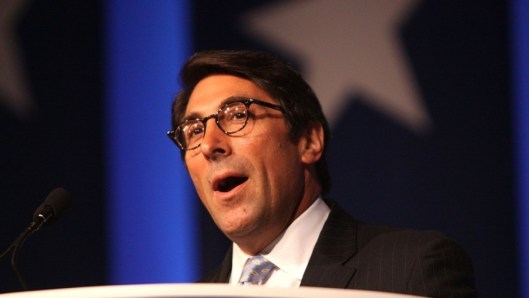
Jay Sekulow, President Trump’s lawyer, has denied that the President is under investigation for obstruction of justice. Click here to read more.

jay sekulo.jpgGage Skidmore/Wikimedia Commons

Share this:

  • Click to share on X (Opens in new window) X
  • Click to share on Facebook (Opens in new window) Facebook
Like Loading...

Image

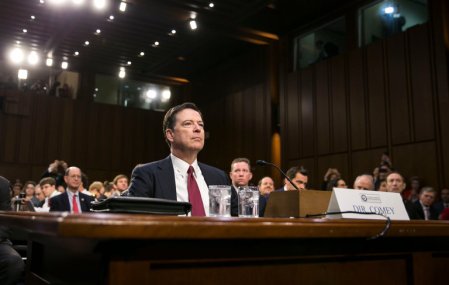
The Comey Senate Testimony

12 Monday Jun 2017

Tags

Comey, Impeachment, Obstruction of Justice, Senate, Testimony

Find here an analysis of the Comey Senate testimony and it’s potential effect on Trump’s presidency.

Share this:

  • Click to share on X (Opens in new window) X
  • Click to share on Facebook (Opens in new window) Facebook
Like Loading...

Posted by crosbysamuel | Filed under Articles, Uncategorized

≈ Leave a comment

Newer posts →

Blog Owner

Frank O. Bowman, III


Curators' Distinguished Professor Emeritus
Floyd R. Gibson Missouri Endowed Prof of Law Emeritus
Univ of Missouri School of Law

Web Profile

Enter your email address to follow this blog and receive notifications of new posts by email.

Professor Bowman on Impeachment »

Bibliographies

Explore bibliographies categorized by author and subject, and find other resources.

Posts by Topic

  • The Case for Impeachment
  • Defining Impeachable Conduct
  • Impeachment on Foreign Policy Grounds
  • Impeachment for Unfitness
  • Obstruction of Justice
  • Abuse of Criminal Investigative Authority
  • Election Law Violations
  • Foreign Emoluments
  • Conspiracy to Defraud the   United States
  • Politics of Impeachment
  • Lying as an Impeachable Offense
  • Abuse of Pardon Power
  • Electoral College
  • House Impeachment Resolutions
  • The Logan Act
  • The Mueller Investigation
  • Impeachment of Missouri Governor Greitens
  • Historical Precedent for Impeachment
  • Messages from Professor Bowman

Student Contributors »

Enter your email address to follow this blog and receive notifications of new posts by email.

Blog at WordPress.com.

  • Subscribe Subscribed
    • Impeachable Offenses?
    • Join 199 other subscribers
    • Already have a WordPress.com account? Log in now.
    • Impeachable Offenses?
    • Subscribe Subscribed
    • Sign up
    • Log in
    • Report this content
    • View site in Reader
    • Manage subscriptions
    • Collapse this bar
 

Loading Comments...
 

    %d