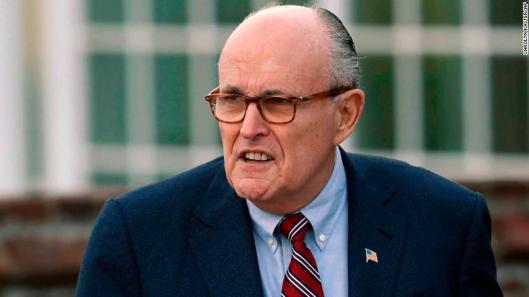
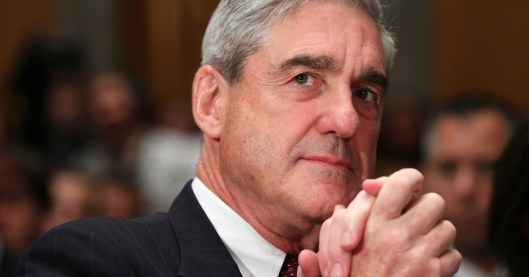
• Home
  • Mission of This Site
  • Contact

Impeachable Offenses?

~ The Use & Abuse of Impeachment in the 21st Century

Impeachable Offenses?

Tag Archives: Mueller

The Value of Weisselberg

25 Saturday Aug 2018

Posted by crosbysamuel in Articles, Uncategorized

≈ Leave a comment

Tags

allen, chief financial officer, clause, Collusion, constitution, cooperating, emoluments, financial, foreign, Impeachment, investigation, Mueller, records, russia, Special Counsel, trump, weisselberg

This Bloomberg article, written by Justin Sink, accounts for each of the Trump associates which are now helping to build a case against the President. Interestingly, included among their numbers is Allen Weisselberg, the chief financial officer of the Trump Organization. Information from Weisselberg could prove especially threatening to Trump.  He has been the C.F.O of the Trump Organization for years,  has worked with the Trump family in some capacity since 1970, serves as treasurer to President Trump’s personal foundation, and is the only non-family member that serves as a trustee to the trust that owns the Trump Organizations business interests. This is significant, because investigators have been previously unable to access Trump’s financial records. Now they have the next best thing. Weisselberg, with his intimate knowledge of the President’s finances, could provide the information previously sought from the records, such as evidence of Russian dealings or violations of the foreign emoluments clause. Even if this information is not sufficient to build a case, it could very well be sufficient enough to get a subpoena for the President’s records.

im-23399.jpgThe Wall  Street Journal

Share this:

  • Click to share on X (Opens in new window) X
  • Click to share on Facebook (Opens in new window) Facebook
Like Loading...

Recall-est, recall-est, the 21st of August

22 Wednesday Aug 2018

Posted by crosbysamuel in Articles, Uncategorized

≈ 2 Comments

Tags

admitted, articles of impeachment, bank, campaign manager, cohen, Collusion, dark, foreign account, fraud, guilty, Impeachment, invesitgation, Lawyer, Manafort, manhattan, Mueller, plea, tax, trump, tuesday

Of campaign finance law violations and plot! “Tuesday was one of the darkest days of Trump’s year and a half in office.”  That’s a quote from a Politico article describing the beating Trump’s presidency took today from Paul Manafort’s and Michael Cohen’s respective guilty verdict and plea.

Manafort has been convicted on 8 counts of tax fraud, bank fraud, and hiding foreign bank accounts. This is exciting news, but has been largely overshadowed by the accusations which accompanied the guilty plea of Michael Cohen, which came only hours before. When Cohen stepped into the New York federal district courtroom to plead guilty to breaking campaign finance laws, he also admitted that the payments he made to the adult film stars were issued at the bequest of President Donald Trump.

If this it true, it is groundbreaking news. Though Trump has brushed it off, stating that it has “nothing to do with Russian collusion,” it still (shockingly) warrants consideration. First off all, the payments very well may have something to do with Russian collusion. The money used to pay Stormy Daniels (one of the actresses) could have come from Russian officials (a full post about that subject can be found here). Additionally, regardless of whether the payments were related to collusion, Trump could still be considered a conspirator to Cohen’s crimes. This is almost certain to result in an article of impeachment, and perhaps someday indictment. And lastly, the simultaneous plea and verdict are bound to light a fire under Mueller’s investigation as each conviction adds to its credibility. If there is treason and plot, Mueller will find it.

michael-cohen-court-1-ap-thg-180821_hpMain_2_16x9_992.jpgABC News


Share this:

  • Click to share on X (Opens in new window) X
  • Click to share on Facebook (Opens in new window) Facebook
Like Loading...

The Consequences of Pardoning Manafort

18 Saturday Aug 2018

Posted by crosbysamuel in Articles, Uncategorized

≈ 5 Comments

Tags

18 U.S.C. 1510, bribe, campaign, Collusion, deliberations, Election, Impeachment, interference, jury, Manafort, manager, Mueller, pardon, president, russia, trial, trump, ukraine

Today marked the second day of jury deliberations for the trial of Paul Manafort, the former Trump campaign manager. Manafort is being tried for 18 criminal charges for bank and tax fraud related to the time he spent working for a Ukrainian political party. Manafort refused to cooperate with the Mueller investigation, and it has been theorized that this decision was based on a belief that President Trump would pardon him if he were convicted.

Whether Trump will pardon Manafort is unknown; however he has used his pardon power politically in the past, and his former lawyer, John Down, apparently broached the subject of a possible pardon with Manafort’s lawyers. When asked whether he would consider pardoning Manafort, the President refused to say, but did comment that  “the whole . . .  trial is very sad.”

In an article written for the American Constitutional Society, entitled Why President Trump Can’t Pardon His Way Out of the Special Counsel and Cohen Investigations, Noah Bookbinder, Norman Eisen, Caroline Fredrickson, and Conor Shaw write that “a prospective pardon of a witness in the Russia investigation might . . . constitute an obstruction of a criminal investigation . . . .” They are referring to section 1510 of title 18 of the the United States Code, which makes the “[willful endeavoring], by means of bribery to obstruct, delay, or prevent the communication of information relating to a violation of any criminal statute of the United States by any person to a criminal investigator” a federal crime. If President Trump did, directly or indirectly, promise Manafort a pardon in exchange for his refusal to cooperate with Mueller, then he may not only be subject to criminal indictment but yet another article of impeachment as well.

5b3f9a219e2a102f008b47ed-750-375.jpgDrew Angerer/Getty Images


Share this:

  • Click to share on X (Opens in new window) X
  • Click to share on Facebook (Opens in new window) Facebook
Like Loading...

Kavanaugh, Kavanaugh, Kavanaugh

10 Tuesday Jul 2018

Posted by crosbysamuel in Articles, Uncategorized

≈ 1 Comment

Tags

appointed, Congress, immunity, impeach, indictment, judge, justice, kavanaugh, kennedy, law, law review, minnesota, Mueller, pardon, roberts, shield, sitting, suit, trump

Have you heard? A new Supreme Court Justice has been appointed. His name is Brett Kavanaugh, he hails from the U.S. Court of Appeals, D.C. Circuit, and he’s got Democrats a little bit nervous. Why? Because they think he may try to shield Trump from the Mueller investigation.

Kavanaugh argued in an article written for the Minnesota Law Review in 2009 that sitting presidents should be immune from civil suit and criminal indictment. He cited the investigation of Clinton as a reason for this view, and has implied “that the Starr investigation distracted Clinton from focusing on Osama bin Laden.” Some find this view alarming — however, take a deep breath. As Noah Feldman points out, in an article published by Bloomberg Law, what Kavanaugh actually suggests is that Congress should pass a law that would protect the President. Inherent in that suggestion is an admission that the Supreme Court does not have the power to immunize the President itself. So worries that the Justices may, for instance, enjoin Mueller’s invesitgation, are probably unfounded.

That being said,  that doesn’t mean Kavanaugh cannot be of use to the President in other ways. Kavanaugh may rule that the President can pardon himself, as Trump has suggested in the past. Alternatively, Congress may just take Kavanaugh up on his suggestion and pass a law immunizing Trump. Much remains to be seen.

1200x-1.jpgAl Drago/Bloomberg

Share this:

  • Click to share on X (Opens in new window) X
  • Click to share on Facebook (Opens in new window) Facebook
Like Loading...

Trump won’t be Indicted

17 Thursday May 2018

Posted by crosbysamuel in Articles, Uncategorized

≈ 1 Comment

Tags

Congress, Impeachment, indicment, investigation, Mueller, president, report, rudolph giuliani, trump

Rudolph Giuliani claims that he has it on good authority that Mueller will not indict President Trump; and the Washington Post says that there is good reason to believe him, because the Justice Department guidelines say that he can’t.  This question has been examined by Professor Frank Bowman on this blog; and he pointed out that the question, as far as Mueller goes, is not whether an indictment will occur, but whether Mueller will recommend that Trump be indicted. Bowman proposed that this recommendation may come in two forms; that Trump be indicted after his presidency, or that he be indicted immediately. The latter recommendation, even if doomed to fail, will potentially have the same effect as the former recommendation: Mueller’s report will reach Congress and lead to impeachment.

180503095830-01-rudy-giuliani-file-exlarge-169.jpgCarolyn Kaster, AP


Share this:

  • Click to share on X (Opens in new window) X
  • Click to share on Facebook (Opens in new window) Facebook
Like Loading...

Must Trump comply with a subpoena?

06 Sunday May 2018

Posted by impeachableoffenses in Uncategorized

≈ 2 Comments

Tags

Fifth Amendment, grand jury subpoena, Guiliani, Mueller, Robert Mueller, Trump subpoena

By Frank Bowman

Rudolph Giuliani, the newest in the revolving cast of Mr. Trump’s lawyers, has made a number of striking legal claims in his short tenure.  His latest is that Mr. Trump is not obliged to comply with a subpoena to testify from a court or grand jury.

Giuliani is assuredly wrong.  But any attempt to subpoena Mr. Trump would raise a number of complicated issues.

First, Giuliani is right that Mr. Trump, like any other person, has a right under the Fifth Amendment to decline to answer questions that may tend to incriminate him.  However, that right does not allow Trump or anyone else to simply refuse to appear in a court or grand jury room if properly subpoenaed.  Rather, a person subject to subpoena must appear at the date and time specified in the subpoena and assert the privilege to particular questions.

If a witness is technically a “target” of a grand jury investigation and provides the prosecution with a written statement of intention to assert the Fifth Amendment, DOJ policy is that such a witness “ordinarily should be excused from testifying.”  U.S. Attorney’s Manual, 9-11.154 . But that would be a matter of discretion, not law.  And even in that case, unless the witness is expressing an intention to assert the Fifth as to all questions, he would ordinarily be obliged to appear and answer questions that cannot be reasonably viewed as seeking self-incriminatory information.

In the case of a president, even one who is not formally a “target,” the prosecutor might accommodate the president’s expressed intention not to answer questions on particular topics that seem plainly incriminatory by agreeing in advance not to ask them.  But that, too, would be a matter of discretion rather than law.

In any case, it seems somewhat unlikely that even this unconventional president would want to be seen as formally “taking the Fifth” to avoid testifying.

Second, there are issues about which Mr. Trump might claim some form of “executive privilege.”  Broadly speaking, executive privilege is the claim that a president can withhold information from congress, the courts, or the public for reasons relating to the proper functioning of the presidential office.  Legitimate claims of executive privilege are generally related to national security or protecting the privacy of White House deliberations for reasons promoting the public interest.

A great many questions Mueller is said to be interested in asking cannot by any reasonable stretch of the imagination fall within the executive privilege doctrine. Virtually all the questions on the list published by the New York Times that relate to Russia seem far outside any reasonable executive privilege claim.  Leaving all other considerations aside, almost all of them relate to events that occurred before Mr. Trump took office.

Some questions Mueller might ask would probably draw objections on executive privilege grounds.  For example, questions about conversations between Mr. Trump and White House advisers about whether to fire former FBI Director James Comey would probably draw such objections on the theory that executive branch personnel decisions should ordinarily remain private.  Mr. Mueller’s team might respond that executive privilege, to the extent it exists, must yield when the inquiry is into possible criminal misuse of the presidential power being discussed.  The analogy would be to the crime-fraud exception to the attorney-client and marital privileges, pursuant to which otherwise confidential communications must be disclosed if they were in furtherance of crime.

The Supreme Court held in U.S. v. Nixon that claims of executive privilege must yield in the face of investigation of criminal wrongdoing by the president or his aides. Nonetheless, Mueller’s people would have to make more than a bare claim of investigative interest to succeed in compelling testimony from this or any president about internal deliberations on policy or personnel decisions.

Finally, one argument that has been floated in the wake of Giuliani’s comments is that the president need not comply with a subpoena because he is the head of the executive branch and thus the ultimate boss of the prosecutors running the Mueller investigation.  This is frivolous. A subpoena is not a request by a prosecutor.  It is an order issued by authority of the court (if a trial subpoena) or of the court and the grand jury (if a grand jury subpoena).  It is a command by the judicial branch.  And it is not one that a president is entitled to disobey.

My personal bet is that Mr. Trump will not agree to testify voluntarily, and that Mueller’s team will subpoena him as a last resort.  Should that come to pass, it will get interesting very fast.

Share this:

  • Click to share on X (Opens in new window) X
  • Click to share on Facebook (Opens in new window) Facebook
Like Loading...

The “Take Care Clause” Does Not Permit Trump to Fire Robert Mueller Directly

16 Monday Apr 2018

Posted by impeachableoffenses in Uncategorized

≈ 2 Comments

Tags

Article II, faithfully executed, John Yoo, Mueller, Mueller investigation, Robert Mueller, Sakrishna Prakash, take care clause

By Frank Bowman

In last Friday’s New York Times, John Yoo and Sakrishna Prakash contend that President Trump has the power to fire special counsel Robert Mueller “directly,” meaning without complying with the Department of Justice regulation mandating that a special counsel can be fired “only by the personal action of the Attorney General” (or if the AG is recused, his designee) and then only for “good cause,” such as “misconduct, dereliction of duty, incapacity, [or] conflict of interest.”  In plain terms, they are saying that the president can simply ignore the Justice Department’s chain of command and its regulations and fire Mueller for any reason or, as they insist, “no reason at all.”

It is important to understand how radical this argument is. Most of the commentary about how Mr. Trump could fire Mr. Mueller accepts the premise that Justice Department regulations specifying how and by whom a special counsel can be removed are laws, binding both officers of the Justice Department and the president himself.  Hence, the endless discussions of whether Trump will embark on a “Saturday Night Massacre” round of firings in search of a senior Justice Department official willing to behead Mueller.

To non-lawyers, it might seem odd that an internal departmental rule called a “regulation” is treated as equivalent to a “law.”  But in our legal system, departmental regulations promulgated using procedures prescribed in the “Administrative Procedure Act” are “law.” And they every bit as binding on presidents or anyone else as a congressionally enacted statute or a decision of the Supreme Court.  The Justice Department’s regulations on the special counsel are precisely this kind of regulatory law.

Yoo and Prakash try to evade this elementary reality of modern American jurisprudence by referring to Article II, Section 3, of the Constitution, which requires a president to “take care that the laws be faithfully executed.”  They say this constitutional language means that the president has absolute control over the federal law enforcement function and thus can direct that legal actions be terminated and federal law enforcement officers fired whenever it suits him.  According to them, the “take care” clause means that a president cannot be bound by any regulation, or indeed any statute that Congress might pass, purporting to limit his power to dismiss subordinates in the executive branch.

They’re wrong.  Though they focus here on the narrow issue of the tenure of a special counsel, their position is merely a local manifestation of the “unitary executive” theory occasionally fashionable on the fringes of the intellectual far right.  It remains a fringe view because, if accepted, it would strike a crippling blow to the rule of law in this country.

Consider its effect in the law enforcement setting.  If the Take Care Clause effectively overrides Justice Department regulations on the special counsel, it also overrides all statutory and regulatory rules purporting to safeguard federal employees from arbitrary dismissal. In that case, the president may not only fire a prominent special appointee like Robert Mueller, without process and without cause, but also every career prosecutor, FBI agent, analyst, and secretary who worked on a case that displeased the president.

A criminal justice apparatus cowed by the chief executive and wielded only according to his unchecked whims is the first step on the road to autocracy.

Moreover, the extremist view propounded by Yoo and Prakash resonates far beyond criminal justice.  After all, the president’s obligation to ensure faithful execution of “the laws” is not limited to criminal statutes.  It extends to all of the myriad laws – constitutional, statutory, and regulatory – that govern all aspects of our national existence.  A president is every bit as obliged to ensure faithful execution of laws governing revenue collection, fair housing, collective bargaining, workplace safety, environmental protection, and the distribution of Medicare and Social Security benefits as he is to ensure proper administration of laws against fraud and official corruption.

Thus, if Yoo and Prakash are right, the president cannot constitutionally be prevented from firing any executive branch employee in any department whenever he feels that such an employee isn’t executing the law as the president would prefer it executed.  For them, legal protections against arbitrary or politically motivated dismissal can be of no effect so long as it is the president who orders a firing. In short, their reading of the constitution would effectively destroy the federal civil service system which, since 1883, has protected the country from the corruption endemic whenever a president or ruling party has unchecked power to dismiss federal employees who will not obey directions from political superiors.

No court will, or should, accept a reading of the constitution so contrary to long-settled legal norms and so destructive of the professionalism and political neutrality of federal civil servants.

It has been reported that the White House has sought advice on whether Robert Mueller might be directly dismissed, and that it has received some scholarly support for the idea.  One hopes that Mr. Trump has not relied on ideas like those of Professors Yoo and Prakash, which combine the defects of being constitutionally unsound, unlikely to find acceptance in the courts, and deeply subversive of the rule of law.

Share this:

  • Click to share on X (Opens in new window) X
  • Click to share on Facebook (Opens in new window) Facebook
Like Loading...

It’s Too Late for a New “Saturday Night Massacre”

13 Friday Apr 2018

Posted by impeachableoffenses in Uncategorized

≈ 1 Comment

Tags

Department of Justice, Mueller, Mueller investigation, Obstruction of Justice, Robert Mueller, Rod Rosenstein, rosenstein, Saturday Night Massacre

By Frank Bowman

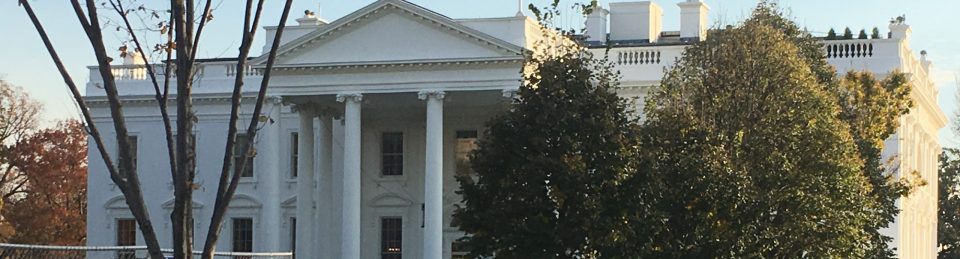
In the hours following Mr. Trump’s infuriated reaction to the FBI’s search of his lawyer’s office, the media crackled with speculation that the president would fire either special counsel Robert Mueller, Deputy Attorney General Rod Rosenstein, or Attorney General Jeff Sessions, or perhaps all three together.  It hasn’t happened yet. And while nothing is certain with our increasingly erratic chief executive, if he retains both a shred of rationality and advisors with some knowledge of the federal criminal system and the capacity to make their boss face reality, there will be no firings. And if there are, they won’t stop the hounds baying at Mr. Trump’s heels.

Mr. Trump wants to fire those he perceives to be his tormenters in order to make the torment – the investigations they supervise – stop. But the simple truth is that Justice Department investigations involving Mr. Trump, his campaign, his family, and his businesses have now proceeded so far that, while they could be hindered or delayed, they cannot be stopped.  That Mr. Trump seems to think that a few firings would achieve that end only shows how little he understands about the federal criminal justice system and the professionals who serve it.

Trump’s most well-known problem, of course, is that, despite his press secretary’s confident assertions to the contrary, he cannot fire Mueller directly.  Under Justice Department regulations, a special counsel can be “removed from office only by the personal action of the Attorney General,” or where the Attorney General is recused, by his deputy, Rod Rosenstein. So to get to Mueller, Trump would have to fire Rosenstein and then put someone in his place willing to axe Mueller.

But the Senate would not confirm an obvious hatchetman as permanent replacement to Rosenstein. So Trump would have to begin working his way down the DOJ line of succession, ordering Mueller’s removal, and then firing anyone who refused, until he found someone willing to be this generation’s Robert Bork (who as Solicitor General complied with President Nixon’s order to fire Watergate Special Prosecutor Archibald Cox).  It’s possible that he could find someone pliable enough to at least consider firing Mueller.

But Trump’s problem is that firing Mueller cannot, by itself, stop the investigations run by Mueller’s office. Mueller has already filed multiple cases. Some of them, like Paul Manafort’s, remain to be tried.  Mueller’s office also employs or supervises dozens of prosecutors and investigators who are actively investigating other crimes and defendants.  He has collected thousands of documents and hundreds of witness interviews and presented reams of grand jury testimony. To stop all that — and to bury the results so they no longer threaten Mr. Trump – would require Trump’s chosen executioner not merely to fire Mueller, but to order the immediate cessation of all the investigative activity being carried on by Mueller’s office and the immediate destruction or sealing of all the information they had gathered.

That won’t happen.  For two reasons.

First, it is extremely doubtful that Mueller’s prosecutors and agents would obey an order shutting and sealing their investigations, particularly if given for no better reason than that the President (who is a subject of their inquiry) said so.  There is no legal basis for such an order.  More to the point, an order to both close and suppress the results of Mueller’s investigations would itself be a plain case of obstruction of justice under either 18 U.S.C. 1503 or 1512.

Second, no rational Rosenstein replacement, no matter how deeply in thrall to Mr. Trump, would order Mueller’s work both stopped and sealed.  Any person who gave such an order would, at one stroke, commit career suicide and become a criminal target himself.

From Trump’s perspective, the rosiest scenario after Mueller’s firing would be: (a) appointment of a replacement for Mueller somewhat more tractable to the president’s wishes, or (b) a dispersal of Mueller’s staff and a transfer of their cases and investigations to regular U.S. Attorney’s Offices who would carry on the work.  Either might slow things down, but the investigations would still be run by career prosecutors and agents who would not simply walk away.

Moreover, the part of the investigation that Trump now apparently most fears – the result of the search through his lawyer’s office – is already outside the special counsel’s bailiwick and being pursued by the U.S. Attorney’s Office for the Southern District of New York.   Neither the New York prosecutors nor the FBI itself, which has a large measure of independent investigative authority, will stop so long as there are grounds to believe federal crimes may have been committed.

In short, while a DOJ firing spree might provide Mr. Trump a moment of satisfying catharsis, it will not resolve his legal problems.

At this critical juncture in his life, Donald Trump confronts a phenomenon with which he has never before had to reckon – the principled dedication of the men and women of the Department of Justice.  The “deep state,” if you like. Though individually subject to all the flaws of any professional assemblage, their institutional allegiance is to no man and no party, but to the vigorous and impartial enforcement of the law. If Mr. Trump has, as he says, done nothing wrong, he has nothing to fear.  But it’s now too late to prevent the Justice Department from following the evidence wherever it may lead.
 

Share this:

  • Click to share on X (Opens in new window) X
  • Click to share on Facebook (Opens in new window) Facebook
Like Loading...

Mueller and Starr Compared

06 Friday Apr 2018

Posted by crosbysamuel in Articles, Uncategorized

≈ Leave a comment

Tags

affair, clinton, Collusion, counsel, daniels, Impeachment, independent, ken, lewinsky, Mueller, robert, russia, special, Starr, stormy

This article, from TIME, compares the methods of Special Counsel Robert Mueller to those of former Independent Counsel Ken Starr. Starr was charged with investigating the Clinton-Whitewater real estate scandal, and released a report which eventually lead to President Clinton’s impeachment. Notably, however, the report was not centered around Whitewater, but rather the lie Clinton told to cover up his affair with Monica Lewinsky. Unlike Starr, TIME notes, Mueller is remaining focused on his task — the investigation of Russian collusion.

It would be easy for Mueller to become distracted with all the stories of Trump’s sordid acts floating around; such as those surrounding Stormy Daniels. But those of us in the audience should be glad that Mueller has remained focused. Though nailing Trump with some ignoble deed may be enough to lower his public esteem and get him impeached, we should want more. We should want the whole truth.

1-mueller-2.w1200.h630.jpgAlex Wong/Getty Images

Share this:

  • Click to share on X (Opens in new window) X
  • Click to share on Facebook (Opens in new window) Facebook
Like Loading...

Mueller (supposedly) said Trump is not a “target” of his investigation — what does that mean?

04 Wednesday Apr 2018

Posted by impeachableoffenses in Uncategorized

≈ 3 Comments

Tags

grand jury target, Mueller, Robert Mueller, subject, target

By Frank Bowman

The Washington Post reports that Robert Mueller’s team has told Trump representatives that Mr. Trump continues to be under investigation, but is not now a “target” of the Mueller grand jury probe.  The Post article contains a good deal of commentary about what this means, most of which is broadly correct.  However, I think the Post misses several important nuances.

If Mueller’s people said Mr. Trump continues to be investigated (which in DOJ terminology makes him a “subject”), but that he’s not now a “target,” that allows two conclusions, one positive, one negative:

First, if Trump is still under investigation — is still a “subject” — Mueller has not exonerated Trump from criminal liability. Or putting it another way, the “subject” designation suggests Mueller has found enough evidence of Trump’s possible involvement in crime that he thinks it’s worthwhile to continue to investigate Trump.

Second, the “not a target” designation doesn’t convey much of real substance concerning Mueller’s assessment of the current evidence against Trump. The Washington Post summary of the meaning of “target” is incomplete. The article says, “A target is a person for which there is substantial evidence linking him or her to a crime.” But that’s not the whole definition in the United States Attorneys Manual (9-11.151), which reads: “A ‘target’ is a person as to whom the prosecutor or the grand jury has substantial evidence linking him or her to the commission of a crime and who, in the judgment of the prosecutor, is a putative defendant.”

If Mueller really said Trump is not a “target,” all he may be saying is that, while there is substantial evidence linking him to a crime, DOJ policy precludes making him an actual indicted “defendant.” For an explanation of this policy, see this earlier post. What’s more, as several commenters in the WP article note, a subject can change to a target in the blink of an eye.

Were I one of Trump’s lawyers, I would be more alarmed than comforted by what Mueller supposedly said.

UPDATE: Jeremy Stahl over at Slate was kind enough to quote me about this point in a longer story on the Washington Post report.


Share this:

  • Click to share on X (Opens in new window) X
  • Click to share on Facebook (Opens in new window) Facebook
Like Loading...
← Older posts
Newer posts →

Blog Owner

Frank O. Bowman, III


Curators' Distinguished Professor Emeritus
Floyd R. Gibson Missouri Endowed Prof of Law Emeritus
Univ of Missouri School of Law

Web Profile

Enter your email address to follow this blog and receive notifications of new posts by email.

Professor Bowman on Impeachment »

Bibliographies

Explore bibliographies categorized by author and subject, and find other resources.

Posts by Topic

  • The Case for Impeachment
  • Defining Impeachable Conduct
  • Impeachment on Foreign Policy Grounds
  • Impeachment for Unfitness
  • Obstruction of Justice
  • Abuse of Criminal Investigative Authority
  • Election Law Violations
  • Foreign Emoluments
  • Conspiracy to Defraud the   United States
  • Politics of Impeachment
  • Lying as an Impeachable Offense
  • Abuse of Pardon Power
  • Electoral College
  • House Impeachment Resolutions
  • The Logan Act
  • The Mueller Investigation
  • Impeachment of Missouri Governor Greitens
  • Historical Precedent for Impeachment
  • Messages from Professor Bowman

Student Contributors »

Enter your email address to follow this blog and receive notifications of new posts by email.

Blog at WordPress.com.

  • Subscribe Subscribed
    • Impeachable Offenses?
    • Join 199 other subscribers
    • Already have a WordPress.com account? Log in now.
    • Impeachable Offenses?
    • Subscribe Subscribed
    • Sign up
    • Log in
    • Report this content
    • View site in Reader
    • Manage subscriptions
    • Collapse this bar
 

Loading Comments...
 

    %d