• Home
  • Mission of This Site
  • Contact

Impeachable Offenses?

~ The Use & Abuse of Impeachment in the 21st Century

Impeachable Offenses?

Tag Archives: Impeachment

Trump Balks at “Chinese Propaganda”

27 Thursday Sep 2018

Posted by crosbysamuel in Articles, Uncategorized

≈ Leave a comment

Tags

Abraham Denmark, bots, china, China Daily, chinese, Collusion, Conspiracy, conspiracy to defraud the united states, des moines, donald, Impeachment, interference, iowa, president, register, Russian, the des moines register, trump

President Trump charged China with “placing propaganda ads in the Des Moines Register and other papers,” in response to a 4-page advertorial purchased by a Chinese State-run paper. The advertorial was fashioned as a series of articles entitled “China Watch” (PDFs found here). Trump’s response is particularly striking in light of his relative silence in response to the established interference of Russian robots. Abraham Denmark, “a former senior Pentagon and U.S. intelligence official [and current] director of the Wilson Center’s Asia Program,” told the New Yorker that this was an old practice and much less extreme than recent Russian actions: ” . . . there’s a distinction between influence and interference. What China did was the former, what Russia did was the latter.”

Denmark brings up an interesting point for an impeachment discussion. President Trump is being investigated for conspiracy to defraud the United States for his possible collaboration with Russians with the intention of interfering with the Presidential election. Some scholars believe that could constitute fraud. Though Trump could not be charged with colluding with the Chinese, it is an interesting question whether the actions of the Chinese government could similarly constitute fraud. That seems unlikely. In addition to what Denmark has already suggested (that there is a distinction between influence and interference) we are also missing the element of deceit (as described by Professor Bowman in the link posted immediately above). The Chinese were very candid in their attempts to influence voters — there was a banner at the top of each page of their advert which read “section sponsored by China Daily.” This is far from the equivalent of the massive campaign of Russians who adopted American personalities online. Therefore there was no probably no fraud involved; making Trump’s reaction contrast even more starkly his silence in the face of Russian interference. That being said, that’s an answer to a question nobody was asking. More soon.

397c0ded-a693-4cc2-bf77-10f6043cadb3-IMG_5088.jpgThe Des Moines Register


Share this:

  • Click to share on X (Opens in new window) X
  • Click to share on Facebook (Opens in new window) Facebook
Like Loading...

Presidential Obstruction of Justice

20 Thursday Sep 2018

Posted by crosbysamuel in Articles, Uncategorized

≈ Leave a comment

Tags

2016 surveillance, bruce ohr, Carter Page, Collusion, communication, donald trump, FBI, federal bureau of investigation, firing, former, Impeachment, investigation, James Comey, Obstruction of Justice, president, release, russia, texts

This article from the California Law Review, written by Daniel J. Hemel and Eric A. Posner and entitled Presidential Obstruction of Justice, examines the standard for charging a United States president with obstruction of justice in light of his role as head of the executive branch and federal law enforcement. The authors assert that a president does violate the law when he obstructs justice with an improper purpose and explore what that improper purpose might be. They ultimately claim that when a president acts/obstructs justice to “take care that the laws be faithfully executed,” his purpose is proper, but that otherwise it is not.

This analysis is of course significant in light of President Trump’s firing of Former FBI James Comey which some believe was an act obstructing justice. The friction between Comey and Trump was brought to the forefront again on Monday when the President ordered that Comey’s communications be released to the public along with ” 20 pages of a 2016 surveillance application targeting former Trump campaign adviser Carter Page and Justice Department official Bruce Ohr’s notes related to the Russia probe.” Comey believes that Trump is trying to root out a procedural mistake made by the FBI, but is confident he will not find one.

comey.jpgCarsten Koall/Getty Images

Share this:

  • Click to share on X (Opens in new window) X
  • Click to share on Facebook (Opens in new window) Facebook
Like Loading...

Losing a Two-Front War

16 Sunday Sep 2018

Posted by crosbysamuel in Articles, Uncategorized

≈ 1 Comment

Tags

campaign chairman, civil suit, conspiracy to defraud, constitution, domestic emoluments, donald trump, foreign emoluments clause, impeach, Impeachment, investigation, Manafort, maryland, Mueller, Obstruction of Justice, paul manafort, plea deal, president, Special Counsel, trump, trump internation hotel, two-front war, u.s. district court of maryland

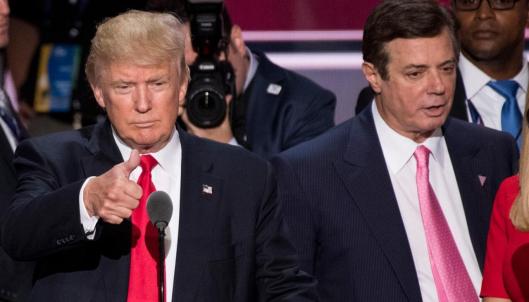
This week has proven to be a difficult one for President Trump. As both civil and criminal investigations draw near and his tight spot becomes tighter, one can only begin to imagine his discomfort.

The world of Special Counsel Robert Mueller’s investigation has gotten a little brighter with the cooperation of Paul Manafort. Trump’s former Campaign chairman finally struck a plea deal last Friday and pleaded guilty to conspiracy to defraud the United States and obstruction of justice. Though Trump’s press secretary, Sarah Sanders, argues that the charges against Manafort have nothing to do with the President and could not incriminate him, Manafort apparently possesses information valuable enough for Mueller to agree to waive 5 of his 7 charges and argue leniency in his sentencing. Especially valuable is Manafort’s participation in the Russian lawyer meeting and any insight he may be able to give as to what happened there. Some theorize that Manafort’s cooperation promises the end of Mueller’s investigation.

On top of Mueller’s progress, Trump faces discovery requests pursuant to a civil suit in the U.S. District Court of Maryland. The suit alleges that Trump violated the Domestic and Foreign Emoluments Clauses of the United States Constitution through operation of the Trump International Hotel near the White House. Pursuant to those allegations, the plaintiffs, D.C. Attorney General Karl Racine and Maryland Attorney General Peter Frosh, are seeking communications between Trump and foreign and U.S. state government officials related to use of the hotel, records of the hotel’s business with foreign officials, records of cash transferred from the trust which collects the hotel’s funds to Trump, and documents from the General Services Administration and the U.S. Treasury Department which lease the hotel building to Trump.

The likely result of these two investigations is that allegations of impeachable offenses committed by Trump, conspiracy to defraud the American people, obstruction of justice, and violation of the emoluments clauses, will soon either be substantiated or refutable. And with midterm elections looming, this information could not have come at a better time. Soon there will be a Congress that can transform all of this discovery into articles of impeachment.

GettyImages-578331186-trump-manafort-2016-1120.jpgBill Clark, CQ Roll Call, Getty Images

Share this:

  • Click to share on X (Opens in new window) X
  • Click to share on Facebook (Opens in new window) Facebook
Like Loading...

The Anonymous Letter

06 Thursday Sep 2018

Posted by crosbysamuel in Articles

≈ Leave a comment

Tags

25th amendment, Collusion, Fear, Impeachment, incompetence, leak, new york times, president, quiet resistance, removal, resistance, russia, tough, trump, Woodward

The nation is abuzz with talk of the anonymous op-ed piece published by the New York Times. The writer is apparently a senior official in the Trump Administration and names him-or-herself  as part of the “quiet resistance.” The piece describes efforts taken by its author and others to walk-back, avoid, and otherwise subvert the President’s more rash decisions. In essence, it paints Trump as an out-of-control child. Some readers will wonder how this is news; however the piece is significant for several reasons. 1) It corroborates other, similar accounts of the Trump administration, such as those leaked by aides and those written in “Fear,” Bob Woodward’s book; 2)  it simultaneously bolsters and rebuffs the 25th amendment theory of removal. The author of the piece wrote that Trump’s cabinet considered removing the President for incompetence, but ultimately decided against it because “no one wanted to precipitate a constitutional crisis.” This confirms both that at some point use of the 25th amendment was a real possibility and also that it will likely never happen. That being said, confirmation of the President’s incompetence could add strength to other removal proceedings, such as through impeachment in the House; 3) perhaps most importantly, it helps to resolve the mixed relationship the Trump Administration has with Russia. The author wrote that though Trump has complained about Russian sanctions, the ‘resistance’ has worked to ensure it sanctioned and otherwise punished the nation for stepping out of line. Trump has boasted in the past that “there’s never been a president as tough on Russia as I have been.” Now we know that the punitive steps that the Trump Administration has taken towards Russia may very well have had nothing to do with Trump or have been done in spite of him. Though it may seem a small thing in light of evidence mounting elsewhere, this strengthens the case for collusion and could perhaps help to usher in impeachment.

920x920.jpgSusan Walsh, AP

Share this:

  • Click to share on X (Opens in new window) X
  • Click to share on Facebook (Opens in new window) Facebook
Like Loading...

Suing Trump over Free Speech Violations

29 Wednesday Aug 2018

Posted by crosbysamuel in Uncategorized

≈ 3 Comments

Tags

first amendment, first amendment violation, Impeachment, manhattan, naomi reice buchwald, president, sonja r. west, suit, trump, twitter, unblocked, university of georgia school of law, users

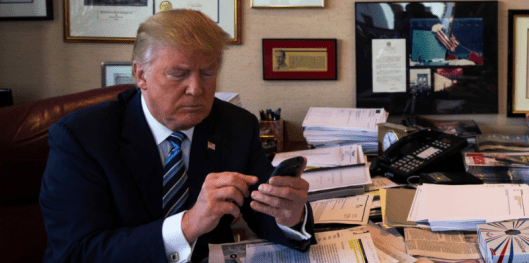
It was reported today that Donald Trump unblocked several more Twitter accounts pursuant to a ruling from May 23rd. U.S. District Judge Naomi Reice Buchwald in Manhattan held that government official’s twitter accounts were public forums and that blocking users based on their political beliefs was a violation of their first amendment rights. Sonja R. West, of the University of Georgia School of Law, offers a more in depth analysis of the intricacies of bringing a first amendment lawsuit against the President in her article entitled Suing the President for First Amendment Violations. Though she expresses some doubt about the capacity of one to sue the President for first amendment violations, West concludes: “courts should take into account the potential damage to our public debate if the President cannot be held accountable for violating the expressive rights of the people.” It would seem that Judge Buchwald agreed.

trump-on-phone.pngTheHustle.co

Share this:

  • Click to share on X (Opens in new window) X
  • Click to share on Facebook (Opens in new window) Facebook
Like Loading...

The Value of Weisselberg

25 Saturday Aug 2018

Posted by crosbysamuel in Articles, Uncategorized

≈ Leave a comment

Tags

allen, chief financial officer, clause, Collusion, constitution, cooperating, emoluments, financial, foreign, Impeachment, investigation, Mueller, records, russia, Special Counsel, trump, weisselberg

This Bloomberg article, written by Justin Sink, accounts for each of the Trump associates which are now helping to build a case against the President. Interestingly, included among their numbers is Allen Weisselberg, the chief financial officer of the Trump Organization. Information from Weisselberg could prove especially threatening to Trump.  He has been the C.F.O of the Trump Organization for years,  has worked with the Trump family in some capacity since 1970, serves as treasurer to President Trump’s personal foundation, and is the only non-family member that serves as a trustee to the trust that owns the Trump Organizations business interests. This is significant, because investigators have been previously unable to access Trump’s financial records. Now they have the next best thing. Weisselberg, with his intimate knowledge of the President’s finances, could provide the information previously sought from the records, such as evidence of Russian dealings or violations of the foreign emoluments clause. Even if this information is not sufficient to build a case, it could very well be sufficient enough to get a subpoena for the President’s records.

im-23399.jpgThe Wall  Street Journal

Share this:

  • Click to share on X (Opens in new window) X
  • Click to share on Facebook (Opens in new window) Facebook
Like Loading...

Impeachment for Concealing the Mistresses? Not Now, Maybe Later

22 Wednesday Aug 2018

Posted by impeachableoffenses in Uncategorized

≈ 1 Comment

Tags

election law violations, George Mason, Gouverneur Morris, Impeachment, impeachment for election law violations

By Frank Bowman

On August 21, 2018, Michael Cohen, Mr. Trump’s former lawyer, pled guilty to eight felony charges, including two campaign finance violations.  The last two impose criminal liability for Mr. Cohen’s role in paying two women involved in affairs with Mr. Trump to prevent their stories from becoming public before the election.  Critically, during his plea colloquy with the judge, Mr. Cohen stated under oath that, “I participated in this conduct … for the principal purpose of influencing the [2016 presidential] election,”  and acted “in coordination with and at the direction of a candidate for federal office” — Mr. Trump.

Cohen’s statement, if true, means that Mr. Trump is guilty of a conspiracy to violate election law under 18 U.S.C. Sec. 371, and of the election law violations themselves under a complicity theory, 18 U.S.C. Sec. 2.  Of course, as has been discussed ad infinitum over the past year, the Justice Department has a policy not to indict a sitting president and there is no indication that they intend to deviate from that policy now.

So lots of folks (including Chuck Todd of NBC, Bret Stephens of the NY Times, and my energetic student and blog co-author Sam Crosby) have jumped immediately to the suggestion that these campaign finance violations constitute proper grounds for impeachment.  I disagree, for both constitutional and political reasons.  At best, depending on how the Mueller investigation finally plays out, the payoffs could form part of a plausible impeachment argument.

First, some background.  The constitution defines impeachable conduct as “treason, bribery, or other high crimes and misdemeanors.” Treason and bribery are crimes, but “high crimes and misdemeanors” need not be.  The phrase is a term of art adopted from British parliamentary impeachments and was not limited to criminal conduct. Two centuries of American usage have confirmed this point. Commission of a crime is not a necessary precondition for impeachment.

Conversely, not every violation of the criminal code is impeachable. The constitution speaks of impeachment for ‘”misdemeanors” — or perhaps only “high misdemeanors” — but it is well nigh impossible to think of any modern crime classified as a misdemeanor that would justify removal of a president.  Jaywalking. Shoplifting stuff worth less than $300. Driving under revocation. Punching somebody in the nose in a fit of anger.  All misdemeanor crimes. But preposterous as grounds for impeachment.

Not even all felonies are proper grounds for impeachment. The basic rule that has evolved over the years is that “high crimes and misdemeanors” are serious offenses that either endanger the political order or demonstrate an official’s manifest unfitness to continue in office — which if the official is the president necessarily endangers the political order.

This is the lesson of the Clinton affair.  Did Bill Clinton commit the felony of perjury when he lied about sex with Monica Lewinsky? Surely.  He was impeached by the House of Representatives for doing so.  Yet he was acquitted by the Senate.  Not because he didn’t lie, but because many senators just didn’t think lying about sex was sufficiently important to merit removal of a president.

The parallel to Mr. Trump’s situation is plain.  Trump was engaged in extramarital sex.  He wanted to hide it. He arranged to pay off one of them and to reimburse the publisher of the National Enquirer for its payments to the other for the rights to her story.  Neither the sex nor even the payments were in themselves unlawful.  What made Michael Cohen a felon is that paying off the women to aid a candidate is a political contribution.  One of the payments was apparently made by the Trump Organization, and corporate contributions made directly to presidential candidates are illegal.  The other payment (to “Stormy Daniels”) was made by Cohen personally, but it far exceeded the legal limit of $2,700 per person per candidate.  Cohen made one payment and arranged the other.  Trump allegedly asked that he do it.  Hence, two crimes.

But the crimes were in the payments.  One from an illegal source, the other in an illegal amount.  What they bought — concealment of embarrassing sexual escapades — is completely irrelevant under election law.  Cohen (and Trump) would be equally guilty if the money was used to buy a shipload of red MAGA hats.

In Mr. Clinton’s case, his Republican opponents endlessly recited the mantra, “It’s not the sex. It’s the lying under oath.”  Here, Mr. Trump’s pursuers could (and some surely will) say, “It’s not the sex, it’s the concealment in violation of election law.”

One can argue that Trump’s violation of laws designed to protect the integrity of elections is more indicative of unfitness for office than Clinton’s perjury because Trump’s offense relates to the democratic process.  That is a key point, and I’ll return to it in a moment.  But the fact remains that the essence of Cohen’s payoffs of Trump’s former inamoratas is extramarital sex and a guy trying to cover it up.  The parallel to Clinton is just too strong for the Democratic Party to press for impeachment on this ground.  The cries of hypocrisy would be too loud … and they would in large measure be justified.

But what about the fact that Cohen says Trump helped him violate election law — statutes designed to protect the integrity of the democratic electoral process ?  The Founders were quite clear that efforts by a presidential candidate to corrupt the process by which he was selected would be impeachable.

At the Constitutional Convention, George Mason (who introduced the phrase “high crimes and misdemeanors” into the constitution) maintained that a president who “procured his appointment” by corrupting the “electors” must be impeachable. Gouverneur Morris made the same point. By “electors” they meant members of the Electoral College because that regrettable institution was envisioned by the Founders as a body of illustrious men selected by the states who would exercise their independent judgment in selecting a proper president for the nation.  As originally designed, the process of picking a president had no place for voting by the citizenry.  The “electors” made the choice.

To the Founders, the only obvious way of corrupting the presidential selection process was to corrupt the tiny circle of eligible voters – the electors.  Today, of course, electors exercise no independent judgment.  They merely transmit the preference of the voters of their state.  Presidential elections are now supposed to be essentially, if sometimes imperfectly, democratic exercises that reflect the will of the people. Therefore, practical modern electoral corruption must take the form of distorting the judgment of the electorate, rather than the electors.

That sort of corruption, if of sufficient magnitude, might be impeachable — with two large caveats.

First, the arts of voter persuasion inevitably have some aspects of flim-flam.   Political spinning, concealment of one’s own flaws, factually questionable slurs on an opponent’s record or character, appeals to emotion rather than logic — all could be said to distort reasoned voter choice.  But just being an ordinary politician can’t be an impeachable offense.  Even concealment of a disreputable fact about one’s past surely cannot alone be impeachable. Everybody has skeletons.  Impeachments on this ground would permit relitigation in Congress of every presidential election.

Second, therefore an impeachment on grounds of corrupting the electorate would have to be based on behavior so far outside the elastic norms of modern political conduct that it both demonstrated the successful candidate’s contempt for the democratic process and put the fair operation of democracy at risk.

Mistress-payoff election violations are too inconsequential (and too obvious a parallel to the Clinton debacle).  To figure at all in a serious impeachment case, those payoffs would have to be part of a larger pattern of  illegal or plainly illegitimate conduct designed to give the candidate an unfair advantage or to deceive the electorate.  Better yet, they should be part of a pattern of conduct that does not merely give advantage to a candidate, but places him under an obligation to some person or entity or foreign power whose interests are inimical to the United States.  In short, all the stuff that Robert Mueller is looking into.

The suspense continues….
Share this:

  • Click to share on X (Opens in new window) X
  • Click to share on Facebook (Opens in new window) Facebook
Like Loading...

Recall-est, recall-est, the 21st of August

22 Wednesday Aug 2018

Posted by crosbysamuel in Articles, Uncategorized

≈ 2 Comments

Tags

admitted, articles of impeachment, bank, campaign manager, cohen, Collusion, dark, foreign account, fraud, guilty, Impeachment, invesitgation, Lawyer, Manafort, manhattan, Mueller, plea, tax, trump, tuesday

Of campaign finance law violations and plot! “Tuesday was one of the darkest days of Trump’s year and a half in office.”  That’s a quote from a Politico article describing the beating Trump’s presidency took today from Paul Manafort’s and Michael Cohen’s respective guilty verdict and plea.

Manafort has been convicted on 8 counts of tax fraud, bank fraud, and hiding foreign bank accounts. This is exciting news, but has been largely overshadowed by the accusations which accompanied the guilty plea of Michael Cohen, which came only hours before. When Cohen stepped into the New York federal district courtroom to plead guilty to breaking campaign finance laws, he also admitted that the payments he made to the adult film stars were issued at the bequest of President Donald Trump.

If this it true, it is groundbreaking news. Though Trump has brushed it off, stating that it has “nothing to do with Russian collusion,” it still (shockingly) warrants consideration. First off all, the payments very well may have something to do with Russian collusion. The money used to pay Stormy Daniels (one of the actresses) could have come from Russian officials (a full post about that subject can be found here). Additionally, regardless of whether the payments were related to collusion, Trump could still be considered a conspirator to Cohen’s crimes. This is almost certain to result in an article of impeachment, and perhaps someday indictment. And lastly, the simultaneous plea and verdict are bound to light a fire under Mueller’s investigation as each conviction adds to its credibility. If there is treason and plot, Mueller will find it.

michael-cohen-court-1-ap-thg-180821_hpMain_2_16x9_992.jpgABC News


Share this:

  • Click to share on X (Opens in new window) X
  • Click to share on Facebook (Opens in new window) Facebook
Like Loading...

The Consequences of Pardoning Manafort

18 Saturday Aug 2018

Posted by crosbysamuel in Articles, Uncategorized

≈ 5 Comments

Tags

18 U.S.C. 1510, bribe, campaign, Collusion, deliberations, Election, Impeachment, interference, jury, Manafort, manager, Mueller, pardon, president, russia, trial, trump, ukraine

Today marked the second day of jury deliberations for the trial of Paul Manafort, the former Trump campaign manager. Manafort is being tried for 18 criminal charges for bank and tax fraud related to the time he spent working for a Ukrainian political party. Manafort refused to cooperate with the Mueller investigation, and it has been theorized that this decision was based on a belief that President Trump would pardon him if he were convicted.

Whether Trump will pardon Manafort is unknown; however he has used his pardon power politically in the past, and his former lawyer, John Down, apparently broached the subject of a possible pardon with Manafort’s lawyers. When asked whether he would consider pardoning Manafort, the President refused to say, but did comment that  “the whole . . .  trial is very sad.”

In an article written for the American Constitutional Society, entitled Why President Trump Can’t Pardon His Way Out of the Special Counsel and Cohen Investigations, Noah Bookbinder, Norman Eisen, Caroline Fredrickson, and Conor Shaw write that “a prospective pardon of a witness in the Russia investigation might . . . constitute an obstruction of a criminal investigation . . . .” They are referring to section 1510 of title 18 of the the United States Code, which makes the “[willful endeavoring], by means of bribery to obstruct, delay, or prevent the communication of information relating to a violation of any criminal statute of the United States by any person to a criminal investigator” a federal crime. If President Trump did, directly or indirectly, promise Manafort a pardon in exchange for his refusal to cooperate with Mueller, then he may not only be subject to criminal indictment but yet another article of impeachment as well.

5b3f9a219e2a102f008b47ed-750-375.jpgDrew Angerer/Getty Images


Share this:

  • Click to share on X (Opens in new window) X
  • Click to share on Facebook (Opens in new window) Facebook
Like Loading...

12 Agents, Butina, and Helsinki

17 Tuesday Jul 2018

Posted by crosbysamuel in Articles, Uncategorized

≈ 3 Comments

Tags

12, 2016, agents, channels, clinton, Collusion, Conspiracy, defraud, democratic national convention, denial, DNC, Election, hacked, hacking, helsinki, hillary, Impeachment, mariia butina, Meeting, nra, Putin, russia, russian meddling, secret, tweet, unfitness

Good news! The Russian scandal now officially can be sung to the tune of the Twelve Days of Christmas: 12 Russian agents, Butina’s russian channel, election interference, PUTIN “STRONG AND POWERFUL!”  Which is good, because everything else is not sounding quite so festive.

The indictments of 12 Russian agents, for the hacking of the Democratic National Convention and the Clinton Presidential Campaign, and the filing of charges against Mariia Butina, a Russian woman who allegedly tried to broker secret meetings between President Putin and President Trump, further confirm  what the intelligence community already knew: that Russia interfered with the 2016 federal elections. As if that wasn’t frightening enough, our President doesn’t seem to mind. After meeting with Putin in Helsinki and asking him about the Russian meddling, Trump could only comment about the strength of Putin’s denial. Needless to say, Americans are feeling a bit miffed. But where does this leave us in the impeachment debate?

There are two arguments to be made here. The first and, most obvious, is that all this adds to potential charges of conspiracy to defraud the United States. The more certain we are that Russia interfered with the election, the stronger the case for collusion becomes. Of course to establish collusion, it would have to be shown that there was some agreement between Trump and Russia. To that point it helps that there are ties between the indicted Russians and members of Trump’s campaign. In addition, though Trump’s ongoing support of Putin is not direct evidence of conspiracy, it does have a suggestive quality and could indicate a more nefarious relationship between the two.

One may also consider Trump’s reaction as an example of his unfitness. It can be argued that a failure to reprimand the leader of a country which has taken action to defraud the United States is a failure of one of the most basic duties of the President: that of the Chief Diplomat. This can be added to the list of the President’s other shortcomings; however it is unclear how long a list is required to lead to removal.

download.jpgYURI KADOBNOV/AFP/Getty Images


Share this:

  • Click to share on X (Opens in new window) X
  • Click to share on Facebook (Opens in new window) Facebook
Like Loading...
← Older posts
Newer posts →

Blog Owner

Frank O. Bowman, III


Curators' Distinguished Professor Emeritus
Floyd R. Gibson Missouri Endowed Prof of Law Emeritus
Univ of Missouri School of Law

Web Profile

Enter your email address to follow this blog and receive notifications of new posts by email.

Professor Bowman on Impeachment »

Bibliographies

Explore bibliographies categorized by author and subject, and find other resources.

Posts by Topic

  • The Case for Impeachment
  • Defining Impeachable Conduct
  • Impeachment on Foreign Policy Grounds
  • Impeachment for Unfitness
  • Obstruction of Justice
  • Abuse of Criminal Investigative Authority
  • Election Law Violations
  • Foreign Emoluments
  • Conspiracy to Defraud the   United States
  • Politics of Impeachment
  • Lying as an Impeachable Offense
  • Abuse of Pardon Power
  • Electoral College
  • House Impeachment Resolutions
  • The Logan Act
  • The Mueller Investigation
  • Impeachment of Missouri Governor Greitens
  • Historical Precedent for Impeachment
  • Messages from Professor Bowman

Student Contributors »

Enter your email address to follow this blog and receive notifications of new posts by email.

Blog at WordPress.com.

  • Subscribe Subscribed
    • Impeachable Offenses?
    • Join 199 other subscribers
    • Already have a WordPress.com account? Log in now.
    • Impeachable Offenses?
    • Subscribe Subscribed
    • Sign up
    • Log in
    • Report this content
    • View site in Reader
    • Manage subscriptions
    • Collapse this bar
 

Loading Comments...
 

    %d