• Home
  • Mission of This Site
  • Contact

Impeachable Offenses?

~ The Use & Abuse of Impeachment in the 21st Century

Impeachable Offenses?

Tag Archives: Robert Mueller

Roger Stone Arrested and Indicted

25 Friday Jan 2019

Posted by crosbysamuel in Articles, Uncategorized

≈ Leave a comment

Tags

arrested, Collusion, Conspiracy, cooperation, DNC, donald trump, Emails, hillary clinton, indicted, investigation, president, Putin, Randy Credico, Robert Mueller, roger stone, russia, russian hackers, Special Counsel, wikileak

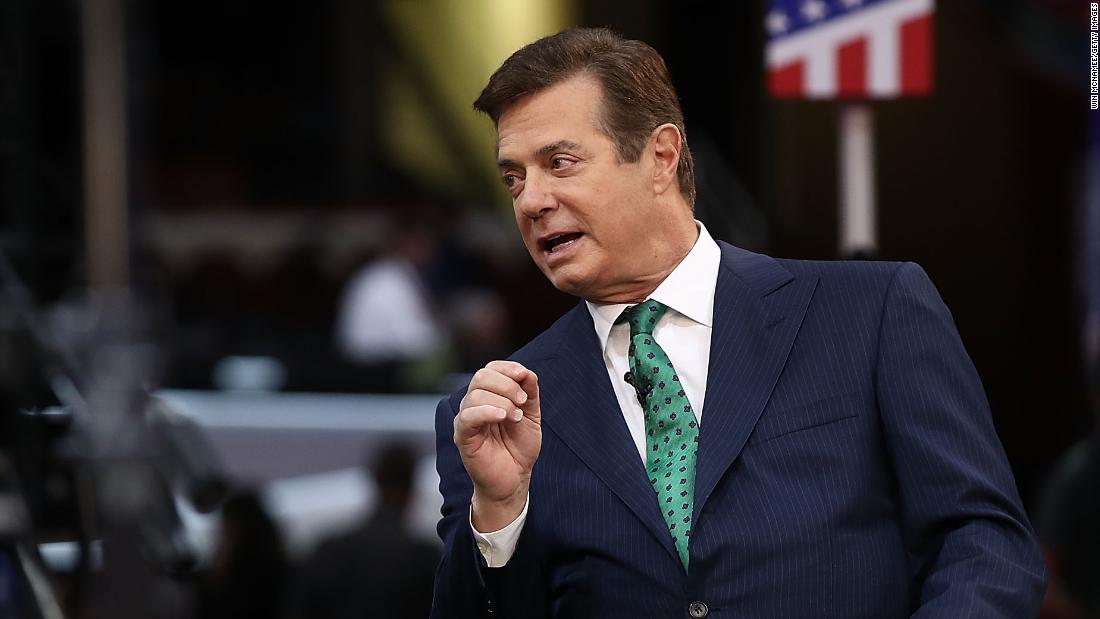
Roger Stone was arrested and received a seven count indictment this morning which included charges of misleading lawmakers about his communications with Wikileaks, the organization that released the emails which scandalized Hillary Clinton’s campaign, and intimidating fellow witness Randy Credico, who was also in contact with Wikileaks. Credico ultimately pleaded the 5th at Stone’s urging.

The emails released by Wikileaks were stolen by Russian hackers, and Stone is a long time friend and supporter of President Trump. If Stone chooses to cooperate with Special Counsel Mueller, he could provide the evidence need to finally establish collusion between Russia and the Trump Campaign. However, if Stone’s past comments are to be believed, he will not be cooperating. Much is yet to be seen.

stone.jpgAlex Wong/Getty Images

Share this:

  • Click to share on X (Opens in new window) X
  • Click to share on Facebook (Opens in new window) Facebook
Like Loading...

Giuliani helps build the case that his client may be a Russian asset (and maybe helps restore Buzzfeed’s credibility)

21 Monday Jan 2019

Posted by impeachableoffenses in Uncategorized

≈ 1 Comment

Tags

attorney-client privilege, buzzfeed, Giuliani, Michael Cohen, Robert Mueller, rudolph giuliani, Trump Tower Moscow, waiver of attorney-client privilege

By Frank Bowman

Somewhat lost in the coverage of Mr. Trump’s apparently unsuccessful effort to end the government shutdown standoff comes the quite remarkable story of Rudy Giuliani’s interview with the New York Times in which Giuliani:

  • admitted that conversations about building a Trump Tower in Moscow continued throughout the 2016 campaign up until the November election;
  • quoted Mr. Trump as saying of the Moscow project, “It was all going from the day I announced to the day I won”;
  • claimed that the whole project was run by Cohen with little input by Trump, quoting Trump as saying, “We talked about it, I knew [Cohen] was running with it, I honestly didn’t pay much attention to it”;
  • “acknowledged that Mr. Trump might have talked to Mr. Cohen before his congressional testimony [in which Cohen falsely claimed that the Trump Tower Moscow negotiations ended in January 2016], but … said his client had never instructed Mr. Cohen to lie.”

From a lawyer’s perspective, perhaps the most amazing part of this interview is the fact that Giuliani just created evidence against his own client, admissible in any court and certainly in the more procedurally relaxed setting of a congressional investigative hearing or an impeachment proceeding.

Non-lawyers probably think that whatever Giuliani says to the press presents no risk to Trump because of the attorney-client privilege. But that’s quite wrong. Attorney-client privilege covers only statements made by the client to the lawyer in confidence for the purpose of obtaining legal advice. What a client said to his lawyer is privileged as long as both lawyer and client keep it secret. Once either of them discloses a client statement, it is no longer privileged. Indeed, even unauthorized or inadvertent lawyer disclosures of client statements sometimes waive the privilege.

Certainly once the lawyer assumes the role of public spokesman for the client and makes public assertions of fact in that role, the lawyer becomes a “speaking agent” of the client and the lawyer’s statements are admissible against the client. Federal Rules of Evidence 801(d)(2)C). This basic rule doesn’t change where the fact publicly asserted by the lawyer is the content of what his client said in an otherwise-private conversation.

Hence, Giuliani just became a witness to the duration of the Trump Tower Moscow project and to Trump’s knowledge of that duration. He may also have become a witness to what Trump told him about any conversation with Michael Cohen before Cohen’s congressional testimony.

Why it could matter

It has been reported that, right up to election night, Trump did not expect (or maybe even want) to win the election. He admits that he was keeping his options open. As he put it, “There was a good chance that I wouldn’t have won [the election], in which case I would have gone back into the business. And why should I lose lots of opportunities?” But both during and after the campaign he repeatedly insisted that he had no deals in Russia. In January 2017, after his election, he explicitly stated that, “I have no dealings with Russia, I have no deals in Russia, I have no deals that could happen in Russia because we stayed away.”

Of course, as we now know, he and the Trump Organization had not “stayed away” from Russia. Far from it. Nonetheless, once the existence of Moscow tower negotiations became public, Trump minimized his interest and the duration of negotiations. As recently as two months ago, in a statement on the South Lawn of the White House, he claimed that they did not continue past “the early part of ’16.” Placing that end date on the project allowed him to dismiss any connection between his financial self-interest in 2016 and his otherwise odd chummy attitude to Putin and promotion of pro-Russian policy throughout the election season. 

Michael Cohen tried to back Trump’s story by telling Congress that the Trump Tower Moscow project ended in January 2016. Cohen has admitted this was a lie and that the project was pursued  actively through at least June 2016. But Giuliani has now established that the project continued still longer. More importantly, he has provided independent proof that Trump knew about its duration and repeatedly lied about it. Proof of Trump’s knowledge no longer depends on Michael Cohen’s unsupported assertions or even on inferences from whatever Trump Organization documents Mueller may have. Instead, it can be established by Giuliani’s testimony about what Trump himself admitted.

Proof of the duration of the Moscow project and Trump’s knowledge of it matters because it solidifies at least one incentive for Trump’s peculiar affinity for Russia during the campaign. More importantly, it proves beyond any shadow of a doubt that, after the election, the Kremlin had leverage on Trump.

Once Trump won, the Kremlin knew that Trump had been actively trying to do a deal in Moscow, while simultaneously and repeatedly publicly denying it. That gave Putin leverage. He could expose the new president as a liar who had been trying to curry financial favor with a traditional enemy state. There are multiple other Russian pressure points that remain unproven – mostly the possibility of ongoing financial relations with Putin-backed Russian oligarchs – but here we have a concrete indisputable fact, corroborated by both Trump’s former and current attorney.

And this concrete indisputable fact lends credence to the still-astonishing possibility that the President of the United States is compromised by a hostile foreign power.

Giuliani’s Times interview does one other thing — it may help rehabilitate, at least somewhat, the BuzzFeed report that Trump told Cohen to lie before Congress. Giuliani denies that Trump told Cohen to lie, but concedes that Trump “might have” talked to Cohen before Cohen’s congressional testimony. That statement has two effects.

From a common sense perspective, Giuliani’s “might have” is as good as an admission that such a conversation occurred. Admission of its occurrence would help Cohen’s credibility immensely if he were to claim that Trump made damaging statements. After all, the mere occurrence of such a conversation — the President having a private talk with a potential witness against him –would be breathtakingly inappropriate. One obvious purpose of such a conversation would be to influence the upcoming testimony. Although speculation is dangerous, Giuliani’s de facto admission suggests that Robert Mueller’s repudiation of BuzzFeed‘s reporting may stem from the wording of the Buzzfeed story, rather than its essence. For example, Cohen may be prepared to say, not that Trump unequivocally told him to lie, but that Trump hinted at how he would prefer the testimony to run. Likewise, Mueller may have objected to the language of the BuzzFeed story insofar as it over-promised, suggesting that the special prosecutor had documentary corroboration of an express presidential direction to commit perjury.

From a legal point of view, Giuliani’s choice to discuss with the press what his client said about the occurrence of a Trump-Cohen conversation and its contents may constitute a waiver of attorney-client privilege on that topic. It certainly provides a legitimate basis upon which a grand jury or a congressional committee could subpoena Mr. Giuliani and seek to compel his testimony about what the President told him about any pre-testimony talk with Cohen.

Things grow curiouser and curiouser.

Share this:

  • Click to share on X (Opens in new window) X
  • Click to share on Facebook (Opens in new window) Facebook
Like Loading...

Mueller Denies BuzzFeed Report

19 Saturday Jan 2019

Posted by crosbysamuel in Articles, Uncategorized

≈ Leave a comment

Tags

buzzfeed, Collusion, Congress, deny, dishonest, donald, Frank Bowman, impeachable, Impeachment, lie, lying, Michael Cohen, moscow, president, report, Robert Mueller, russia, Russian, slate, trump, Trump Tower

Special Counsel Robert Mueller’s office has issued a rare statement denying the veracity of the BuzzFeed article published yesterday. The article in question stated that Mueller’s office had a cache of documents which established that President Trump encouraged his former attorney, Michael Cohen, to lie about the extent of the Moscow Trump Tower negotiations. If that were true, the legal consequences would have been severe; Professor Frank Bowman provided an analysis which was published on Slate.com.

However, though BuzzFeed has dug in its heels, the rarity of such public statements from Mueller’s office and its direct nature seem to indicate that there is no truth to the story. That is to say, Mueller’s office does not have hard evidence of such directions exchanged between Trump and Cohen. There is some concern that this revelation will give the President new ammunition against the media; however, it should not be forgotten that the truth finder of most significance in this case is Robert Mueller. It should be heartening that he is staying the course.

UT5EXCA3QYI6TCATZOO6Y5Q6OM.jpgRichard Drew/AP


Share this:

  • Click to share on X (Opens in new window) X
  • Click to share on Facebook (Opens in new window) Facebook
Like Loading...

Prof. Bowman debates Hans von Spakovsky on the Mueller investigation and impeachment

11 Friday Jan 2019

Posted by impeachableoffenses in Uncategorized

≈ Leave a comment

Tags

Hans van Spakovsky, indictment of president, Lawyer2Lawyer, Mueller investigation, Mueller report, Robert Mueller

Professor Bowman appeared today on the podcast “Lawyer2Lawyer” hosted by J. Craig Williams to discuss the Mueller investigation and its relation to the impeachment process. His fellow guest was Hans von Spakovsky of the Heritage Foundation, a former member of the Federal Election Commission and, as the Washington Post put it, “a polarizing figure in voting rights circles.”

Modest fireworks ensued. You can listen here.

Predictions on the Mueller Report

Share this:

  • Click to share on X (Opens in new window) X
  • Click to share on Facebook (Opens in new window) Facebook
Like Loading...

Manafort Lied about Dealings with Kilimnik

09 Wednesday Jan 2019

Posted by crosbysamuel in Articles, Uncategorized

≈ Leave a comment

Tags

Collusion, Conspiracy, conspiracy to defraud, conspire, donald trump, impeachable, Impeachment, konstantin kilimnik, lie, lying, madrid, paul manafort, polling data, president, Robert Mueller, russian collusion, russian intelligence, Special Counsel, ukraine, witness tampering

Special Counsel Robert Mueller believes that Paul Manafort, former Trump campaign chairmen, shared polling data with Konstantin Kilimnik, a Ukranian translator and campaign adviser believed to have ties with Russian intelligence, and that he later lied about it. Apparently, Manafort’s lawyers have conceded that Manafort neglected certain details of his Ukrainian dealings, as they wrote in a court filing that “[i]t is not surprising at all that Mr. Manafort was unable to recall specific details prior to having his recollection refreshed.” The filing also notes that Manafort forgot  and later recalled that he had met with Kilimnik in Madrid in January or February of 2017, which was after Trump became President-elect, but also after Manafort’s tenure as campaign chairmen. Manafort and Kilimnik have previously been accused of witness tampering, for allegedly reaching out to members of the Hapsburg group, and asking them to lie about secret, pro-Ukrainian lobbying done at Manafort’s behest.

If it is to be believed that Kilimnik does have ties to Russian intelligence, then this information establishes, at least, a Russian interest in President Trump’s candidacy. Of course, that is not new information. At most, it could go to establishing communication between Trump and Russia post-election. That being said, it is only circumstantial evidence. The fact that foreign powers are interested in Trump’s nomination and presidency, does not mean he cooperated with foreign powers, and the fact that Manafort cooperated with foreign powers, does not mean that Trump participated. Still, this another straw on the camel’s back.

gettyimages-975251610_wide-a5b8c154718a06791ada3f9447c359251dd114b5.jpgAFP/Getty Images


Share this:

  • Click to share on X (Opens in new window) X
  • Click to share on Facebook (Opens in new window) Facebook
Like Loading...

House Democrats are Taking Things Slow

18 Tuesday Dec 2018

Posted by crosbysamuel in Articles, Uncategorized

≈ Leave a comment

Tags

Frank Bowman, Impeachment, impeachment debates, investigation, nancy pelosi, oversight committee, Robert Mueller, saudi arabia, speaker of the house, Special Counsel, The House of Representatives, turkey, united arab emirates

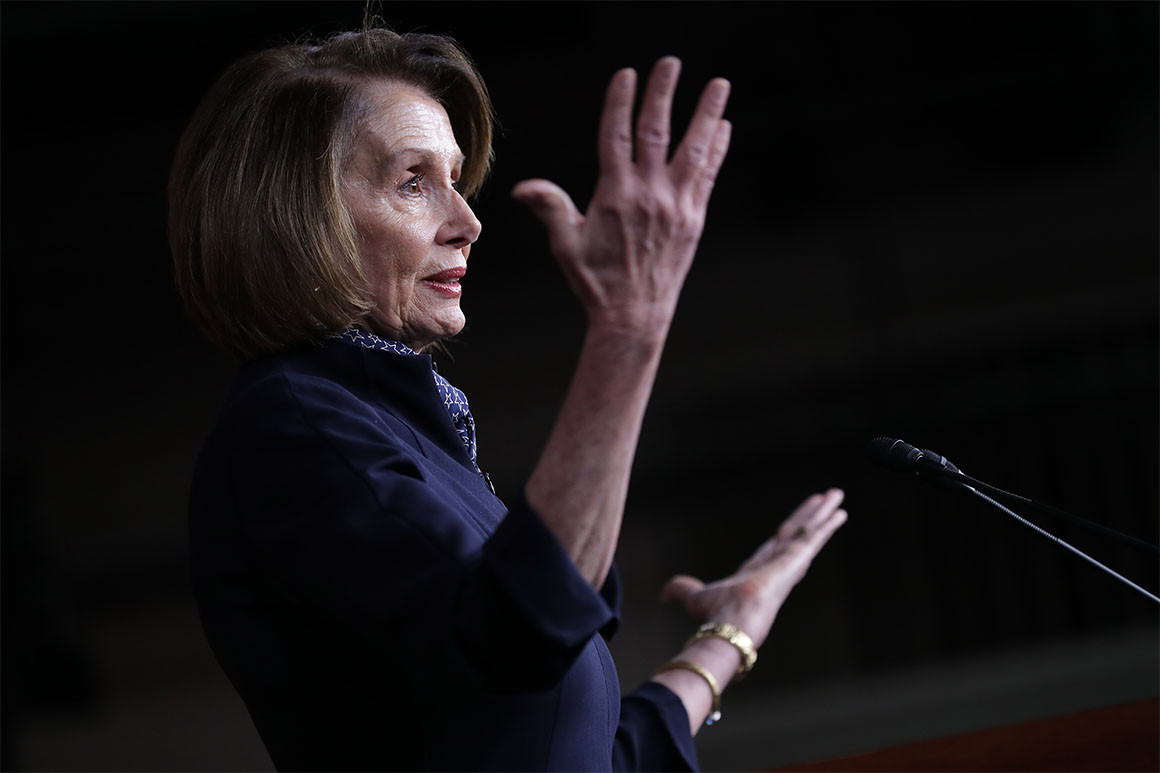
Politco reports that Nancy Pelosi, incoming Speaker of the House, is reining in impeachment efforts in order to give Special Counsel Robert Muller more time with his investigation. She is joined in this effort even by progressive Democrats who voted to start impeachment efforts last year, such as Rep. Pramila Jayapal. Though representatives, such as California Rep. Eric Swalwell, recognize that the campaign finance law violations, established by Michael Cohen when he confessed to paying hush money to models Stormy Daniels and Karen McDougal, do constitute impeachable offenses, they feel they do not alone justify impeachment. It has been suggested that this may be in part because they are reluctant to risk the blow-back that Republicans faced after the impeachment of President Clinton for the mild offenses brought incident to the Lewinsky scandal. They are however planning to start oversight hearings in January.

House Democrats are wise to wait. With new reports that Saudi Arabia, the United Arab Emirates, and Turkey may have had their hands in President Trump’s election, it is apparent that whatever conspiracy exists, it has many more as of yet not-established parts. Additionally, as Professor Bowman has written, the impeach-ability of Trump rests on the slue of missteps he has committed since before and during his presidency. It will take the whole of his crimes, well established by Mueller’s investigation, to justify impeachment efforts.

download (3).jpgChip Somodevilla/Getty Images

Share this:

  • Click to share on X (Opens in new window) X
  • Click to share on Facebook (Opens in new window) Facebook
Like Loading...

Manafort Flips Again

27 Tuesday Nov 2018

Posted by crosbysamuel in Articles, Uncategorized

≈ Leave a comment

Tags

campaign chairman, Collusion, Conspiracy, impeachable offense, Impeachment, indictment, lying, pardon, paul manafort, plea agreement, president, Robert Mueller, russia, russians, Special Counsel, trump, wikileaks

Special Counsel Robert Mueller has submitted court filings indicating that his team will not be recommending that Paul Manafort’s, President Trump’s former campaign chairman, sentence be reduced as previously considered, because Manafort has not been cooperative with his investigation. Manafort plead guilty to two counts of conspiracy pursuant to a deal he made with prosecutors; however, contrary to that agreement, Manafort has been lying to authorities (about some unspecified things). David S. Weinstein, a former federal prosecutor, believes Manafort’s lack of cooperation may be due to a belief that he will ultimately receive a pardon for his crimes. The consequences of such a pardon and similar pardons have previously been considered on this blog.

manafort.jpg


Share this:

  • Click to share on X (Opens in new window) X
  • Click to share on Facebook (Opens in new window) Facebook
Like Loading...

Stone and WikiLeaks

30 Tuesday Oct 2018

Posted by crosbysamuel in Articles, Uncategorized

≈ Leave a comment

Tags

conspiracy to defraud, donald trump, election fraud, Impeachment, investigation, Mueller, president, Robert Mueller, roger stone, russia, russian collusion, Special Counsel, trump, wikileaks

Special Counsel Robert Mueller’s investigators are looking into comments Roger Stone, an adviser to President Trump and self-proclaimed “ultimate political insider,” made to those who called on his political insight. Stone said he knew of WikiLeak’s plans to release information which would affect the 2016 election, apparently referring to the Democratic National Convention emails which were hacked by Russian Intelligence Officials. Roger Stone also claimed to have a relationship with the founder of WikiLeaks, Julian Assange. The natural conclusion to be drawn here, is that a connection between Stone and WikiLeaks is a connection between Stone and Russia, which is ultimately a connection between Trump and Russia. Though Stone has yet to be indicted, he did admit in August that such a thing is possible. The possibility now is greater than it was then, and with Stone’s indictment may come a plea deal and cooperation.

roger_stone_ap_file.jpgANDREW HARNIK/ASSOCIATED PRESS/FILE

Share this:

  • Click to share on X (Opens in new window) X
  • Click to share on Facebook (Opens in new window) Facebook
Like Loading...

The Letter from Trump’s Lawyers to Mueller Refutes Itself

04 Monday Jun 2018

Posted by impeachableoffenses in Uncategorized

≈ Leave a comment

Tags

18 USC 1503, 18 USC 1505, 18 USC 1512, Dowd letter, erik, executive privilege, Obstruction of Justice, Robert Mueller, subpoena, subpoena to Trump

By Frank Bowman

The New York Times has published a lengthy letter dated January 29, 2018, from John Dowd, then head of Trump’s legal team, to Special Counsel Robert Mueller contending that Trump could successfully assert executive privilege and refuse to testify, even if subpoenaed.

The Dowd letter doesn’t quite say that Trump will invoke executive privilege.  It merely argues that he would have solid grounds for doing so and thus, by implication, warns the special counsel not to put the question to the test.  Remarkably, the letter is so poorly executed that it ends up demonstrating exactly why such a subpoena is enforceable under existing law.

Courts have recognized that presidents need a zone of confidentiality within which they can receive and discuss information and recommendations from their advisers.  To protect that zone, several privileges (often lumped together under the term “executive privilege”) have emerged.  One of these covers communications to the president  from his advisers and also communications among the advisers about matters on which they will advise the president.

Unlike many other privileges with which the public is familiar, such as the Fifth Amendment privilege against self-incrimination, the presidential communications privilege is not absolute.  If a criminal suspect claims his right against self-incrimination, he cannot be compelled to talk (at least without granting him immunity from prosecution), no matter how useful his testimony might be.  By contrast, even if a president can show that subpoenaed materials are covered by the presidential communications privilege, the court will order them produced anyway if the prosecution (or a civil litigant) can make a sufficient showing of relevance and need.

The Espy case, on which the Dowd letter places great reliance, sets out the standard for relevance and need:

[I]n order to overcome a claim of presidential privilege raised against a grand jury subpoena, it is necessary to specifically demonstrate why it is likely that evidence contained in presidential communications is important to the ongoing grand jury investigation and why this evidence is not available from another source.

The Dowd letter makes three interlocking claims: (a) implicitly that Trump’s own testimony is covered by the presidential communications privilege; (b) that Mr. Trump did not, indeed legally cannot, commit obstruction of justice and therefore the grand jury has no legitimate need for his testimony; and (c) that, even if there were a need, the White House has already provided so much information from sources other than the president’s own mouth that his testimony would be superfluous.

As to the scope of the privilege, it’s surely correct that, to the extent advice to the president is covered, the president’s memory of that advice and his mental processes in deciding how to respond to the advice should be covered, as well.  The catch, however, is that not all advice and not all presidential decisions fall within the privilege.  It exists in order to maintain the confidentiality necessary to sound exercise of the president’s legitimate powers.  However, if a president does illegitimate things, that is things he has no power to do or things that violate the criminal law, then the fact that he is the president does not immunize him or his advisers from disclosure of either the advice or his personal rationale for choosing to do wrong.  Richard Nixon was legally required comply with a subpoena seeking White House tapes that recorded him receiving advice and giving orders that amounted to criminal conduct during Watergate.

Dowd’s argument that there was no obstruction and therefore no need for a Trump interview has two threads.  The first, and the one that has drawn immediate outraged responses, is the by-now familiar claim by Trump’s acolytes that a president cannot commit obstruction of justice by firing or giving instructions to executive branch law enforcement officials.  The argument takes the noncontroversial truth that a president has wide Article II powers to hire and fire executive branch subordinates and considerable discretionary authority to supervise their work and distorts it into an absurd absolute.  This extreme application of the so-called unitary executive theory has been given thorough scholarly debunkings elsewhere.

But one scarcely needs to be a scholar to discern its absurdity.  If a president can never commit a crime by ordering his subordinates not to investigate or prosecute, regardless of how self-serving or corrupt the president’s motive, then a president can effectively exempt both himself and anyone he favors from the constraints of law.  Anglo-American jurisprudence abandoned that idea — what the English called the royal prerogative — four centuries ago during the reign of King Charles I.  The Framers did not revive this relic of absolutist monarchies in the U.S. constitution.

The second prong of Dowd’s obstruction argument is less shockingly authoritarian, but ultimately no less wrong.  Essentially, he goes through various incidents possibly indicative of obstruction — Trump’s alleged remark to James Comey about letting General Flynn go, the Comey firing, and others — and tries to show that no obstruction occurred and therefore there can be no need for Trump to testify about them.  The argument has two gaping holes.

The first was noted in the original Times report: incredibly, Dowd based his entire exposition on the wrong obstruction statute.

There are a number of federal obstruction of justice statutes.  The three most important are 18 U.S.C. Sections 1503, 1505, and 1512.  The Dowd letter says, “The only statute that could even theoretically be implicated on the alleged facts is 18 U.S.C. § 1505….”  This is not only wrong, but laughably wrong.  Sections 1503 and 1512 between them cover proceedings before judges, grand juries, Congress, and executive agencies, while 1505 is directed primarily at obstruction of proceedings before federal regulatory agencies.  No prosecutor faced with allegations of obstruction of a federal grand jury investigation would ever use section 1505.

Not only do sections 1503 and 1512 fit the facts of this case far better than 1505, but Section 1512 is phrased to eliminate the technical issues raised in the Dowd letter, such as whether there was a “pending proceeding” at the time of Trump’s allegedly obstructive behavior and, if so, whether he was aware of its pendency.  Section 1512(f) specifically provides that in 1512 prosecutions “an official proceeding need not be pending or about to be instituted at the time of the offense.” In short, under Section 1512(c), all the government must prove is that the defendant corruptly attempted to obstruct, influence, or impede some official proceeding (a term that includes grand jury investigations) that is either under way or that might reasonably be anticipated.

Dowd’s choice to claim 1505 as the only applicable obstruction statute is inexplicable. It can only have drawn incredulity mixed with contempt from Mueller’s team.  And it casts everything else in the Dowd letter into doubt.

The remainder of the letter fulfills this low promise.  The primary obstacle to proving that Mr. Trump violated 18 U.S.C. 1512 is not proving that he has acted in ways that tend to “obstruct, influence, or impede” investigation of his affairs.  He plainly has.  His Twitter feed is now devoted obsessively to that project. (Which may be why the Dowd letter relies so heavily on the specious claim that a president can never obstruct justice.)  The real legal challenge for a prosecutor is proving that the president acted “corruptly,” which is to say with an improper purpose.  In other words, the one issue on which Mueller is in the most need of evidence is Trump’s state of mind.

Yet most of the factual discussion in the Dowd letter amounts to arguments that Trump acted with proper, rather than corrupt motives.  Sometimes the letter argues that the evidence already in Mueller’s hands should be read as demonstrating that Trump’s motives were pure. And sometimes, particularly with respect to former FBI Director Comey’s allegations about Trump’s private statements to him, the letter just denies that any such statements were made.

But of course all this rigamarole really demonstrates is how crucial Trump’s testimony is to the obstruction inquiry.  Only two people know what Trump said to Comey.  Mueller has Comey’s evidence.  What’s missing is Trump’s.  Even if other evidence on the point is equivocal, one person knows for certain whether Trump’s motives in impeding the Russia investigation are legitimate or corrupt.  Trump himself.

In short, the Dowd letter actually achieves exactly the reverse of its stated purpose.  It shows precisely why Mueller needs Trump’s testimony and why no other kind of evidence is a reasonable substitute.  And it therefore makes the best possible case for enforcing a subpoena to the president.


Share this:

  • Click to share on X (Opens in new window) X
  • Click to share on Facebook (Opens in new window) Facebook
Like Loading...

Must Trump comply with a subpoena?

06 Sunday May 2018

Posted by impeachableoffenses in Uncategorized

≈ 2 Comments

Tags

Fifth Amendment, grand jury subpoena, Guiliani, Mueller, Robert Mueller, Trump subpoena

By Frank Bowman

Rudolph Giuliani, the newest in the revolving cast of Mr. Trump’s lawyers, has made a number of striking legal claims in his short tenure.  His latest is that Mr. Trump is not obliged to comply with a subpoena to testify from a court or grand jury.

Giuliani is assuredly wrong.  But any attempt to subpoena Mr. Trump would raise a number of complicated issues.

First, Giuliani is right that Mr. Trump, like any other person, has a right under the Fifth Amendment to decline to answer questions that may tend to incriminate him.  However, that right does not allow Trump or anyone else to simply refuse to appear in a court or grand jury room if properly subpoenaed.  Rather, a person subject to subpoena must appear at the date and time specified in the subpoena and assert the privilege to particular questions.

If a witness is technically a “target” of a grand jury investigation and provides the prosecution with a written statement of intention to assert the Fifth Amendment, DOJ policy is that such a witness “ordinarily should be excused from testifying.”  U.S. Attorney’s Manual, 9-11.154 . But that would be a matter of discretion, not law.  And even in that case, unless the witness is expressing an intention to assert the Fifth as to all questions, he would ordinarily be obliged to appear and answer questions that cannot be reasonably viewed as seeking self-incriminatory information.

In the case of a president, even one who is not formally a “target,” the prosecutor might accommodate the president’s expressed intention not to answer questions on particular topics that seem plainly incriminatory by agreeing in advance not to ask them.  But that, too, would be a matter of discretion rather than law.

In any case, it seems somewhat unlikely that even this unconventional president would want to be seen as formally “taking the Fifth” to avoid testifying.

Second, there are issues about which Mr. Trump might claim some form of “executive privilege.”  Broadly speaking, executive privilege is the claim that a president can withhold information from congress, the courts, or the public for reasons relating to the proper functioning of the presidential office.  Legitimate claims of executive privilege are generally related to national security or protecting the privacy of White House deliberations for reasons promoting the public interest.

A great many questions Mueller is said to be interested in asking cannot by any reasonable stretch of the imagination fall within the executive privilege doctrine. Virtually all the questions on the list published by the New York Times that relate to Russia seem far outside any reasonable executive privilege claim.  Leaving all other considerations aside, almost all of them relate to events that occurred before Mr. Trump took office.

Some questions Mueller might ask would probably draw objections on executive privilege grounds.  For example, questions about conversations between Mr. Trump and White House advisers about whether to fire former FBI Director James Comey would probably draw such objections on the theory that executive branch personnel decisions should ordinarily remain private.  Mr. Mueller’s team might respond that executive privilege, to the extent it exists, must yield when the inquiry is into possible criminal misuse of the presidential power being discussed.  The analogy would be to the crime-fraud exception to the attorney-client and marital privileges, pursuant to which otherwise confidential communications must be disclosed if they were in furtherance of crime.

The Supreme Court held in U.S. v. Nixon that claims of executive privilege must yield in the face of investigation of criminal wrongdoing by the president or his aides. Nonetheless, Mueller’s people would have to make more than a bare claim of investigative interest to succeed in compelling testimony from this or any president about internal deliberations on policy or personnel decisions.

Finally, one argument that has been floated in the wake of Giuliani’s comments is that the president need not comply with a subpoena because he is the head of the executive branch and thus the ultimate boss of the prosecutors running the Mueller investigation.  This is frivolous. A subpoena is not a request by a prosecutor.  It is an order issued by authority of the court (if a trial subpoena) or of the court and the grand jury (if a grand jury subpoena).  It is a command by the judicial branch.  And it is not one that a president is entitled to disobey.

My personal bet is that Mr. Trump will not agree to testify voluntarily, and that Mueller’s team will subpoena him as a last resort.  Should that come to pass, it will get interesting very fast.

Share this:

  • Click to share on X (Opens in new window) X
  • Click to share on Facebook (Opens in new window) Facebook
Like Loading...
← Older posts
Newer posts →

Blog Owner

Frank O. Bowman, III


Curators' Distinguished Professor Emeritus
Floyd R. Gibson Missouri Endowed Prof of Law Emeritus
Univ of Missouri School of Law

Web Profile

Enter your email address to follow this blog and receive notifications of new posts by email.

Professor Bowman on Impeachment »

Bibliographies

Explore bibliographies categorized by author and subject, and find other resources.

Posts by Topic

  • The Case for Impeachment
  • Defining Impeachable Conduct
  • Impeachment on Foreign Policy Grounds
  • Impeachment for Unfitness
  • Obstruction of Justice
  • Abuse of Criminal Investigative Authority
  • Election Law Violations
  • Foreign Emoluments
  • Conspiracy to Defraud the   United States
  • Politics of Impeachment
  • Lying as an Impeachable Offense
  • Abuse of Pardon Power
  • Electoral College
  • House Impeachment Resolutions
  • The Logan Act
  • The Mueller Investigation
  • Impeachment of Missouri Governor Greitens
  • Historical Precedent for Impeachment
  • Messages from Professor Bowman

Student Contributors »

Enter your email address to follow this blog and receive notifications of new posts by email.

Blog at WordPress.com.

  • Subscribe Subscribed
    • Impeachable Offenses?
    • Join 199 other subscribers
    • Already have a WordPress.com account? Log in now.
    • Impeachable Offenses?
    • Subscribe Subscribed
    • Sign up
    • Log in
    • Report this content
    • View site in Reader
    • Manage subscriptions
    • Collapse this bar
 

Loading Comments...
 

    %d