Manafort Flips Again

Tags

, , , , , , , , , , , , , , , ,

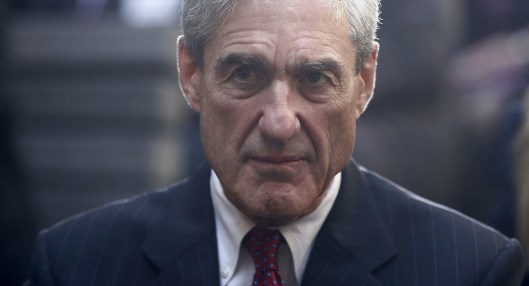
Special Counsel Robert Mueller has submitted court filings indicating that his team will not be recommending that Paul Manafort’s, President Trump’s former campaign chairman, sentence be reduced as previously considered, because Manafort has not been cooperative with his investigation. Manafort plead guilty to two counts of conspiracy pursuant to a deal he made with prosecutors; however, contrary to that agreement, Manafort has been lying to authorities (about some unspecified things). David S. Weinstein, a former federal prosecutor, believes Manafort’s lack of cooperation may be due to a belief that he will ultimately receive a pardon for his crimes. The consequences of such a pardon and similar pardons have previously been considered on this blog.

manafort.jpg


Abuse of Military Power — the Newest Impeachable Offense?

Tags

, , , , , , , , , , , , ,

This opinion piece, published in the New York Times, describes President Trump’s order sending the military to meet the caravan of immigrants at the U.S.-Mexican border as an unprecedented abuse of military power. The caravan referred to is that of the thousands of immigrants moving north towards the United States from Central America. President Trump has used the caravan to boost his anti-immigration rhetoric over the past few weeks. Trump recently ordered that 5800 military troops march to meet the immigrants, an action which the opinion piece above theorizes was taken solely to curry political favor. If that is that case, it would be an unprecedented abuse of military power.

Though what Trump did was technically legal,  the opinion claims that it amounts to an abuse of military power.  To use and move troops for no other reason than to gain political advantage is a first for American presidents. The piece points out that though other presidents have referred to military actions in speeches to increase their popularity, there are no examples of presidents that have taken military action within the United States for no other reason than to curry political favor. It argues politics must be the sole reason for the order because in the past similar border threats have been dealt with by fewer troops and the national guard alone. By treating the situation as a more serious threat, Trump has turned a group of tired immigrants into a national security threat. As such, Trump’s manner of dealing with the caravan amounts to an unprecedented abuse of military power.

Abuse of military power has historically been considered an impeachable offense. Professor Frank Bowman wrote an article about the history of British impeachments (found here), entitled “British Impeachmnets (1376 – 1787) & the Present American Constitutional Crisis.” In it he explores historical British impeachment procedure and specific examples of British impeachments. He cites to several examples of British officers that were impeached for military blunders. For instance, Michael de la Pole, Earl of Suffolk, was impeached for failure to adequately utilize funds for maritime defense and bungling a military expedition to relieve Ghent. In 1626 parliamentary outrage over George Villiers, the Duke of Buckingham’s, military incompetence also led to articles of impeachment.

The phrase “high crimes and misdemeanors” is the vague descriptor of what qualifies an act as impeachable. It can be difficult to tell what the founding fathers intended to fall into that scope. However, the drafters of the Constitution would have known of these British impeachments. An impeachment of a president for abuse of military power does not seem out of the realm of possibility, because of the historical precedent already in place for such a thing, and because the enormous power that is placed with the President as the Commander in Chief. Without a way to rectify abuse of said power there would be little balance between the branches of government. Therefore, it is arguable that in moving 5800 troops to the border Trump has committed another act worthy of impeachment.

Will the Investigative Torch Pass to the House?

Tags

, , , , , , , , , , , , , , , , , ,

With Jeff Sessions gone as Attorney General and Matt Whitaker positioned as acting AG, one has to wonder how much longer Mueller will be able to carry on his investigation unhindered. It may be the Special Counsel will have to pass his baton over to the House. But will  House Democrats vigorously investigate?

This article from Vox, written by Ezra Klien, correctly points out that because Democrats took the House but not the Senate, they will have trouble passing legislation into law. Much of what power is left to them is in the  investigation of President Trump. With their new found majority, Democrats are taking over vital investigative committees in the House. New York Democrat Nita Lowey, will chair the Appropriations Committee, and has “a laundry list of potential areas for inquiry. . . . [including the] family separation policy and hurricane relief in Puerto Rico.” California Rep. Adam Schiff will lead the House Intelligence Committee, which has already been engaged in the Trump investigation.

However, Democrats may be reluctant to shift their focus to investigation. Nancy Pelosi, House Democratic Leader, has said that any investigations will be “strategic” aimed at “seek[ing] the truth.” And Rep. Zoe Lofgren, a Democrat from California, expressed a similar sentiment, stating: “if Mueller sends us an exploding bomb, we may have an obligation to deal with that. But absent that, I don’t think the country will be on board with impeachment, and nor should we.” She feels that focusing on the investigation will distract from what “really matters to people.” It may be Democrats are unwilling to focus their energy of uncovering a truth that, even if it leads to impeachment in the House, will fail to cause removal by the Senate.

pelosi.jpgJ. Scott Applewhite

Impeachable Offenses in Slate: All about AG Sessions’ acting replacement

By Frank Bowman

Jeremy Stahl of Slate wrote a nice analysis of why fired Attorney General Jeff Sessions’ acting replacement, Matt Whittaker, is a troubling choice for a position with influence over the Mueller investigation.  Jeremy was kind enough to quote me and reference this blog on a couple points.  The article appears at this link.

Stone and WikiLeaks

Tags

, , , , , , , , , , , , ,

Special Counsel Robert Mueller’s investigators are looking into comments Roger Stone, an adviser to President Trump and self-proclaimed “ultimate political insider,” made to those who called on his political insight. Stone said he knew of WikiLeak’s plans to release information which would affect the 2016 election, apparently referring to the Democratic National Convention emails which were hacked by Russian Intelligence Officials. Roger Stone also claimed to have a relationship with the founder of WikiLeaks, Julian Assange. The natural conclusion to be drawn here, is that a connection between Stone and WikiLeaks is a connection between Stone and Russia, which is ultimately a connection between Trump and Russia. Though Stone has yet to be indicted, he did admit in August that such a thing is possible. The possibility now is greater than it was then, and with Stone’s indictment may come a plea deal and cooperation.

roger_stone_ap_file.jpgANDREW HARNIK/ASSOCIATED PRESS/FILE

The Social More-ing of the Executive and Legislative Branches

Tags

, , , , , , , , , , , , ,

Is there a constitutional defense against members of the Executive and Legislative branches that act not illegally, but immorally? Constitutional scholars have recognized this possibility for judges, but would leave it to the political process to take care of the rest of the branches. Neil S. Siegel, in his article After the Trump Era: A Constitutional Role Morality for Presidents and Members of Congress,  published in the Georgetown Law Journal in its October, 2018 Edition, argues that the moral constitutional standard applied to judges should be extended to presidents and congressmen as well. Here is an excerpt from his article:

Meanwhile, the federal government itself is becoming even more dysfunctional as elected officials increasingly disregard norms that previously constrained partisan competition; more often than not, elected officials are unable to cooperate across party lines to execute the basic responsibilities of the federal government. Examples abound. The confirmation process for Supreme Court Justices has become a hyperpartisan, destructive race to the normative bottom. A Republican Senate approved highly consequential tax legislation without any Democratic input or even a single hearing, let alone the traditional process of “multiple congressional hearings, proposed statutory language and detailed reports from the tax-writing committees, all prepared well in advance of any vote” and “with the assistance of [Joint Committee on Taxation] staff and with the input of Treasury Department experts.” In addition, Republican President Donald J. Trump routinely flouts norms and conventions of proper governmental behavior that previously constrained presidents of both parties. The Democrats, for their part, held up urgent funding legislation in order to extract a deal that would offer a path to citizenship to beneficiaries of the program known as Deferred Action for Childhood Arrivals (DACA); a shutdown of the federal government ensued. Three characteristics of the problems discussed above stand out. First, they mostly implicate the convictions and conduct of the public and the political branches, not the courts. Second, they concern mindsets and behavior that, although troubling, are not potentially unconstitutional or otherwise illegal. Third, that behavior, even where not potentially unconstitutional or otherwise illegal, raises concerns that are properly denominated constitutional in the broad sense that they appear to call into question the long-term health of the American constitutional system.

000_HZ8ZT-e1478828415397.jpgAFP/Nicholas Kamm


Mueller’s Questions Exclude Obstruction

Tags

, , , , , , , , , , , , ,

Special Counsel Robert Mueller sent President Trump and his lawyers questions this week regarding collusion between the Trump Campaign and Russian officials. This represents a breakthrough in negotiations between the parties as to the scope of questioning of the President; however it is limited. The President’s answers will only be written. Given Trump’s history of contradictions this may be a safeguard against perjury. Commentators have noted that the series of questions leave out obstruction of justice.

Jonathan Turley, in an opinion piece written for The Hill, has theorized that the absence may indicate Mueller is not pursuing an obstruction charge. His supports his opinion by pointing out that obstruction of justice is a bad fit for the President’s alleged crimes, since the charge is normally applied to the obstruction of some kind of judicial proceeding. Elie Honig, a former federal prosecutor from New York, disagrees with Turley. He theorizes that if Mueller is presenting questions about collusion that must be because he is focused on specific conduct and doesn’t see “wiggle room” for the President in his answers. In his mind, the fact that Mueller isn’t giving questions about obstruction does not mean that he has given up on the charge, but rather that he is preparing for a legal battle that could go to the Supreme Court.

Regardless of Mueller’s motivation, readers would do well to remember that the crimes of obstruction and collusion are intimately involved. If it could be established that President Trump was involved in the Russian election interference, that would go a long way in establishing the mens rea required to convict the President of obstruction of justice — his corrupt influence, if you will.

trumpfirst_opi2jd.jpgKevin Lamarque/Reuters

Rosenstein Spared

Tags

, , , , , , , , , , ,

It has been reported that President Donald Trump has no intention of firing Deputy Attorney General Rod Rosenstein. There was some speculation that a firing or resignation would occur after it was reported by the New York Times that Rosenstein had discussed removing the President via the 25th amendment and recorded him secretly, though Rosenstein denied both allegations. Now, after a nice flight the two shared to Florida, Trump announces that he doesn’t intend to make any changes to the Justice Department.

This is surprising, considering the menagerie of firings Trump has collected throughout his campaign and administration.  However, there was some speculation that firing Rosenstein could amount to obstruction of justice, and with midterms looming, it may be that Trump is looking to avoid another scandal. This issue very well may resurface after November.

SUM7NGGLJUI6RI7GITNKHU263Y.jpgMandel Ngan/AFP/Getty Images

Impeaching Kavanaugh Is Not an Option

Tags

, , , , ,

By Frank Bowman

This morning as I walked into the cafe where I get my morning coffee, I passed a newspaper vending machine (yes, they still exist) from which a USA Today headline blared the suggestion that the fight over Judge Kavanaugh’s Supreme Court nomination might not end with Senate confirmation.  IMPEACHMENT, the article suggested might follow if Democrats gained control of Congress. It even quoted some congressional Democrats intimating that congressional investigation and even impeachment were live possibilities.

Fiddlesticks.

It is true that federal judges, including Supreme Court justices, can be, and have been, impeached.  It is also true that there is precedent for impeaching a federal judge based on pre-confirmation conduct and/or lies told during the confirmation process (which is presumably the basis on which any impeachment investigation of Kavanaugh would be launched).

In 2010, Thomas Porteus, U.S. District Judge for the Eastern District of Lousiana, was impeached, convicted, and removed on charges of corruption in his previous office of state judge and also for false statements made during the process of Senate confirmation.  This impeachment seems to have settled the previously unresolved question of whether conduct prior to taking office could be the basis for impeaching federal judges who, per the Constitution, serve during “good behavior.”

That said, the idea that anything either known or suspected about Kavanaugh would stack up as a plausible impeachable offense is just unsupportable.  He may well be lying about his encounter with Christine Blasey Ford thirty-some years ago. But whatever people’s intuition or even moral certainties, the truth of that affair is profoundly unlikely ever to be known. (The only way the matter could be resolved with any certainty would be if Kavanaugh’s supposed wingman in the business, Mark Judge, were to step forward and confirm Dr. Ford’s account. And that seems vanishingly unlikely.)

He may be lying about how much he drank in high school and college, and about whether he behaved like a jerk.  But those questions are in some measure subjective.  One person’s aggressive drunk is another person’s hale-fellow-well-met party enthusiast.  For that reason, not to speak of the passage of time, the truth will remain contestable.  But far more importantly, tidying up your youthful social indiscretions is just not impeachable conduct.

He may be lying about exactly what he knew and did during his time at the Bush White House, obscuring his participation in partisan maneuvering around judicial nominations or other matters.  If conclusively proven, that would matter far more than fudging about his youthful drinking habits. But the odds are extremely high that, even if every scrap of paper relating to his work in the Bush years were disclosed, no perjury will be provable.  At most, shadings of ambiguous truth.

I can hear Democratic partisans screaming, “But what if we can conclusively prove he lied?!!! It’s not that he was a drunk or a partisan hack, but he lied under oath!!!  Surely that’s impeachable.”  To which the answer is, yes, judges have been impeached for perjury, but in every case the lies were about the judge’s own participation in overt corruption. There is no precedent either in America or Great Britain for impeaching a judge or any other official for the kind of lies that amount to making oneself look a little more upright and a bit less partisan than one actually is.

Leave to one side the rank hypocrisy of Democrats — who lined up in solid phalanx against impeaching Bill Clinton for perjury about adultery — hollering to impeach anybody not for what they did, but for lying about it. No sensible person should want to open the door to a world in which Congress demands a do-over on federal judges every time control of the legislature changes hands.  If either party starts trying to reverse confirmations because they didn’t care for the results, the legitimacy of the federal courts as constitutional arbiters, already tottering, would be utterly destroyed.

Now, let’s be clear.  I’d rather Judge Kavanaugh were not confirmed.  If he committed one or more sexual assaults when young, and even if there is probable cause to believe he did, he ought not be confirmed. If he is lying about other things, he ought not be confirmed.  Even if he is telling the truth as he understands it about all the episodes of his youth, his outburst during the Senate hearing revealed him to be both bitterly partisan and unable to maintain the equanimity essential to a Supreme Court justice.

But if he is confirmed, impeachment ought not even be seriously contemplated, at least absent revelations of misbehavior or criminality on a completely different plane that anything so far revealed.  Even launching an impeachment investigation based on no more than what is now known would be a grave disservice to the country. The process would further politicize the court and embitter (or further embitter) Kavanaugh, other members of the Court, and even the most moderate of Republicans.

And any such effort would surely fail. There is almost no chance that anything exposed by such an investigation would produce revelations that even all House Democrats would consider impeachable, still less any Republicans whatever.  In the surpassingly unlikely event that articles of impeachment could secure a majority of the House, the odds of gaining a two-thirds majority in the Senate, which would require at least 16 Republican votes even if the Democrats control the Senate after November, approach zero. The whole process would be a farce, a transparent pander to angry elements of the Democratic base.

Democratic leaders in both Houses should firmly suppress any notion that impeachment is possible.  Either Kavanaugh is stopped now, or he’s on the high court until he dies.  Those are the possibilities.  Anything else is dangerous fantasy.


Was Mueller’s Appointment Constitutional?

Tags

, , , , , , , , , , , , ,

Marina Medvin, a contributor to Forbes.com, wrote today about a constitutional challenge which has been brought against the authority of Special Counsel Robert Mueller. The challenge was brought by counsel for Andrew Miller, an aide to Roger Stone, who was subpoenaed by Mueller. It comes in three parts: 1) that according to the Constitution, short of a presidential appointment, Congress must create a law empowering the Attorney General to appoint a special counsel and no such law exists; 2) even if such a law does exist, Attorney General Sessions’ recusal is not sufficient to empower Deputy Attorney General Rosenstein to make such an appointment; and 3) the powers which Mueller has utilized are far beyond those appropriate for a Special Counsel and are equivalent to those of a “super U.S. attorney.”

Miller’s argument lost in the district court and he has taken it up on appeal. Mueller filed a brief in response (interested readers can find it here). It is unclear what would happen to Mueller’s investigative findings should his powers be invalidated. The searches and subpoenas he has executed so far, if not backed by constitutional authority, are sure to equate to violations of the 4th amendment rights of his subjects. That being said, the invalidation of his power seems an unlikely result. As Mueller pointed out himself, there is strong precedent for his power, dating back to 1870.

download (1).jpg AP Photo