The President is Not Demented

Tags

, , , , , , , , , ,

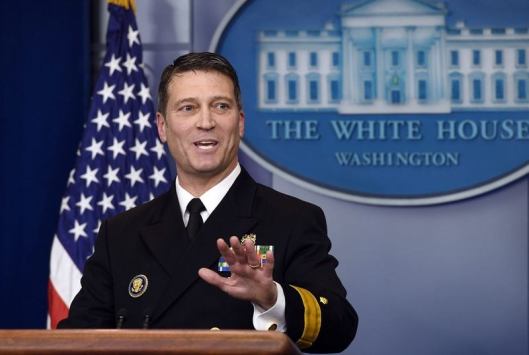
Trump apparently requested that his presidential physician perform a cognitive exam on him during his annual physical exam. The exam used was the Montreal Cognitive Assessment, which is used to test for Alzheimer’s and dementia. The President received a perfect score, indicating that he is free of dementia. This result contradicts some recent speculation. Though some have questioned the rigor of the test, it has done its job. It has armed Trump against attacks on his mental fitness, and made removal via the 25th amendment much less likely.

AR-180119380.jpgOlivier Douliery/Abaca Press/TNS

The Merits of a Strategic Shutdown

Tags

, , , , , , , , , , , ,

If Congress is unable to pass a spending bill by this Friday at midnight, the government will shutdown for the first time since 2013. With elections looming in 2018 and presidential elections in 2020, Parties and the President must decide whether it would be better to allow a government shutdown then to cede their policy concerns. The spending bill is currently stalled over immigration issues. A bipartisan proposal was recently rejected by President Trump, who wanted stronger restrictions on immigration and more funding for his border wall. The Democrats meanwhile are unwilling to cede on certain immigration issues, such as an easier path to citizenship for the dreamers. So the question is then, if the current stalemate were to result in a government shutdown, which party would it reflect poorly on?

President Trump recently tweeted that “the Democrats want to shut down the Government over Amnesty for all and Border Security.” Meanwhile, Democrats are claiming that the President is racist, citing his “shithole” comment. In 2013, both parties tried to blame the other for the government shutdown. Therefore, it is possible that no party will look good in light of a government shutdown. But the President might: Trump has tweeted before that the government needs a good shutdown, and indeed, the comment is in line with the anti-government rhetoric upon which he ran. It may be that the Republican party will be harmed by a government shutdown, however if Trump comes out unharmed, it won’t matter.

ap18009641510185.jpgAssociated Press/Evan Vucci

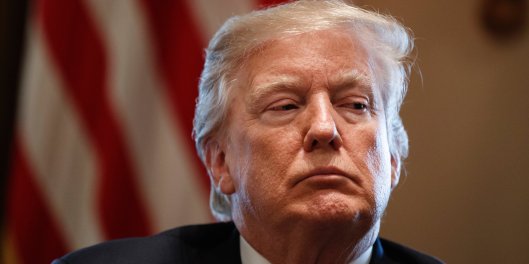
In 24 hours, Mr. Trump demonstrates the whole spectrum of his unfitness

Tags

, , , , , , , ,

By Frank Bowman

The media are understandably abuzz with reports about Mr. Trump’s use during yesterday’s White House meeting on immigration of a vulgarity to refer to Haiti, El Salvador, and some African nations.  But the horrified focus on the phrase “s***-hole countries” has served to obscure the multiple ways in which, during a single day, Mr. Trump displayed his unfitness for the presidency.

The “s***-hole countries” comment does perhaps deserve pride of place because it illustrates at least two disqualifying character traits.

First, although I am deeply reluctant to get into the business of assessing anyone else’s racial attitudes (none of us being pristine in this regard), it is darn near impossible to hear Mr. Trump’s vulgar denigration of countries populated by brown people as anything other than a manifestation of personal prejudice, particularly in light of his reported enthusiasm in the same meeting for immigration from places like Norway.  And even if, as Mr. Trump’s defenders are valiantly seeking to do, one could explain away this particular remark, it was not an isolated incident.  His consistent use of overt or barely coded racial appeals compels the conclusion that he is either personally bigoted or is at the least prepared to play on the prejudices of  a segment of the public to advance his political ends.  Either characteristic should be disqualifying in a president because it places him in opposition to the founding ideals of the country (“all men are created equal”) and core legal principles written into the constitution and statutory law.

Second, the use of a racially-charged vulgarity in the setting of a delicate negotiation with congressional leaders is a demonstration of personal indiscipline and professional incompetence. Among a president’s primary jobs are the practical one of helping to guide the legislative process toward enactments consistent with the administration program and the aspirational one of acting as a behavioral exemplar to the country.  It goes without saying that public displays of vulgarity and racial insensitivity hardly uplift the nation. But anyone who does not understand that behavior of this sort is almost sure to mortally offend those with whom one is negotiating and thus to derail the negotiation has no business in any executive position, much less the Oval Office.

That said, the “s***-hole countries” incident actually pales in comparison to several remarks Mr. Trump made during a Thursday interview with the Wall Street Journal.  I’ll mention only two here.

During a discussion of the recently released tell-all book, Fire & Fury, Mr. Trump repeated his previously expressed view that libel laws should be strengthened, and went on to complain that this would not happen because “congress doesn’t have the ‘guts’ for that debate.”  This is profoundly troubling for two reasons.

First, it is of a piece with Mr. Trump’s continued disparagement of the press.  All presidents are at times resentful of the media.  And there’s nothing inherently wrong with presidential criticism of either particular coverage or the general approach of the 4th Estate.  But a president should not, consistent with his obligation to support and defend the constitution, actively seek to undermine the free press guaranteed by the First Amendment.  Mr. Trump’s behavior has consistently run very close to that impermissible line, if indeed it has not already crossed it. Indeed, Trump’s virulent disparagement of all media not overtly adulatory of him is distressingly consistent with the approach taken by anti-democratic authoritarian leaders of the past century.

Second, Mr. Trump’s criticism of Congress for failing to change libel laws illustrates — once again — his yawning ignorance of American law and government.  There is no federal libel statute.  Libel law is a matter of state jurisdiction.  This is not to rule out absolutely the possibility that, in theory, congress could pass a national libel statute. But it would seem quite difficult to find a constitutional warrant for doing so even in an expansive reading of the commerce clause.  And more to the point, by immemorial American practice, libel is a state matter.

Mr. Trump’s defenders would no doubt respond that this is a picky, technical legal point that only an academic pointy-head would care about.  But that’s precisely wrong. A president should know this sort of thing.  It’s part of the background knowledge of American public life that should be a minimal qualification for the presidential office. But even more critically, a president who is actively proposing congressional action in a particular area has an obligation to find out the status of current law and to identify the appropriate body to make changes before he shoots off his mouth.

No president can know everything.  All presidents, even deeply experienced ones, come to office with big gaps in their knowledge.  But a minimal expectation of any president is that he or she become informed before advocating important changes in federal law.

During the Wall Street Journal interview, Mr. Trump also contended that text messages sent by an FBI agent during the campaign criticizing Trump and expressing dismay at the possibility of his election amounted to “treason.”  This comment, too, illustrates multiple disqualifying Trumpian traits.

First, just as with the libel remark, Mr. Trump demonstrates a sad ignorance of the law.  Treason is the one offense named and defined in the constitution itself, which provides that treason “shall consist only in levying war against [the United States], or in adhering to their enemies, giving them aid and comfort.”  Whatever the FBI agent’s texts may be, they are not treason.

Again, Mr. Trump’s defenders may say that this is picayune legal nicety.  But it’s not.  A president is supposed to know what the constitution says.  And even if he doesn’t remember the place of “treason” in the constitution, a president should never publicly accuse someone of a capital crime – which treason is – without at a minimum fully and carefully considering whether the accusation has any merit. Indeed, the best practice is for presidents to studiously avoid publicly accusing people of crimes at all, since doing so both damages the reputation of the accused in a forum where he has no opportunity to respond and preempts the role of the Justice Department in determining through formal legal processes whether charges should be preferred against anyone.

Second, and more distressingly, the accusation of treason here is yet another in the steady stream of examples of Mr. Trump characterizing his opponents as criminals and criticism of him as something to be suppressed by either civil law (libel) or criminal prosecution (treason). It becomes plainer by the day that Mr. Trump increasingly conceives of himself as indivisible from the country, that, incredibly in an American president, he subscribes to Louis XIV’s view that “L’etat c’est moi.”  Only for a man who sees the world this way is this accusation of treason comprehensible.

Our national crisis deepens.

Frank Bowman
 

Bipartisan Rejection of Sh–hole Comment

Tags

, , , , , , , , , , ,

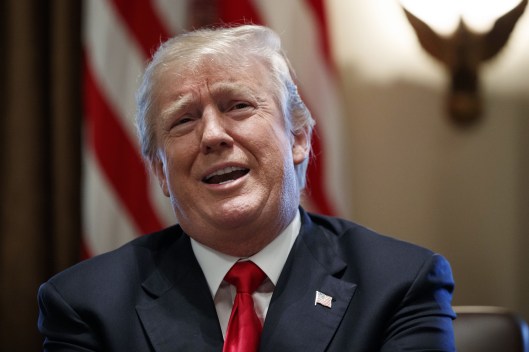
Congressmen from both the Republican and Democratic parties are condemning the President’s comment on the bipartisan immigration bill. Trump reportedly questioned why we were accepting immigrants from “shithole countries” such as Haiti. Both Republican and Democratic congressmen have stated that the comment was offensive and unacceptable. There has been an international reaction to the comment as well: the United Nations Human Rights Office said the comment was “xenophobic,” and the African Continental Body said the comment was “alarming.” Trump now denies that he made the comment.

Though his comment was offensive, it is certainly not the first offensive comment the President has made. One can hope that this comment will be the proverbial straw that will finally break the Country’s, and Republican’s, tolerance of the President, but that much remains to be seen.

ct-trump-immigrants-shithole-countries-20180111.jpgEvan Vucci / AP

Is Trump Losing his Political Identity?

Tags

, , , , , , , , , , , , , ,

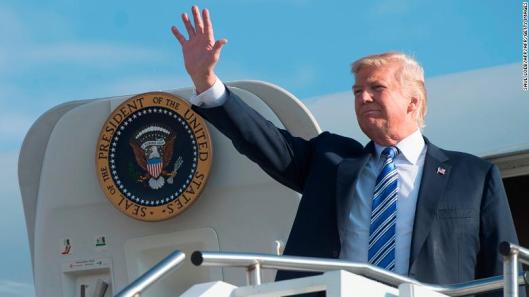
Two events have caused commentators to question President Trump’s political identity. The first is the meeting on immigration he held with both Democrats and Republicans. Some are saying the President, in an effort to prove his competence, came off as a yes-man, agreeing with conflicting assertions proposed by both parties, and allowing for pork barreling by the congressmen. Trump’s behavior at the meeting has received push back from republican icons such as Ann Coulter. who said he “agree[d] with whatever the last person who sp[oke] . . . . said.” The second event is President Trump’s announcement that he will be attending the World Economic Forum in Davos, Switzerland. Though Trump’s press secretary has said he is attending the conference to talk about “America first” policy, his attendance contradicts the anti-elitist base upon which he ran for the Presidency. Therefore, Americans should be left confused at to what President Trump stands for.

It is unclear how this confusion will affect Trump’s support, but it may be to his advantage. If Republican Congressmen are unwilling to scrutinize the President, then they need only a few examples of his fitness to justify their support. Though the President’s behavior may be contradictory, it is just the sort of smoke bomb he needs to buy himself some time.

171103085825-trump-air-force-one-waving-exlarge-169.jpg


Mueller to Interview Trump

Tags

, , , , , , , , , , , , , ,

Special Counsel Mueller intends to interview President Trump soon, a decision which some believe signals the nearing of the end of his investigation. Though Trump has said that he is happy to talk about Russian collusion, a conversation he believes he will clear his name, his lawyers are scrambling to find a way to avoid or limit Mueller’s interview. Commentators believe what they are trying to avoid are questions about obstruction of justice: namely the firing of former FBI Director James Comey, and the lies former national security adviser, Michael Flynn, told the FBI.

Regardless of the motive for the interview, however, the timing could not be better for Democrats. With the 2018 midterms fast approaching, should Mueller’s investigation come to a close soon, its results may be a boon to Democrats running for Congress. And of course, if Democrats are able to obtain a majority in the House and Senate, impeachment will become more likely.

robert-mueller-mckelvey_j4wbro.jpegAlex Wong/Getty Images

A Mad Week: As Trump’s Unfitness Becomes Ever Plainer, Republicans Maneuver to Protect Him

Tags

, , , , , , , , , ,

By Frank Bowman

During the past week, two discordant trends gathered strength in the parallel universes inhabited by the increasingly Trumpist Republican Party and pretty much everyone else.

One the one hand, evidence of Mr. Trump’s unfitness for office continued to mount.  Michael Wolff’s book about the Trump campaign and his early days in office, Fire & Fury, was breathlessly previewed, and then released early in the face of a threat by Trump to sue to stop it.  Whether or not all the details of the book are accurate, the thrust of its portrayal of Trump — an unprepared, barely literate, narcissist who ran for president as a brand-building stunt, never expected to win, and lacks the minimum levels of intelligence, rectitude, maturity, discipline, and psychological stability necessary for the job — is entirely consistent with the existing public record.

Mr. Trump is reportedly furious about the book, and his handlers have furiously disparaged both book and author.  But, typically, Trump’s own uncontrollable compulsion to return fire merely confirmed the truth of the book’s portrait of a man both pathologically insecure and cripplingly wanting in self-awareness.  This morning, in response to Wolff’s disparagement of his intelligence and stability, Mr. Trump tweeted that he is “a very stable genius.”

Meanwhile, at the other end of Pennsylvania Avenue, congressional Republicans seem to be unaffected by the ceaseless accretion of proof that Mr. Trump is dangerously unsuited to be president.  Indeed, as Trump’s troubles increase, an increasing number of Republican legislators evince a readiness to undermine long-standing governing norms to protect him.

Trump and his defenders obviously view the Mueller investigation as a major threat to the administration.  It is increasingly plain that an important faction of Republican legislators also see Mueller as a threat, although it is unclear whether they are most concerned about the danger Mueller poses to Mr. Trump, or the danger that adverse conclusions by Mueller would pose to Republican electoral prospects in coming down-ballot elections.  Regardless, a two-pronged Republican strategy seems to be emerging.

Prong one involves attacking Mueller directly, with insinuations that he and his team are servants of an anti-conservative “deep state” embedded in the Justice Department and FBI, and calls for the resignation of AG Jeff Sessions so that he can be replaced by someone who could control Mueller’s supposed “witch hunt.”

Prong two is a transparent, but deeply dangerous, effort to divert attention from Mueller’s work by pressing for federal criminal investigations of Hillary Clinton, the Clinton Foundation, former members of the Obama Administration, and others who are either already recognized boogiemen to consumers of far-right media or, like James Comey, are persons whose reputation for probity threatens Trump.

I have previously deplored the willingness of the Republican members of the House Judiciary Committee to call for legally baseless investigations of Hillary Clinton and her campaign.  Such requests are corrosive of the rule of law inasmuch as they seek to politicize the criminal investigative apparatus of the federal government.  Worse, they undermine democracy itself by transforming elections into struggles to the death in which all tactics, however reprehensible, are justified by the imperative to avoid losing in an arena where losing could mean prison, or at least the crippling cost of endless investigations.

The latter consequence has now materialized for Secretary Clinton, as it was this week reported that the Justice Department has opened, or re-opened, investigations into the Clinton Foundation and perhaps the e-mail matter. In short, Jeff Sessions’ Department of Justice has folded under political pressure and in the process severely damaged its own institutional credibility.

Until this week, I was somewhat comforted by the relative restraint of Republican senators, some of whom had signaled opposition to any effort to fire Mueller or distort the ordinary professional judgments of the Department of Justice.  However, my tentative confidence in the relative rectitude of Republican senators was shaken this week when Senators Charles Grassley (R-Iowa) and Lindsey Graham (R-S.C.) made a formal referral to the Justice Department suggesting that criminal charges be brought against Christopher Steele, the former British intelligence agent whose consulting company assembled the famous dossier about Trump’s connections with Russia.

It is, to be frank, doubtful that the Justice Department will take serious action on this request.  But the mere making of it is plainly part of a larger strategy to diffuse the impact of the Mueller investigation, and to discredit Trump critics and sources of information about his Russian contacts. In short, at least some Republican senators are now joining in the deeply dangerous, profoundly corrosive tactic of using the Department of Justice as a pawn in the game of protecting Donald Trump.

Again, the dissonance between the mounting evidence of Mr. Trump’s unsuitability for the presidency and the increasing willingness of elected and appointed Republicans to undermine governmental institutions and democratic norms to protect him, and by extension the Republican Party, is stark.

A collision is coming.  I am not confident that the result will be a happy one.

Frank Bowman

Image

Obstruction of justice matters only in an impeachment inquiry

Tags

, , , , ,

For the past several days, the media has been ablaze with stories touting new details of Mr. Trump’s concern about the Russia investigation and his alleged efforts to quash it.  For example, Mr. Trump apparently believed that Attorney General Sessions could control the investigation and shield Mr. Trump, and therefore sought to prevent Sessions from recusing himself by sending White House counsel Donald McGahn to lobby Sessions against recusal.  Other bits and pieces are solidifying the proposition that Trump fired Comey in order to stop or impede the Russia investigation.

Unsurprisingly, many commentators have been declaring one or the other of these revelations definitive proof that Mr. Trump is guilty of obstruction of justice. The purpose of this post is not to assess the current state of the evidence.  Rather, I want to re-emphasize several points I made last summer:

1) While it is quite possible (contrary to the ill-considered declarations of folks like Alan Dershowitz) for a president to commit the crime of obstruction of justice, the official position of the Department of Justice is that a sitting president may not be criminally indicted.  Robert Mueller, whose appointment makes him subject to DOJ rules and regulations and subordinate to Deputy Attorney General Rod Rosenstein, has no authority to disregard that DOJ position.  Accordingly, no matter what evidence Mr. Mueller uncovers, it is vanishingly unlikely that he would even attempt to indict Mr. Trump for obstruction.

2) Even if Mr. Trump were indicted and convicted of obstruction, such a conviction would not result in his removal from office.  Only impeachment can accomplish that end.  Only Congress can impeach and remove a president.  And therefore the real question is what Congress will choose to do with whatever Mr. Mueller uncovers. But before it could do anything, it would have to have access to Mueller’s results.

3) Absent a formal indictment, the most Mueller could do in the criminal context is name Mr. Trump as an unindicted co-conspirator in an indictment charging others with obstruction.  This was the tack taken against Richard Nixon by Watergate Special Prosecutor Leon Jaworsky, but it was controversial at the time and is disfavored by DOJ policy.  We cannot predict with any certainty whether Mueller might try this approach, or whether Deputy A.G. Rosenstein would approve it.  Should Trump be named as an unindicted co-conspirator, that designation would formalize a legal conclusion by the Mueller prosecution team and give that conclusion a grand jury’s stamp of approval.  Critically, in the course of litigating the case against those formally indicted, the facts regarding Mr. Trump’s involvement would be revealed.

4)  If Mueller’s team assembles a convincing case that Mr. Trump did commit the crime of obstruction of justice, but is unwilling either to indict him or name him as an unindicted co-conspirator, there is some uncertainty about whether, and if so how, Mueller’s conclusions and supporting evidence would become available to anyone outside the Justice Department. Ordinarily, out of concern for the privacy interests of persons not charged, the Department does not disclose the facts of investigations that don’t result in charges.  James Comey’s choice to discuss publicly the details of the Clinton e-mail investigation was contrary to DOJ policy and would have been a perfectly sound reason to fire him — if it had been the real reason. Moreover, DOJ regulations on the appointment of special counsel make no provision for reports to congress or the public.

All that being said, there is little, if any, doubt that a committee of the House of Representatives engaging in an impeachment inquiry could request, and if necessary subpoena, Mueller’s materials and secure his testimony about his conclusions.  But, as I have observed before, no such inquiry is at all likely to occur so long as Republicans control the House.  Only if Democrats flip at least the House of Representatives will any of this chatter about presidential obstruction of justice have any practical consequence.

Frank Bowman

Bannon Switching Sides

Tags

, , , , , , , , ,

The world is abuzz today with talk of Steve Bannon’s comments in Michael Wolff’s new book, “Fire and Fury: Inside the Trump White House.” Most notably, Bannon, former Chief Strategist, claimed that the meeting between Donald Trump Jr. and the Russian lawyer in the Trump Tower was treasonous. The President fired back at Bannon, claiming that he had lost his mind, and had very little influence over the White House while he was involved.

It unclear how much weight to put on Bannon’s opinion as to whether or not the Russian lawyer meeting was “treasonous” — he is a journalist, not a lawyer; however his comments are significant for another reason. The exchange between Bannon and Trump represents a clear break in their relationship. Bannon connected with Trump’s populist base, and though Bannon was fired months ago, he has still had influence on the President’s decision-making. So, now that a break has finally and fully occured, one has to wonder whether Trump’s support will wane. As the President’s base continues to shrink, impeachment becomes more likely.

ct-donald-trump-steve-bannon-russia-20170217.jpgMario Tama / Getty Images

What to do about Trump’s Mental Health?

Tags

, , , , ,

This article from the Atlantic takes a close look at President Trump’s mental health, and the inability of our legal system to deal with a cracked President. Over the past year there has been a lot of speculation as to the President’s capacity, and even calls to utilize the 25th amendment to remove the President should he prove mentally unfit. The President’s tweets (such as the recent one about his ‘nuclear button’), his speech, and even the manner by which he takes a drink of water are all seen as indicators of his lack of mental capacity. But should this speculation prove to be accurate, and Trump actually suffers from some sort of dementia, it seems there is little that can be done. The 25th amendment is the usual mechanism for removing an unfit president, but that requires that the President’s cabinet declare him unfit, and that 2/3 of Congress vote to remove him. That make it an arguably higher standard than impeachment. Therefore, if Trump (continues to) prove himself unfit, it may be that impeachment is still the worried citizen’s best bet.

dfe.jpg