• Home
  • Mission of This Site
  • Contact

Impeachable Offenses?

~ The Use & Abuse of Impeachment in the 21st Century

Impeachable Offenses?

Tag Archives: donald trump

Manafort Lied about Dealings with Kilimnik

09 Wednesday Jan 2019

Posted by crosbysamuel in Articles, Uncategorized

≈ Leave a comment

Tags

Collusion, Conspiracy, conspiracy to defraud, conspire, donald trump, impeachable, Impeachment, konstantin kilimnik, lie, lying, madrid, paul manafort, polling data, president, Robert Mueller, russian collusion, russian intelligence, Special Counsel, ukraine, witness tampering

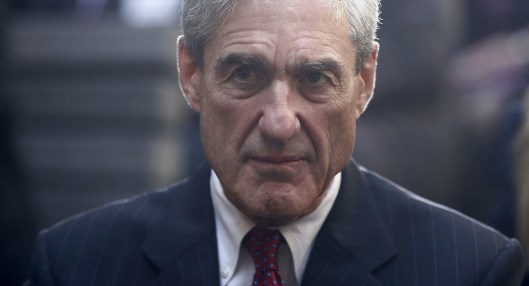
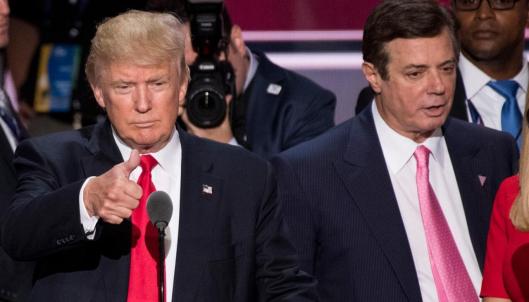
Special Counsel Robert Mueller believes that Paul Manafort, former Trump campaign chairmen, shared polling data with Konstantin Kilimnik, a Ukranian translator and campaign adviser believed to have ties with Russian intelligence, and that he later lied about it. Apparently, Manafort’s lawyers have conceded that Manafort neglected certain details of his Ukrainian dealings, as they wrote in a court filing that “[i]t is not surprising at all that Mr. Manafort was unable to recall specific details prior to having his recollection refreshed.” The filing also notes that Manafort forgot  and later recalled that he had met with Kilimnik in Madrid in January or February of 2017, which was after Trump became President-elect, but also after Manafort’s tenure as campaign chairmen. Manafort and Kilimnik have previously been accused of witness tampering, for allegedly reaching out to members of the Hapsburg group, and asking them to lie about secret, pro-Ukrainian lobbying done at Manafort’s behest.

If it is to be believed that Kilimnik does have ties to Russian intelligence, then this information establishes, at least, a Russian interest in President Trump’s candidacy. Of course, that is not new information. At most, it could go to establishing communication between Trump and Russia post-election. That being said, it is only circumstantial evidence. The fact that foreign powers are interested in Trump’s nomination and presidency, does not mean he cooperated with foreign powers, and the fact that Manafort cooperated with foreign powers, does not mean that Trump participated. Still, this another straw on the camel’s back.

gettyimages-975251610_wide-a5b8c154718a06791ada3f9447c359251dd114b5.jpgAFP/Getty Images


Share this:

  • Click to share on X (Opens in new window) X
  • Click to share on Facebook (Opens in new window) Facebook
Like Loading...

Impeachment Scholars Butting Heads

01 Tuesday Jan 2019

Posted by crosbysamuel in Articles, Uncategorized

≈ Leave a comment

Tags

donald trump, harvard law review, High Crimes and Misdemeanors, impeach, Impeachment, joshua matz, laurence tribe, legal standard, michael paulsen, president, to end a presidency, to end a republican presidency, to pretend to review our book, university of st. thomas

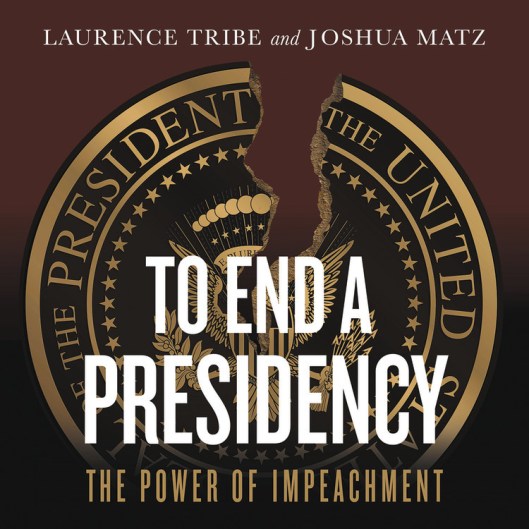
There is an interesting interplay between articles published by Harvard Law that readers might wish to explore. Michael Paulsen, of  the University of St. Thomas, wrote a response to the book written by Professor Laurence Tribe and attorney Joshua Matz entitled “To End a Presidency: The Power of Impeachment,” in an article published in the Harvard Law Review: “To End a (Republican) Presidency.”  Tribe and Matz’s book attempts to establish the proper standard for impeachment. In his article, Paulsen complains that Tribe and Matz set forth an overly restrictive standard, by introducing an elements which lack textual support: 1) that the President use formal powers of his office to further wrongdoing; 2) that he is not viable as a national leader; and 3) that he “pose[s] a prospective danger of grave harm for which there is no alternative short of removal.” Paulsen claimed, additionally, that Tribe and Matz’s analysis had an unacceptably partisan slant.

Tribe and Matz wrote a strong response to Paulsen published in the Harvard Law Review forum, in an article entitled “To (Pretend to) Review our Book.” It that response they refuted that their book was aimed at partisan ends. Rather, they sought to end the tendency to jump so readily to talk of impeachment by “[emphasizing] realism over fantasy.”  They wrote “impeachment is neither a magic wand nor a doomsday device. Instead, it is an imperfect and unwieldy constitutional power that exists to defend democracy from tyrannical presidents.” It is for this reason they offer a more restrictive definition, about which Paulsen’s complaints were unfounded.  First they deny that they asserted it was necessary for the President to use his office for an offense to be impeached, and though they admit to the second two requirements, refute that they lack textual support. Rather, they are borrowed from Professor Charles L. Black, Jr.’s canonical study, Impeachment: A Handbook, in which he writes:

Many common crimes–willful murder, for example–though not subversive of government or political order, might be so serious as to make a president simply unviable as a national leader; I cannot think that a president who had committed murder could not be removed by impeachment. But the underlying reason remains much the same; such crimes would so stain a president as to make his continuance in office dangerous to public order. Indeed, it may be this prospective tainting of the presidency that caused even treason and bribery to be made impeachable.

There is, of course, more substance contained in the articles themselves. For an interesting debate on the subjects of originalism and partisanship in the formation of an impeachment standard, readers should visit the links above.

97815491690071.jpg


Share this:

  • Click to share on X (Opens in new window) X
  • Click to share on Facebook (Opens in new window) Facebook
Like Loading...

Resurrecting Justice Curtis’ Argument

26 Wednesday Dec 2018

Posted by crosbysamuel in Articles, Uncategorized

≈ 3 Comments

Tags

Collusion, donald trump, Frank Bowman, harvard law school, high crimes without law, Impeachment, interpretation, joshua matz, justice benjamin curtis, lawrence tribe, Mueller, nikolas bowie, voter fraud

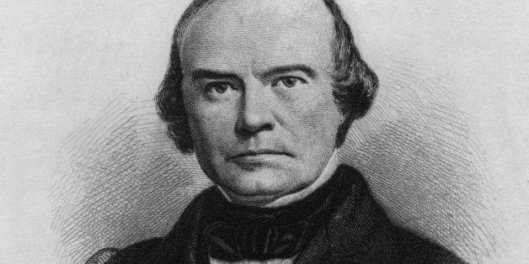
Nikolas Bowie, Assistant Professor at Harvard Law School, wrote in an article for the Harvard Law Review Forum, entitled “High Crimes Without Law,” a dissent to the popular view that impeachable offenses need not be violations of existing law. This argument was first made by Justice Benjamin Curtis, who left his post with the Supreme Court  in the wake of the Dred Scott decision, and subsequently agreed to represent President Andrew Johnson in his impeachment proceedings. Johnson was impeached, in part, for inflammatory speeches given in protest of Congress’ anti-slavery legislation.

Curtis argued that the “high crimes and misdemeanors” warranting impeachment are defined as high crimes committed against the United States, made illegal by laws of the  United States. He supported this argument with three points: “first, a textual argument that the phrase “high Crimes and Misdemeanors” refers to something analogous to treason and bribery; second, a structural argument that impeachment proceedings are criminal trials; and third, a structural argument that Congress could not use impeachment proceedings to subvert the constitutional prohibitions against ex post facto laws and bills of attainder.” Bowie explores these arguments in detail, and then proceeds to respond to modern counter arguments, such as those professed by Professors Laurence Tribe and Joshua Matz. The primary difference between Curtis’ interpretation and that of Tribe and Matz’s more expansive definition is in the way they define impeachment, as either a criminal or civil process; Tribe and Matz argue that impeachment is a civil proceeding not requiring the constitutional protections of a criminal proceeding. Interested readers should follow the link above for a more detailed overview of Bowie and Curtis’ argument.

As a note, even if Curtis’ interpretation is correct, and impeachment only applies to crimes enshrined in law, that does not necessarily let President Trump off the hook. The voter fraud for which he has been very nearly implicated by Mueller’s investigation, may well be a criminal violation. Professor Bowman weighed this possibility in his latest post, though he would disagree with Bowie and argues that violations of existing law are not necessary for impeachment. Said post can be found here.

5bb929d6200000c70101ea90.jpegKean Collection/Getty Images

Share this:

  • Click to share on X (Opens in new window) X
  • Click to share on Facebook (Opens in new window) Facebook
Like Loading...

Will the Investigative Torch Pass to the House?

13 Tuesday Nov 2018

Posted by crosbysamuel in Articles, Uncategorized

≈ Leave a comment

Tags

acting attorney general, Adam Schiff, attorney general, Collusion, Committees, donald trump, House appropriations committee, house intelligence committee, House of Representatives, investigation, Jeff Sessions, matt whitaker, midterms, Mueller, nancy pelosi, nita lowey, president, russia, zoe lofgren

With Jeff Sessions gone as Attorney General and Matt Whitaker positioned as acting AG, one has to wonder how much longer Mueller will be able to carry on his investigation unhindered. It may be the Special Counsel will have to pass his baton over to the House. But will  House Democrats vigorously investigate?

This article from Vox, written by Ezra Klien, correctly points out that because Democrats took the House but not the Senate, they will have trouble passing legislation into law. Much of what power is left to them is in the  investigation of President Trump. With their new found majority, Democrats are taking over vital investigative committees in the House. New York Democrat Nita Lowey, will chair the Appropriations Committee, and has “a laundry list of potential areas for inquiry. . . . [including the] family separation policy and hurricane relief in Puerto Rico.” California Rep. Adam Schiff will lead the House Intelligence Committee, which has already been engaged in the Trump investigation.

However, Democrats may be reluctant to shift their focus to investigation. Nancy Pelosi, House Democratic Leader, has said that any investigations will be “strategic” aimed at “seek[ing] the truth.” And Rep. Zoe Lofgren, a Democrat from California, expressed a similar sentiment, stating: “if Mueller sends us an exploding bomb, we may have an obligation to deal with that. But absent that, I don’t think the country will be on board with impeachment, and nor should we.” She feels that focusing on the investigation will distract from what “really matters to people.” It may be Democrats are unwilling to focus their energy of uncovering a truth that, even if it leads to impeachment in the House, will fail to cause removal by the Senate.

pelosi.jpgJ. Scott Applewhite

Share this:

  • Click to share on X (Opens in new window) X
  • Click to share on Facebook (Opens in new window) Facebook
Like Loading...

Stone and WikiLeaks

30 Tuesday Oct 2018

Posted by crosbysamuel in Articles, Uncategorized

≈ Leave a comment

Tags

conspiracy to defraud, donald trump, election fraud, Impeachment, investigation, Mueller, president, Robert Mueller, roger stone, russia, russian collusion, Special Counsel, trump, wikileaks

Special Counsel Robert Mueller’s investigators are looking into comments Roger Stone, an adviser to President Trump and self-proclaimed “ultimate political insider,” made to those who called on his political insight. Stone said he knew of WikiLeak’s plans to release information which would affect the 2016 election, apparently referring to the Democratic National Convention emails which were hacked by Russian Intelligence Officials. Roger Stone also claimed to have a relationship with the founder of WikiLeaks, Julian Assange. The natural conclusion to be drawn here, is that a connection between Stone and WikiLeaks is a connection between Stone and Russia, which is ultimately a connection between Trump and Russia. Though Stone has yet to be indicted, he did admit in August that such a thing is possible. The possibility now is greater than it was then, and with Stone’s indictment may come a plea deal and cooperation.

roger_stone_ap_file.jpgANDREW HARNIK/ASSOCIATED PRESS/FILE

Share this:

  • Click to share on X (Opens in new window) X
  • Click to share on Facebook (Opens in new window) Facebook
Like Loading...

The Social More-ing of the Executive and Legislative Branches

27 Saturday Oct 2018

Posted by crosbysamuel in Articles, Uncategorized

≈ 1 Comment

Tags

after the trump era, Congress, constitutional standard, DACA, Deferred Action for Childhood Arrivals, donald trump, georgetown journal, hyperpartisan, immoral, impeach, neil s. siegel, president, shutdown, trump

Is there a constitutional defense against members of the Executive and Legislative branches that act not illegally, but immorally? Constitutional scholars have recognized this possibility for judges, but would leave it to the political process to take care of the rest of the branches. Neil S. Siegel, in his article After the Trump Era: A Constitutional Role Morality for Presidents and Members of Congress,  published in the Georgetown Law Journal in its October, 2018 Edition, argues that the moral constitutional standard applied to judges should be extended to presidents and congressmen as well. Here is an excerpt from his article:

Meanwhile, the federal government itself is becoming even more dysfunctional as elected officials increasingly disregard norms that previously constrained partisan competition; more often than not, elected officials are unable to cooperate across party lines to execute the basic responsibilities of the federal government. Examples abound. The confirmation process for Supreme Court Justices has become a hyperpartisan, destructive race to the normative bottom. A Republican Senate approved highly consequential tax legislation without any Democratic input or even a single hearing, let alone the traditional process of “multiple congressional hearings, proposed statutory language and detailed reports from the tax-writing committees, all prepared well in advance of any vote” and “with the assistance of [Joint Committee on Taxation] staff and with the input of Treasury Department experts.” In addition, Republican President Donald J. Trump routinely flouts norms and conventions of proper governmental behavior that previously constrained presidents of both parties. The Democrats, for their part, held up urgent funding legislation in order to extract a deal that would offer a path to citizenship to beneficiaries of the program known as Deferred Action for Childhood Arrivals (DACA); a shutdown of the federal government ensued. Three characteristics of the problems discussed above stand out. First, they mostly implicate the convictions and conduct of the public and the political branches, not the courts. Second, they concern mindsets and behavior that, although troubling, are not potentially unconstitutional or otherwise illegal. Third, that behavior, even where not potentially unconstitutional or otherwise illegal, raises concerns that are properly denominated constitutional in the broad sense that they appear to call into question the long-term health of the American constitutional system.

000_HZ8ZT-e1478828415397.jpgAFP/Nicholas Kamm


Share this:

  • Click to share on X (Opens in new window) X
  • Click to share on Facebook (Opens in new window) Facebook
Like Loading...

Was Mueller’s Appointment Constitutional?

01 Monday Oct 2018

Posted by crosbysamuel in Articles, Uncategorized

≈ 1 Comment

Tags

Andrew Milller, donald trump, Impeachment, investigation, marine medvin, Mueller, Obstruction of Justice, paul kamenar, president, robert muelller, roger stone, russian collusion, Special Counsel, Washington D.C.

Marina Medvin, a contributor to Forbes.com, wrote today about a constitutional challenge which has been brought against the authority of Special Counsel Robert Mueller. The challenge was brought by counsel for Andrew Miller, an aide to Roger Stone, who was subpoenaed by Mueller. It comes in three parts: 1) that according to the Constitution, short of a presidential appointment, Congress must create a law empowering the Attorney General to appoint a special counsel and no such law exists; 2) even if such a law does exist, Attorney General Sessions’ recusal is not sufficient to empower Deputy Attorney General Rosenstein to make such an appointment; and 3) the powers which Mueller has utilized are far beyond those appropriate for a Special Counsel and are equivalent to those of a “super U.S. attorney.”

Miller’s argument lost in the district court and he has taken it up on appeal. Mueller filed a brief in response (interested readers can find it here). It is unclear what would happen to Mueller’s investigative findings should his powers be invalidated. The searches and subpoenas he has executed so far, if not backed by constitutional authority, are sure to equate to violations of the 4th amendment rights of his subjects. That being said, the invalidation of his power seems an unlikely result. As Mueller pointed out himself, there is strong precedent for his power, dating back to 1870.

download (1).jpg AP Photo

Share this:

  • Click to share on X (Opens in new window) X
  • Click to share on Facebook (Opens in new window) Facebook
Like Loading...

The Russians Influenced the Election — So What?

25 Tuesday Sep 2018

Posted by crosbysamuel in Articles, Uncategorized

≈ 1 Comment

Tags

bots, Collusion, Conspiracy, conspiracy to defraud the united states, Cyberwar: How Russian Hackers and Trolls Helped Elect a President—What We Don’t, donald trump, Kathleen Hall Jamieson, overt act, president, robots, russia, russian hackers, trolls, trump

The New Yorker writes today that Russian bots and trolls likely did influence the 2016 election; or rather Kathleen Hall Jamieson, author of  “Cyberwar: How Russian Hackers and Trolls Helped Elect a President—What We Don’t, Can’t, and Do Know,” asserted as much during her interview with the paper. She writes about how, through an online campaign, Russian hackers influenced voters to garner support for Trump. These trolls adopted pseudo-American-identities to better influence their audience, and, according to Jamieson, succeeding in swaying the vote.

Though this is an alarming proposition, it is worth noting that it is not one that needs to be established for a charge of conspiracy to defraud the United States. A showing of success is not necessary for a charge of collusion — all that is necessary is that there is a conspiracy with the aim of defrauding the U.S. and some overt act taken in pursuit of that goal. Whitfield v. United States, 543 U.S. 209, 214, 125 S. Ct. 687, 691, 160 L. Ed. 2d 611 (2005). As such, it would be sufficient if Trump were to have conspired with Russian hackers, the Russian hackers assumed American avatars, and then the whole plan went belly up. That being said, the idea that the presidency was handed to Trump by internet trolls could add fervor to impeachment efforts.

trump.jpg

Share this:

  • Click to share on X (Opens in new window) X
  • Click to share on Facebook (Opens in new window) Facebook
Like Loading...

Presidential Obstruction of Justice

20 Thursday Sep 2018

Posted by crosbysamuel in Articles, Uncategorized

≈ Leave a comment

Tags

2016 surveillance, bruce ohr, Carter Page, Collusion, communication, donald trump, FBI, federal bureau of investigation, firing, former, Impeachment, investigation, James Comey, Obstruction of Justice, president, release, russia, texts

This article from the California Law Review, written by Daniel J. Hemel and Eric A. Posner and entitled Presidential Obstruction of Justice, examines the standard for charging a United States president with obstruction of justice in light of his role as head of the executive branch and federal law enforcement. The authors assert that a president does violate the law when he obstructs justice with an improper purpose and explore what that improper purpose might be. They ultimately claim that when a president acts/obstructs justice to “take care that the laws be faithfully executed,” his purpose is proper, but that otherwise it is not.

This analysis is of course significant in light of President Trump’s firing of Former FBI James Comey which some believe was an act obstructing justice. The friction between Comey and Trump was brought to the forefront again on Monday when the President ordered that Comey’s communications be released to the public along with ” 20 pages of a 2016 surveillance application targeting former Trump campaign adviser Carter Page and Justice Department official Bruce Ohr’s notes related to the Russia probe.” Comey believes that Trump is trying to root out a procedural mistake made by the FBI, but is confident he will not find one.

comey.jpgCarsten Koall/Getty Images

Share this:

  • Click to share on X (Opens in new window) X
  • Click to share on Facebook (Opens in new window) Facebook
Like Loading...

Losing a Two-Front War

16 Sunday Sep 2018

Posted by crosbysamuel in Articles, Uncategorized

≈ 1 Comment

Tags

campaign chairman, civil suit, conspiracy to defraud, constitution, domestic emoluments, donald trump, foreign emoluments clause, impeach, Impeachment, investigation, Manafort, maryland, Mueller, Obstruction of Justice, paul manafort, plea deal, president, Special Counsel, trump, trump internation hotel, two-front war, u.s. district court of maryland

This week has proven to be a difficult one for President Trump. As both civil and criminal investigations draw near and his tight spot becomes tighter, one can only begin to imagine his discomfort.

The world of Special Counsel Robert Mueller’s investigation has gotten a little brighter with the cooperation of Paul Manafort. Trump’s former Campaign chairman finally struck a plea deal last Friday and pleaded guilty to conspiracy to defraud the United States and obstruction of justice. Though Trump’s press secretary, Sarah Sanders, argues that the charges against Manafort have nothing to do with the President and could not incriminate him, Manafort apparently possesses information valuable enough for Mueller to agree to waive 5 of his 7 charges and argue leniency in his sentencing. Especially valuable is Manafort’s participation in the Russian lawyer meeting and any insight he may be able to give as to what happened there. Some theorize that Manafort’s cooperation promises the end of Mueller’s investigation.

On top of Mueller’s progress, Trump faces discovery requests pursuant to a civil suit in the U.S. District Court of Maryland. The suit alleges that Trump violated the Domestic and Foreign Emoluments Clauses of the United States Constitution through operation of the Trump International Hotel near the White House. Pursuant to those allegations, the plaintiffs, D.C. Attorney General Karl Racine and Maryland Attorney General Peter Frosh, are seeking communications between Trump and foreign and U.S. state government officials related to use of the hotel, records of the hotel’s business with foreign officials, records of cash transferred from the trust which collects the hotel’s funds to Trump, and documents from the General Services Administration and the U.S. Treasury Department which lease the hotel building to Trump.

The likely result of these two investigations is that allegations of impeachable offenses committed by Trump, conspiracy to defraud the American people, obstruction of justice, and violation of the emoluments clauses, will soon either be substantiated or refutable. And with midterm elections looming, this information could not have come at a better time. Soon there will be a Congress that can transform all of this discovery into articles of impeachment.

GettyImages-578331186-trump-manafort-2016-1120.jpgBill Clark, CQ Roll Call, Getty Images

Share this:

  • Click to share on X (Opens in new window) X
  • Click to share on Facebook (Opens in new window) Facebook
Like Loading...
← Older posts
Newer posts →

Blog Owner

Frank O. Bowman, III


Curators' Distinguished Professor Emeritus
Floyd R. Gibson Missouri Endowed Prof of Law Emeritus
Univ of Missouri School of Law

Web Profile

Enter your email address to follow this blog and receive notifications of new posts by email.

Professor Bowman on Impeachment »

Bibliographies

Explore bibliographies categorized by author and subject, and find other resources.

Posts by Topic

  • The Case for Impeachment
  • Defining Impeachable Conduct
  • Impeachment on Foreign Policy Grounds
  • Impeachment for Unfitness
  • Obstruction of Justice
  • Abuse of Criminal Investigative Authority
  • Election Law Violations
  • Foreign Emoluments
  • Conspiracy to Defraud the   United States
  • Politics of Impeachment
  • Lying as an Impeachable Offense
  • Abuse of Pardon Power
  • Electoral College
  • House Impeachment Resolutions
  • The Logan Act
  • The Mueller Investigation
  • Impeachment of Missouri Governor Greitens
  • Historical Precedent for Impeachment
  • Messages from Professor Bowman

Student Contributors »

Enter your email address to follow this blog and receive notifications of new posts by email.

Blog at WordPress.com.

  • Subscribe Subscribed
    • Impeachable Offenses?
    • Join 199 other subscribers
    • Already have a WordPress.com account? Log in now.
    • Impeachable Offenses?
    • Subscribe Subscribed
    • Sign up
    • Log in
    • Report this content
    • View site in Reader
    • Manage subscriptions
    • Collapse this bar
 

Loading Comments...
 

    %d