• Home
  • Mission of This Site
  • Contact

Impeachable Offenses?

~ The Use & Abuse of Impeachment in the 21st Century

Impeachable Offenses?

Tag Archives: Impeachment

Trump’s Foreign Policy Is Impeachable

12 Thursday Jul 2018

Posted by impeachableoffenses in Uncategorized

≈ 1 Comment

Tags

Earl of Danby, Foreign policy, George Mason, High Crimes and Misdemeanors, Impeachment, impeachment for foreign policy, James Madison, Warren Hastings

By Frank Bowman

By any objective measure, Donald Trump’s conduct of American foreign policy, particularly over the past six months or so, has been a catastrophe.  He has persistently — and quite consciously — alienated our most faithful traditional allies, disrupted critical trade arrangements, and undermined vital security relationships both in Europe and across the globe, while at the same time cozying up to vicious dictatorships and promoting authoritarian rulers even in recently democratic states.  He is systematically destroying a world order created over seventy years by American statesmen of both parties, an order that has not only maintained peace among the great powers and seen steadily improved standards of living worldwide, but has already made America first among the nations of the earth.

But what, you may ask, can be done about it between now and the 2020 election?  The answer, as always when dealing with this catastrophic man, is nothing … at least until Democrats win at least one house of Congress and at least some Republicans are sufficiently shamed by their craven abandonment of every foreign policy principle they ever claimed to stand for to join with Democrats in blocking Trump’s demolition of America’s position in the world.

If such a (concededly unlikely) epiphany were to occur among Trump’s Republican abettors — most likely as a result of a midterm electoral drubbing — then there is a remedy for Trump’s foreign policy carnage.  Impeachment.

This suggestion will, of course, be dismissed by the Trumpian chorus as a wild liberal fever dream. Certainly, the political obstacles to successful impeachment on any ground are daunting. But as a constitutional matter, indeed as a matter of the original intention of the Framers, there is no serious question that a president is impeachable for activities in the foreign policy sphere that seriously undermine the national interest.

Impeachment is a British invention, employed by Parliament beginning in 1376 to resist the general tendency of the monarchy to absolutism and to counter particularly obnoxious royal policies by removing the ministers who implemented them.

During the Constitutional Convention of 1787, the delegates decided that presidents and other federal officers could be impeached, but they wrestled over what conduct should be impeachable. Various formulations were advanced.  As the convention rounded into the home stretch, the phrase that had taken hold was “treason or bribery.”

George Mason objected because he thought “treason and bribery” far too narrow.  Mason was a student of British impeachment and had authored the post-revolutionary impeachment provisions of the Virginia state constitution.  He wanted a federal impeachment remedy analogous to British practice at least in the conduct it covered, even if not in the sorts of brutal personal punishments Parliament could impose.

“Treason,” Mason said, “will not reach many great and dangerous offences. Hastings is not guilty of treason.” He was referring to the impeachment trial of Warren Hastings, Governor General India, just about to start in England. Mason wanted American impeachments to reach beyond the two indictable crimes of treason and bribery to important breaches of public trust in both the domestic and foreign sphere, the kinds of offenses charged against Hastings.

Mason’s solution was to add the word “maladministration” after bribery. But James Madison rose to object, saying, “So vague a term will be equivalent to a tenure during pleasure of the Senate.”

Mason thought the matter over and came back with a compromise. Omit “maladministration” but add to treason and bribery “other high crimes and misdemeanors.”  The new language passed 8 states to 3.

Mason’s choice of “high crimes and misdemeanors” was not whimsical.  Rather, he lifted it from British practice where, beginning in the 1600s, Parliament increasingly (though not invariably) used this phrase to describe conduct it charged as impeachable.  As a result, one of the perennial arguments in American impeachments is over whether the Framers intended “high crimes and misdemeanors” as a term of art limiting impeachable conduct to only those misdeeds impeached by Parliament prior to 1787.

My study of both British and American impeachments convinces me that “high crimes and misdemeanors” does not limit Congressional impeachment power to the necessarily idiosyncratic and antique list of misdeeds Parliament had addressed by 1787.  Both Parliament and the Framers were acutely conscious that the sorts of dangerous public misconduct for which impeachment is a necessary remedy could not easily be described in advance.

However, the Framers’ choice of “high crimes and misdemeanors” does set the baseline minimum for the scope of American impeachments. In other words, even if one accepts both the originalist approach to American constitutional interpretation and that the founders meant to restrict American impeachment within the boundaries set by British practice, that means American officials are properly impeachable for at least the range of conduct covered by British practice.

A persistent theme in British impeachments was the charge that the impeached minister had pursued a policy at odds with the nation’s basic foreign policy interests.  Impeachments on this ground were a constant beginning with the charges against William de la Pole in 1450 for his role in arranging the marriage of Henry VI to Margaret of Anjou.  The Duke of Buckingham was impeached in 1626 in part for loaning English ships to the French to employ against the Protestant Huguenots at Rochelle.  In 1678, the Earl of Danby was impeached for assisting King Charles in negotiations with France for British neutrality in the Franco-Dutch War.  Lords Oxford, Bolingbroke, and Strafford were impeached in 1715 for their advocacy of the Treaty of Utrecht, which was widely despised as selling out Britain’s Dutch allies in favor of making accommodations with Britain’s traditional enemy France. And Warren Hastings’ 1787 impeachment, so central to George Mason’s thinking, centered on fundamental disagreements about the proper relationship of Great Britain to its Indian possessions and the states that abutted them.   

Over and over again, Parliament employed impeachment to assert an authority independent of the royal executive to define the nation’s true foreign policy interests. That Congress has believed itself to have similar authority is demonstrated by the first impeachment in American history, that of Senator William Blount, charged in 1797 with conspiring to assist the British in acquiring Spanish territory in Florida.  Blount was acquitted, but only because there were doubts that senators are “civil officers” subject to impeachment and because he had already resigned.

President Trump’s disparagement or outright abandonment of long-established defense and trade relationships with democratic states in Europe, the Americas, and Asia in favor of self-destructive mercantilism, “America First” isolationism, and a growing affinity for authoritarian regimes such as Russia, China, Hungary, Turkey, and the Philippines is far more destructive of American interests than Senator Blount’s failed Florida adventure or any of the policies for which Parliament routinely impeached royal ministers.

A Congress with any sense of America’s true interests, or indeed with any sense of responsibility for the continued peace and prosperity of the world in general, would be entirely within its constitutional authority to impeach Donald Trump.



Share this:

  • Share on X (Opens in new window) X
  • Share on Facebook (Opens in new window) Facebook
Like Loading...

The Travel Ban, Constitutionality, and Impeachment

28 Thursday Jun 2018

Posted by crosbysamuel in Articles, Uncategorized

≈ 1 Comment

Tags

Articles, ban, Congress, Green, Impeachment, muslim, president, Representative, resolution, roberts, sotomayor, supreme court, travel, trump

The Supreme Court held, yesterday, that the Trump Administration’s travel ban had “sufficient national security justification to survive a rational basis review,” and that therefore it would reverse the preliminary injunction granted by the District Court. This is an indication that the travel ban is constitutional, and allows it to go forth unhindered, at least for the time being. Because the travel ban has been cited in at least Representative Green’s impeachment resolution as evidence of the President’s “bigotry,” one might wonder what effect this decision will have on the President’s chances of impeachment.

While it could be argued that the Supreme Court decision could set some, perhaps ethereal, precedent, it is still Congress that decides whether the President will be removed. And while the Supreme Court’s decision could in some way be construed as an endorsement of the executive order, so too can Justice Sotomayor’s dissent remind Congress of the reason the travel ban was cited as an impeachable offense in the first place:  “[the] appearance of discrimination that the President’s words have created.” Though Trump’s “muslim ban,” may have been rolled back enough to be constitutional, it can still evidence the  President’s bigotry, and therefore could still contribute to his impeachment.

ap_18115517534302_custom-de2433708c26b21f70c27b24fa1da4764a5b7a5d-s1600-c85.jpgAndrew Harnik/AP

Share this:

  • Share on X (Opens in new window) X
  • Share on Facebook (Opens in new window) Facebook
Like Loading...

Terribly Charitable Trump

15 Friday Jun 2018

Posted by crosbysamuel in Articles, Uncategorized

≈ 1 Comment

Tags

attorney general, banned, campaign finance law, charity, coordination, Donald J. Trump Foundation, illegal, Impeachment, jr., new york, selfdealing, sues, trump

The New York State attorney general’s office is suing the Donald J. Trump Foundation for “violating campaign finance laws, self-dealing, and illegal coordination with the presidential campaign.” The suit alleges that the charity used its funds to help Trump curry political favor, and seeks to dissolves the charity, to ban Trump and his three children from serving on non-profit organizations, and to collect $2.8 million in restitution (“the amount raised for the foundation at a 2016 Iowa political fund-raiser.”). Interested readers can find the petition here.

These election law violations are just the latest on a laundry list of unfit behavior, including conspiracy to defraud the United States,  inappropriate pardons, obstruction of justice, and generally dishonest behavior; however, these charges seem especially important. It may be a local’s bias, a sort of impeachment ethnocentrism, but it feels significant that these charges are brought so soon after the resignation of  Missouri Governor Eric Greitens, who was alleged to have illegally used his charity to raise campaign finance funds. In a country where the removal of executive officials is so rare, it may be that Greitens’ resignation could act as a sort of precedent. Is using a charity to raise campaign funds the line one must not cross?

15trumpfoundation-01-jumbo-v2.jpgDamon Winter/The New York Times

Share this:

  • Share on X (Opens in new window) X
  • Share on Facebook (Opens in new window) Facebook
Like Loading...

The G-7 plus 1?

09 Saturday Jun 2018

Posted by crosbysamuel in Articles, Uncategorized

≈ 1 Comment

Tags

annual, canada, Collusion, economic policy, france, G-7, G-8, germany, impeach, Impeachment, italy, japan, Meeting, president, Putin, russia, summit, the united kingdom, trump, united states

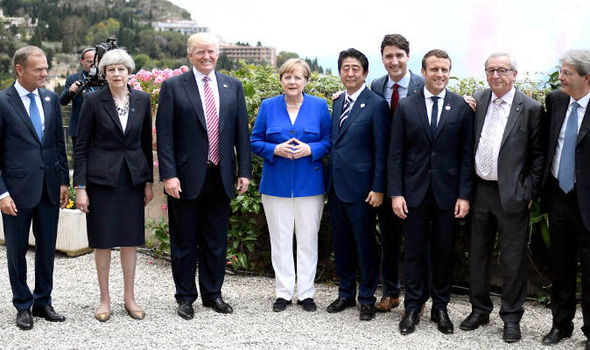
President Trump, at the annual summit meeting, suggested that Russia be readmitted into the G-7, the group of 7 nations (Canada, France, Germany, Italy, Japan, the United Kingdom, and the United States) which meet to discuss world-economic policy. Russia was ousted from the then G-8 in 2014 for seizing parts of the Ukraine. Trump defended his suggestion, stating as follows:

“You know, whether you like it or not — and it may not be politically correct — but we have a world to run. And in the G-7, which used to be the G-8, they threw Russia out. They should let Russia come back in. Because we should have Russia at the negotiating table.”

President Trump acted antagonistically at the summit meeting, rendering himself an outsider, and causing some to refer to it as “G-6 plus 1.”  For some this is a cause of concern: Trump treating allies as enemies and enemies as allies. And it could further bolster the theory that there was and is collusion going on between Russia and Trump; however, it is unclear that that rejoining the G-8 is actually on Putin’s agenda. In response to the news, the Kremlin spokesman, Dmitri S. Peskov, said that “we are putting emphasis on different formats,” insinuating that Russia is not particularly interested in rejoining the G-7. Russian officials made similar comments in 2014 when they were removed: Russian Foreign Minister Sergey Lavrov said that Russia was “not attached to this format and we don’t see a great misfortune if it will not gather.” So if Trump is acting on behalf of Russia, it is the result of some very coy maneuvering. Regardless of the reason for his stance, however, it betrays more of the same peculiar friendless we have seen since the beginning of Trump’s presidency. We will find out exactly what it means in due time.

g7-summit-trump-may-merkel-macron-809690.jpgexpress.co.uk

Share this:

  • Share on X (Opens in new window) X
  • Share on Facebook (Opens in new window) Facebook
Like Loading...

The Foreign Emoluments Clause: an Analysis and History

31 Thursday May 2018

Posted by crosbysamuel in Articles, Uncategorized

≈ 1 Comment

Tags

elon, emoluments, erik, foreign, hotel, Impeachment, influence, jensen, law, review, trump

Erik M. Jensen, Coleman P. Burke Professor Emeritus of Law of Case Western Reserve University, wrote a journal article published in the Elon Law Review titled the Foreign Emoluments Clause. That article examines the definition of emoluments, the history of the emoluments clause, and debate as to whether the clause applies to Trump and his businesses.  He sums up the problem of the Trump Hotels as follows:

[S]uppose a foreign diplomat is paying the same rate as the guest in the next room, but he is occupying a room that would otherwise have been empty for the night.Or suppose the diplomat, in selecting sleeping quarters, chooses an otherwise unoccupied luxury suite over an otherwise unoccupied, but substantially less expensive, room. In those cases, whatever is paid for the room, or the extra that is paid for the luxury suite, is mostly gravy for the hotel’s owners. Why is that not a potential problem under the Foreign Emoluments Clause (at least if we assume that the presidency is an “office of profit or trust”)? By any standard, the arrangement is unseemly, and by its terms the clause has no de minimis exception.

180529204622-trump-rally-052918-exlarge-169.jpg

Share this:

  • Share on X (Opens in new window) X
  • Share on Facebook (Opens in new window) Facebook
Like Loading...

Limiting the Removal Power

28 Monday May 2018

Posted by crosbysamuel in Articles, Uncategorized

≈ 1 Comment

Tags

appointment, Comey, Congress, director, FBI, hamlin, impeachable offenses, Impeachment, limit, power, removal, trump

Qualified Tenure: Presidential Removal of the FBI Director is an article written by Leah A. Hamlin which was published in the Ohio Northern University Law Review. It addresses the question of whether the President’s power to remove an FBI director is limited by the 10-year term instituted by Congress, and whether it may, constitutionally, be further limited by Congress. Hamlin ultimately concludes:

that the ten-year term does not limit the president’s ability to remove the director at will, and that, given the importance of the FBI director to the effective functioning of a unitary executive, Congress may not limit the president’s removal power without infringing on the separation of powers limits laid out in case law.

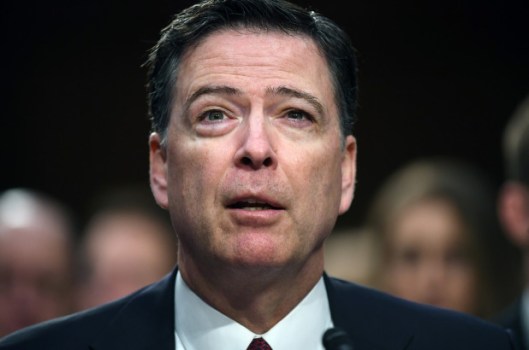
This question is especially significant, of course, in light of the firing of James Comey which was met with such outrage, and which some believe could constitute obstruction of justice.  Though Hamlin concludes that Congress cannot not interfere with the President’s removal power, it is doubtful that her conclusion would extend so far as to suggest that Congress could not wield its impeachment power in wake of a removal which constitutes a high crime or misdemeanor.

gettyimages-694398560.jpgThe Washington Post/Getty Images

Share this:

  • Share on X (Opens in new window) X
  • Share on Facebook (Opens in new window) Facebook
Like Loading...

Trump won’t be Indicted

17 Thursday May 2018

Posted by crosbysamuel in Articles, Uncategorized

≈ 1 Comment

Tags

Congress, Impeachment, indicment, investigation, Mueller, president, report, rudolph giuliani, trump

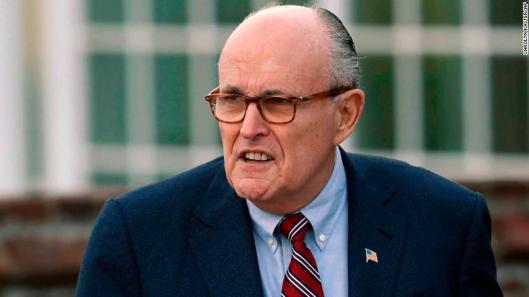
Rudolph Giuliani claims that he has it on good authority that Mueller will not indict President Trump; and the Washington Post says that there is good reason to believe him, because the Justice Department guidelines say that he can’t.  This question has been examined by Professor Frank Bowman on this blog; and he pointed out that the question, as far as Mueller goes, is not whether an indictment will occur, but whether Mueller will recommend that Trump be indicted. Bowman proposed that this recommendation may come in two forms; that Trump be indicted after his presidency, or that he be indicted immediately. The latter recommendation, even if doomed to fail, will potentially have the same effect as the former recommendation: Mueller’s report will reach Congress and lead to impeachment.

180503095830-01-rudy-giuliani-file-exlarge-169.jpgCarolyn Kaster, AP


Share this:

  • Share on X (Opens in new window) X
  • Share on Facebook (Opens in new window) Facebook
Like Loading...

Justices Signal that Revised Travel Ban is Constitutional

26 Thursday Apr 2018

Posted by crosbysamuel in Articles, Uncategorized

≈ 1 Comment

Tags

al, ban, Green, Impeachment, iran, muslim, oral argument, president, roberts, supreme court, The House of Representatives, travel, trump

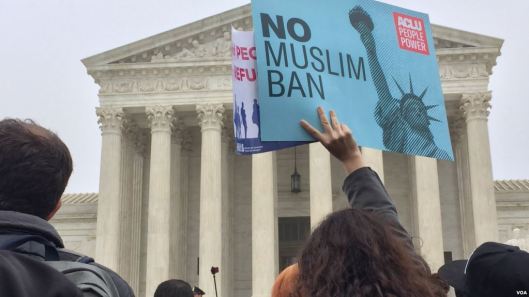
Oral arguments over the Trump Administration’s new travel ban occurred yesterday in front  of the Supreme Court. The conservative justices of the Court signaled that they believed the revised ban to be a constitutional exercise of executive power done in pursuit of national security. Significantly, Chief Justice Roberts indicated that President Trump’s statements detailing an intention to implement a “Muslim-ban” would likely not be considered in determining the order’s constitutionality.

If the Supreme Court ultimately confirms that the revised travel ban is constitutional despite Trump’s statements, it may have a negative effect on future impeachment proceedings. Representative Al Green’s impeachment resolution cited President Trump’s travel ban as one reason he should be impeached. Though an act may be both constitutional and worthy of impeachment, as they have far different standards, the Supreme Court decision could still set a precedent. It may act as an endorsement of sorts.

A3C0CAC7-5D5B-4C82-8E01-AB1360326948_cx0_cy7_cw0_w1023_r1_s.jpgV. Macchi/VOA


Share this:

  • Share on X (Opens in new window) X
  • Share on Facebook (Opens in new window) Facebook
Like Loading...

Mueller and Starr Compared

06 Friday Apr 2018

Posted by crosbysamuel in Articles, Uncategorized

≈ Leave a comment

Tags

affair, clinton, Collusion, counsel, daniels, Impeachment, independent, ken, lewinsky, Mueller, robert, russia, special, Starr, stormy

This article, from TIME, compares the methods of Special Counsel Robert Mueller to those of former Independent Counsel Ken Starr. Starr was charged with investigating the Clinton-Whitewater real estate scandal, and released a report which eventually lead to President Clinton’s impeachment. Notably, however, the report was not centered around Whitewater, but rather the lie Clinton told to cover up his affair with Monica Lewinsky. Unlike Starr, TIME notes, Mueller is remaining focused on his task — the investigation of Russian collusion.

It would be easy for Mueller to become distracted with all the stories of Trump’s sordid acts floating around; such as those surrounding Stormy Daniels. But those of us in the audience should be glad that Mueller has remained focused. Though nailing Trump with some ignoble deed may be enough to lower his public esteem and get him impeached, we should want more. We should want the whole truth.

1-mueller-2.w1200.h630.jpgAlex Wong/Getty Images

Share this:

  • Share on X (Opens in new window) X
  • Share on Facebook (Opens in new window) Facebook
Like Loading...

Is Trump Capable of Receiving Legal Help?

25 Sunday Mar 2018

Posted by crosbysamuel in Articles, Uncategorized

≈ Leave a comment

Tags

Collusion, digenova, dowd, Impeachment, Lawyer, Mueller, resign, russia, toensing, trump

News surfaced today that Joseph diGenova and Victoria Toensing are leaving President Trump’s legal team only 5 days after being selected to join it. Apparently, diGenova and Toensing’s law firm represents two other people being investigated by Mueller, thereby creating a conflict of interest, which prevents them from representing Trump in the Mueller investigation. However, Trump may have created his own obstacles to representation: reports indicate that Trump did not feel “he had personal chemistry” with the lawyers. This news compounds with the recent resignation of John Dowd, the lawyer who headed Trump’s outside team addressing the Russian probe. A source reported that Dowd was frustrated that the President was not taking his advice. This resignation came soon after Trump attacked Mueller via twitter.

There has been speculation that lawyers are reluctant to work with Trump; allegations that Trump has denied. However, the question remains as to whether Trump is too stubborn to work with his lawyers. If Trump is ignoring his lawyer’s advice, that may lead to a number of ramifications, including the firing of Mueller. That can only make impeachment more likely.

Image result for toensing digenovaThe Washington Post, via Getty Images


Share this:

  • Share on X (Opens in new window) X
  • Share on Facebook (Opens in new window) Facebook
Like Loading...
← Older posts
Newer posts →

Blog Owner

Frank O. Bowman, III


Curators' Distinguished Professor Emeritus
Floyd R. Gibson Missouri Endowed Prof of Law Emeritus
Univ of Missouri School of Law

Web Profile

Enter your email address to follow this blog and receive notifications of new posts by email.

Professor Bowman on Impeachment »

Bibliographies

Explore bibliographies categorized by author and subject, and find other resources.

Posts by Topic

  • The Case for Impeachment
  • Defining Impeachable Conduct
  • Impeachment on Foreign Policy Grounds
  • Impeachment for Unfitness
  • Obstruction of Justice
  • Abuse of Criminal Investigative Authority
  • Election Law Violations
  • Foreign Emoluments
  • Conspiracy to Defraud the   United States
  • Politics of Impeachment
  • Lying as an Impeachable Offense
  • Abuse of Pardon Power
  • Electoral College
  • House Impeachment Resolutions
  • The Logan Act
  • The Mueller Investigation
  • Impeachment of Missouri Governor Greitens
  • Historical Precedent for Impeachment
  • Messages from Professor Bowman

Student Contributors »

Enter your email address to follow this blog and receive notifications of new posts by email.

Blog at WordPress.com.

  • Subscribe Subscribed
    • Impeachable Offenses?
    • Join 199 other subscribers
    • Already have a WordPress.com account? Log in now.
    • Impeachable Offenses?
    • Subscribe Subscribed
    • Sign up
    • Log in
    • Report this content
    • View site in Reader
    • Manage subscriptions
    • Collapse this bar
 

Loading Comments...
 

    %d